USMNT Fall 2026 Roster: Cavan Sullivan Called Up, Pulisic Left Out as Pochettino Launches Youth Era
Pro Merch · USMNT · Fall 2026 International Window
Cavan Sullivan Is In. Pulisic Is Out. A New Era Begins.
Mauricio Pochettino names a 28-player USMNT roster built for the future — 16-year-old Philadelphia Union phenom Cavan Sullivan headlines a squad averaging 22 years and 9 months, as the program launches its four-year cycle toward the 2030 World Cup.
28
Roster Size
13
Uncapped Players
16
Sullivan’s Age
4
Friendlies This Window
Manager
Pochettino
New four-year cycle begins now
Avg. Squad Age
22 yrs 9 mo
One of youngest in program history
Sullivan’s MLS Form
5G · 6A
Last 7 games for Philadelphia Union
Pulisic Status
Omitted
Microfracture recovery · AC Milan
2028 Target
LA Olympics
Youth pipeline being built now
Window
Sept 26 – Oct 6
Four games · All in the United States
· · ⚽ · ·
The Story of the Roster: Cavan Sullivan at 16
Philadelphia Union · MLS · Age 16
Cavan Sullivan — USMNT’s Most Exciting New Name
Potential second-youngest senior debut in program history
At just 16 years old, Cavan Sullivan is the headline name in Pochettino’s fall roster and the player every serious American soccer fan is tracking. The Philadelphia Union midfielder has been on an absolute tear in MLS since the summer World Cup break, racking up five goals and six assists in his last seven games — a run of form so sustained and so impressive that it made his call-up less of a surprise and more of a logical conclusion.
If he steps onto the pitch during this international window, he will become the second-youngest player to ever debut for the USMNT senior squad, trailing only Freddy Adu. That’s not a trivial distinction. The Freddy Adu comparison carries enormous weight in American soccer history, and the fact that Sullivan is earning it through current, verified performance rather than prospect reputation makes it considerably more meaningful.
Pochettino was characteristically direct when asked about the selection: “He deserves it, he deserves all the praise he’s getting. He is playing well, giving assists and scoring goals. He is 16. The important thing is to be with him and provide a solid pattern and support.”
The Omission: Christian Pulisic Left Off the Roster
AC Milan · Serie A · Injury Recovery
Christian Pulisic — Omitted for Full Recovery
Microfracture in lower leg · Yet to start an AC Milan match this season
Leaving the team’s biggest superstar off a healthy roster would be a rare and controversial move. But Pulisic isn’t fully healthy. The AC Milan forward suffered a microfracture in his lower leg during the World Cup this summer and has not yet started a single match in the current AC Milan season. He is still working his way back to full match fitness, and Pochettino made the pragmatic call to leave him out entirely so he can complete his recovery without the added pressure of international window travel and match demands.
This is not a statement about Pulisic’s standing in the squad. He remains the program’s most consequential offensive player when healthy. It is a statement about how Pochettino intends to manage player availability and long-term fitness in a cycle that has four years and multiple major tournaments ahead of it. Getting Pulisic fully fit for club and country is worth more than rushing him back for a September friendly against Peru.
· · ⚽ · ·
The Youth Movement: Six Teenagers Who Combine for 26 Goals and 24 Assists
USMNT · Fall 2026 · Youth Pipeline
13 Uncapped Players. Six Teenagers. A Squad Built for 2028 and Beyond.
The six teenage standouts in this 28-man squad have combined for 26 goals and 24 assists in 9,113 minutes of MLS play this season. None of them will even be in their prime by the time the 2030 World Cup arrives. Pochettino is building something with a long runway, and the players below are the foundation.
16Cavan Sullivan · Philadelphia Union
17Adri Mehmeti
18Julian Hall · NY Red Bulls
18Niel Pierre
18Peyton Miller
19Justin Ellis
20Cole Campbell · Bundesliga
Brian Schwake, the Nashville SC goalkeeper, also earns his first call-up after what Pochettino and his staff have assessed as a stellar 2026 season in MLS. The program has 13 players from the 2026 World Cup squad plus 12 newcomers in a roster that reflects the specific vision of a head coach who is genuinely starting a cycle rather than just bridging to the next tournament.
This isn’t a transitional roster. This is a statement of intent.
The 2026 World Cup was played on home soil this summer, and the USMNT’s tournament ended before the quarterfinals. That outcome, however painful, is now behind the program. What Pochettino is building with this fall window is the answer to the question of what comes next, and the answer is genuinely exciting if you’re willing to think in four-year cycles rather than four-game stretches.
A squad averaging 22 years and 9 months. Six teenagers who have combined for 26 goals and 24 assists in MLS this season. Thirteen players making their first appearance in the senior camp. A 16-year-old who might become the second youngest debut in program history. Four games over ten days against Peru, Chile, Mexico, and Canada, all on American soil, all against opponents who will provide different tactical problems and different levels of competitive pressure. This is what building looks like. It’s not always pretty. It’s frequently chaotic. And it occasionally produces a Cavan Sullivan walk onto a pitch and the specific feeling that the sport gives you when a talent arrives before you were fully ready for it.
Watch every minute of this window. You’re watching something get started.
The Carolina Panthers held off the Arizona Cardinals 33-30 in a back-and-forth 2026 Hall of Fame Game. Even in the loss, Cardinals rookie third-round quarterback Carson Beck stole the spotlight with a standout debut performance.
The USA Today preseason coaches poll has been released, with Ohio State opening at No. 1 and Oregon right behind at No. 2. Georgia, Texas, and Notre Dame round out the top five.
Philadelphia pulled out a dramatic 12th-inning walk-off win over Toronto on a clutch single from Derek Hill, outlasting the Blue Jays after Toronto’s Ernie Clement had tied the game with an RBI double earlier.
Speculation is building around Wild defenseman Quinn Hughes, with talk of a shorter three-year deal that could line up his free agency with his brother Jack’s contract with the Devils.
LeBron James has signed with the 76ers, choosing Philadelphia over a possible reunion in Miami or Cleveland and setting up a fresh chapter in a new city.
Mexico’s Under-20 men’s national team captured the Concacaf title with a 2-0 win over the United States at the Azteca, in a final marked by a controversial VAR-assisted red card.
Manchester City midfielder Rodri is reported to be in the final stages of a blockbuster move to FC Barcelona, following weeks of intense negotiations between the two clubs.
The world of English football has always thrived on pressure, paranoia, tactical obsession, and relentless competition, but even by the extraordinary standards of the modern game, the scandal currently engulfing Southampton F.C. has detonated into something almost impossible to believe. What initially sounded like a bizarre internet rumor has rapidly evolved into one of the most dramatic and damaging controversies to hit the English Football League in recent memory, transforming Southampton’s promotion campaign from a story of ambition and resurgence into a cautionary tale about desperation, surveillance culture, and the increasingly ruthless pursuit of Premier League money.
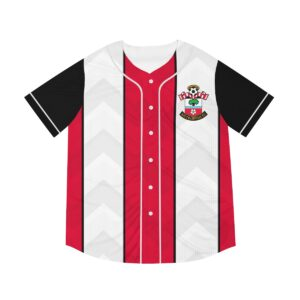
At the exact moment global attention has shifted toward the unprecedented fallout surrounding the club, the Pro Merch Southampton Collection arrives as both a reflection of Southampton’s deeply loyal supporter culture and a reminder of how emotionally invested football fans remain even when their clubs are consumed by chaos, controversy, and institutional embarrassment.
The so-called “Spygate” scandal surrounding Southampton has become one of the defining football stories of the year because it contains every ingredient capable of capturing worldwide attention: covert surveillance, panicked escapes, playoff implications, massive financial stakes, managerial fallout, league investigations, and a sporting punishment severe enough to completely alter the future of an entire organization.
At the center of the controversy sits Southampton manager Tonda Eckert, whose alleged decision to send a junior analyst intern to secretly observe and record Middlesbrough F.C. training sessions has triggered one of the harshest disciplinary responses English football has issued in years.
The details sound almost cinematic.
According to the now-explosive allegations, the Southampton intern positioned himself hidden among trees and bushes near Middlesbrough’s private training facility while wearing headphones and using a smartphone to film players during tactical drills. The primary objective reportedly centered on determining whether Middlesbrough midfielder Hayden Hackney had fully recovered from injury ahead of the critical playoff matchup.
In isolation, the incident already would have generated enormous headlines. But what transformed the story into full-scale football theater was what happened after Middlesbrough staff discovered the operation.
When confronted, the intern allegedly panicked and fled the scene by sprinting across a nearby golf course before escaping into the golf club’s public restroom facilities. According to reports surrounding the incident, he then completely changed clothes inside the bathrooms in an apparent attempt to disguise himself before fleeing the area altogether.
The absurdity of the sequence immediately sent shockwaves across football media because it combined elite-level professional sports pressure with a sequence of events that sounded closer to a comedy-thriller than a Championship playoff preparation story.
Yet beneath the bizarre imagery sat an enormously serious violation.
English football regulations maintain strict protections regarding opponent privacy during final match preparations, particularly within seventy-two hours of kickoff. The rules are designed specifically to preserve competitive integrity and prevent clubs from obtaining illegal tactical advantages through covert observation or surveillance.
Once Middlesbrough formally reported the incident to the English Football League, investigators rapidly traced the operation back to Southampton. What initially appeared to be a rogue incident quickly escalated into something far more damaging once league officials reportedly uncovered evidence suggesting the behavior extended beyond a single match.
According to the investigation findings, Southampton admitted not only to spying on Middlesbrough before the playoffs, but also to conducting unauthorized surveillance operations involving Oxford United F.C. earlier in the season and Ipswich Town F.C. during another critical period of the campaign.
At that point, league officials no longer viewed the matter as an isolated lapse in judgment.
The EFL instead characterized the operation as a deliberate, organized strategy originating from the highest levels of club leadership. That distinction proved catastrophic for Southampton because it fundamentally altered the disciplinary framework surrounding the case.
On May 19, the independent commission overseeing the matter delivered one of the most devastating punishments imaginable.
Southampton was officially disqualified from the playoffs entirely.
The consequences immediately sent shockwaves through English football because promotion from the Championship into the Premier League represents one of the most financially transformative achievements in global sports. Premier League promotion carries enormous broadcast revenue increases, sponsorship expansion, worldwide visibility growth, and long-term commercial opportunities that can reshape the trajectory of entire organizations for years.
For Southampton, the playoff removal effectively destroyed what many analysts viewed as a potential $250 million pathway back into English football’s top tier.
The punishment did not stop there.
The club also received a four-point deduction heading into next season, placing Southampton immediately behind competitors before the campaign even begins. Even more dramatically, manager Tonda Eckert now reportedly faces the possibility of a complete ban from football operations, a staggering outcome considering how rapidly his managerial reputation had risen during Southampton’s playoff push.
The scandal has instantly become one of the most polarizing debates in English football because it touches on deeper anxieties surrounding modern sports culture itself.
Football at the Championship and Premier League levels has evolved into an ecosystem of extreme data analysis, tactical preparation, biometric tracking, psychological optimization, and hyper-competitive scouting infrastructure. Marginal advantages are pursued relentlessly. Clubs invest millions attempting to gain tiny edges capable of deciding promotion races, relegation battles, and championship pursuits.
The Southampton situation represents what happens when that obsession crosses into ethically and legally prohibited territory.
In many ways, the scandal reflects the broader paranoia embedded throughout elite football today. Managers obsess over tactical secrecy. Clubs close training sessions to media. Players receive instructions regarding social media activity and public visibility before major matches. Entire departments exist solely to monitor opponent tendencies and strategic patterns.
The difference is that nearly all legitimate preparation occurs within clearly defined competitive boundaries.
Southampton’s alleged actions shattered those boundaries entirely.
That tension between football obsession and institutional overreach is part of the reason the story has exploded internationally. Supporters across Europe, North America, and South America immediately recognized the psychological reality behind the scandal even while condemning the methods themselves. Football’s pressure ecosystem is so intense that the temptation to seek illegal informational advantages becomes understandable even when entirely unacceptable.
For Southampton supporters specifically, the emotional impact has been brutal because the club had been building significant momentum toward a return to top-flight football. The organization carries deep historical roots within English football culture and maintains one of the sport’s most respected developmental traditions, having produced or nurtured countless elite players throughout modern football history.
The club’s identity has long revolved around resilience, smart recruitment, academy development, and tactical progression. That makes the scandal especially painful because it directly conflicts with the values many supporters associate with Southampton’s traditional football philosophy.
Yet despite the institutional embarrassment and league sanctions, fan culture surrounding Southampton remains extraordinarily passionate. Football supporters rarely abandon their clubs during controversy. In many cases, difficult periods actually strengthen emotional loyalty between supporters and teams because fandom in global football operates less like entertainment consumption and more like inherited identity.
That emotional intensity is precisely why the Pro Merch Southampton Collection arrives during such a fascinating moment in the club’s modern history.
Football merchandise has never simply been about apparel. It represents belonging. Identity. Geography. Generational attachment. During periods of controversy or adversity, supporters often become even more visually connected to club culture because public loyalty itself becomes emotionally meaningful.
Southampton’s fan base now enters a profoundly uncertain era. Questions surrounding management stability, league recovery, roster retention, and future promotion viability suddenly dominate every conversation surrounding the club. The playoff dream evaporated overnight, replaced by investigations, disciplinary headlines, and existential uncertainty about the organization’s direction.
Yet football history repeatedly demonstrates that moments of collapse often become the emotional foundation for future resurgence.
English football supporters understand suffering as part of club identity. Relegations, scandals, financial crises, ownership battles, managerial collapses, and controversial league punishments have shaped countless historic clubs throughout the sport’s history. The emotional endurance of fan bases is one of football’s defining cultural characteristics.
Southampton now faces the challenge of rebuilding credibility while simultaneously navigating one of the most humiliating episodes in recent EFL history. The road ahead will be extraordinarily difficult. League scrutiny will remain intense. Opposing supporters will weaponize the scandal relentlessly. Media attention will continue dissecting every organizational decision for months.
But football also moves quickly.
New seasons create new narratives. New managers emerge. New players redefine club identity. Redemption arcs are embedded deeply into football culture because the sport’s emotional volatility allows organizations to rise from chaos remarkably fast when properly rebuilt.
For now, however, the scandal remains impossible to ignore.
The image of an intern hiding in bushes filming private training sessions before fleeing across a golf course and changing disguises in a public bathroom has already secured permanent status within football folklore. It is bizarre, embarrassing, surreal, and deeply consequential all at once.
At the same time, the broader Southampton story remains larger than a single scandal. The club still represents generations of football culture, devoted supporters, and one of England’s historically significant football institutions. The emotional relationship between club and supporters survives even amid extraordinary controversy.
The Pro Merch Southampton Collection therefore arrives at a uniquely charged moment where football drama, club identity, scandal, loyalty, and cultural relevance have all collided simultaneously. In the modern sports landscape, very few stories capture global attention quite like football controversy, and Southampton has suddenly become the center of one of the wildest chapters English football has witnessed in years.

 Cart is empty