Swing for the Fences: The 2026 MLB Home Run Derby at Citizens Bank Park Is Everything Baseball Does Best, and Pro Merch Has the Gear to Prove You Were There

Swing for the Fences: The 2026 MLB Home Run Derby at Citizens Bank Park Is Everything Baseball Does Best, and Pro Merch Has the Gear to Prove You Were There

There is a particular kind of electricity that settles over a baseball stadium on Home Run Derby night that no other event in sports quite replicates. It is not the tension of a seventh game or the quiet anticipation of a no-hitter in the eighth inning. It is something looser and louder and more purely joyful than any of that, a shared agreement between the players on the field and the crowd in the seats that for one evening the entire game can be reduced to its most primal and universally satisfying element: a round bat meeting a round ball, struck with maximum force, launched on a trajectory that defies the ordinary geometry of a ballpark and reminds everyone watching why this sport captured the American imagination in the first place. The 2026 MLB Home Run Derby, kicking off tonight at 8:00 PM Eastern Time from Citizens Bank Park in Philadelphia, streaming exclusively on Netflix, has every ingredient it needs to be one of the most memorable editions in the history of the event. The venue is perfect, the field is outstanding, the format has been boldly reimagined, and the city hosting it is exactly the kind of city that makes that kind of night feel like an occasion. And Pro Merch, the premier destination for officially licensed MLB merchandise across all 30 franchises and 885 products, is the place to gear up before, during, and after every moment of it.

This is the full story of the 2026 Home Run Derby. The participants, the format, the venue, the stakes, and the merchandise that lets every baseball fan mark the moment properly.


Citizens Bank Park: The Second Best Home Run Park in Baseball Is About to Find Out What That Really Means
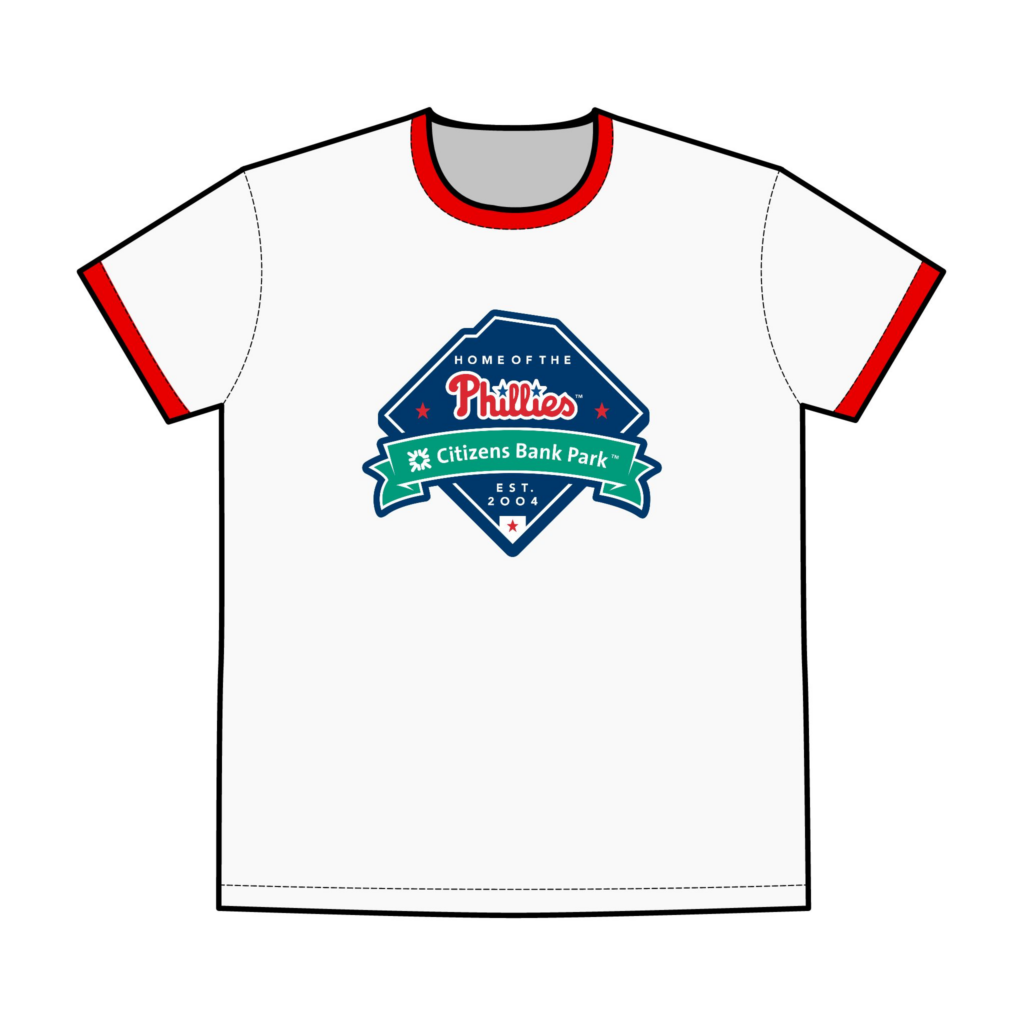
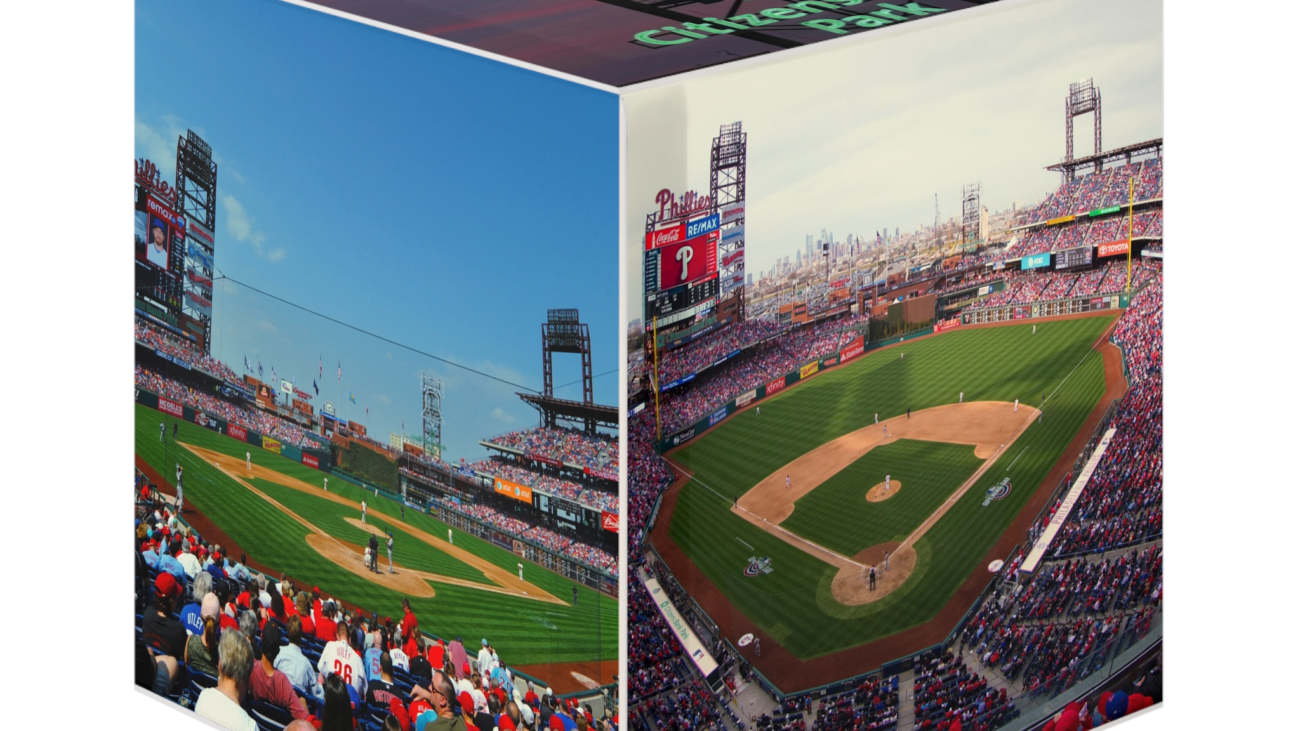
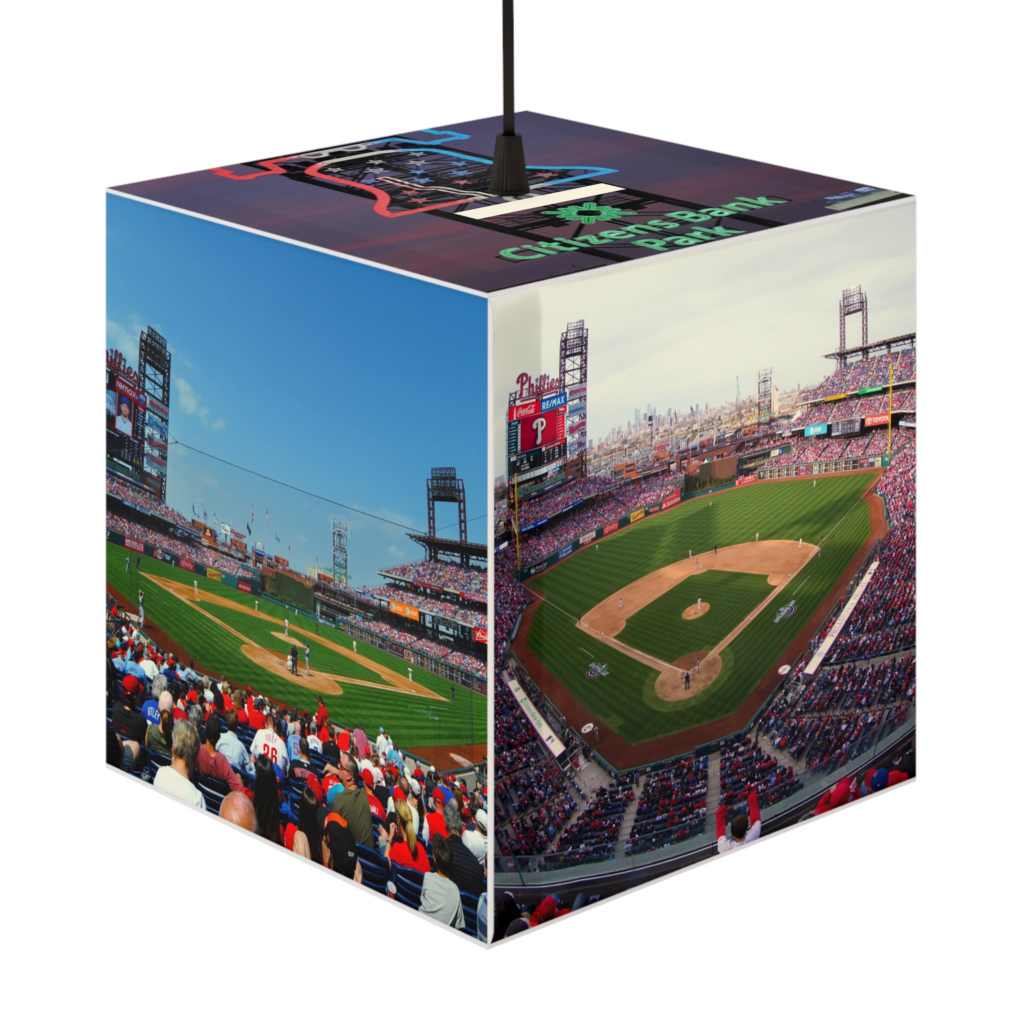
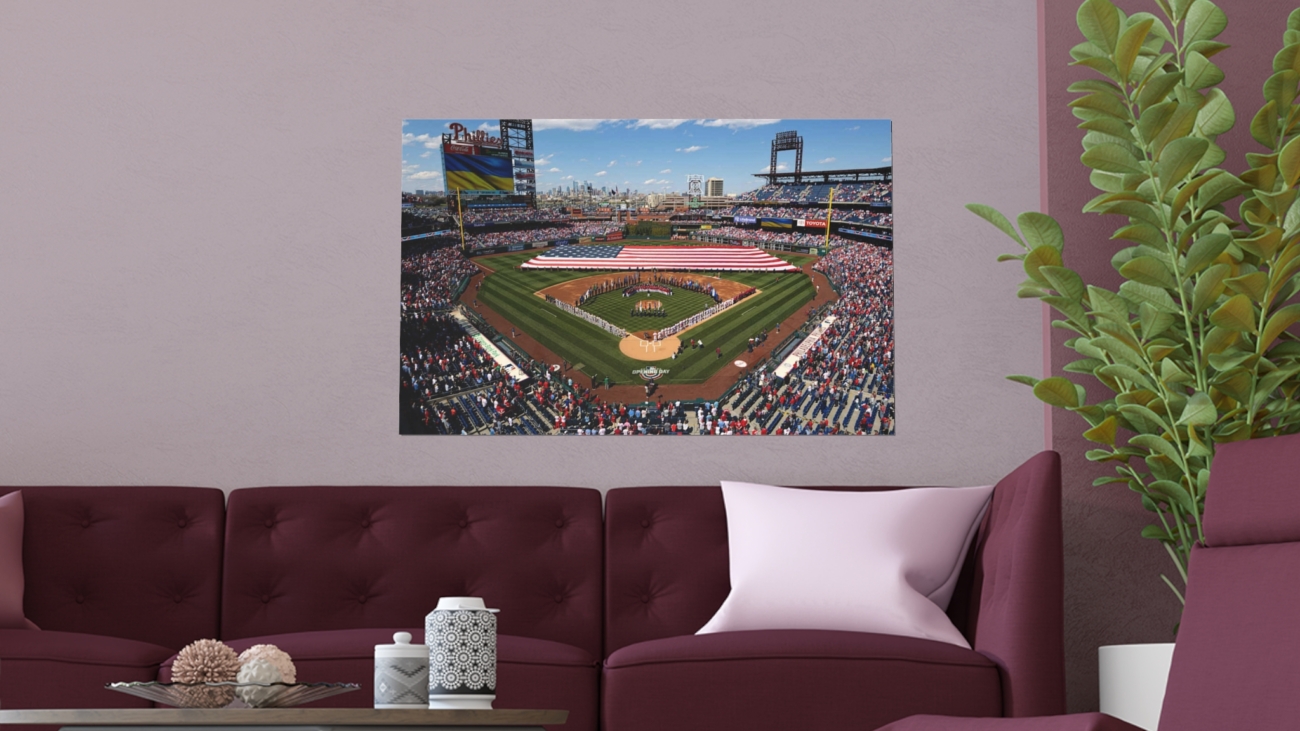
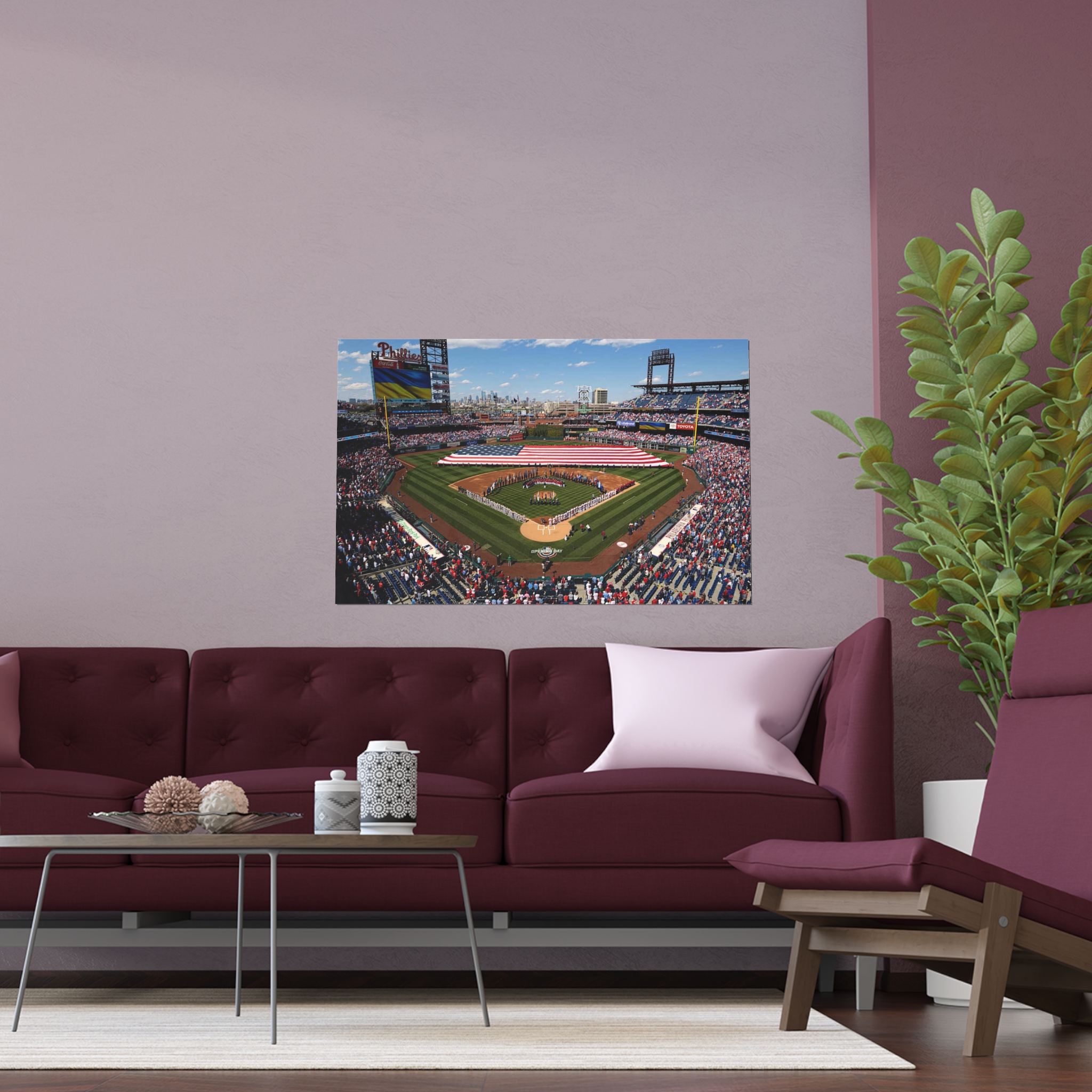
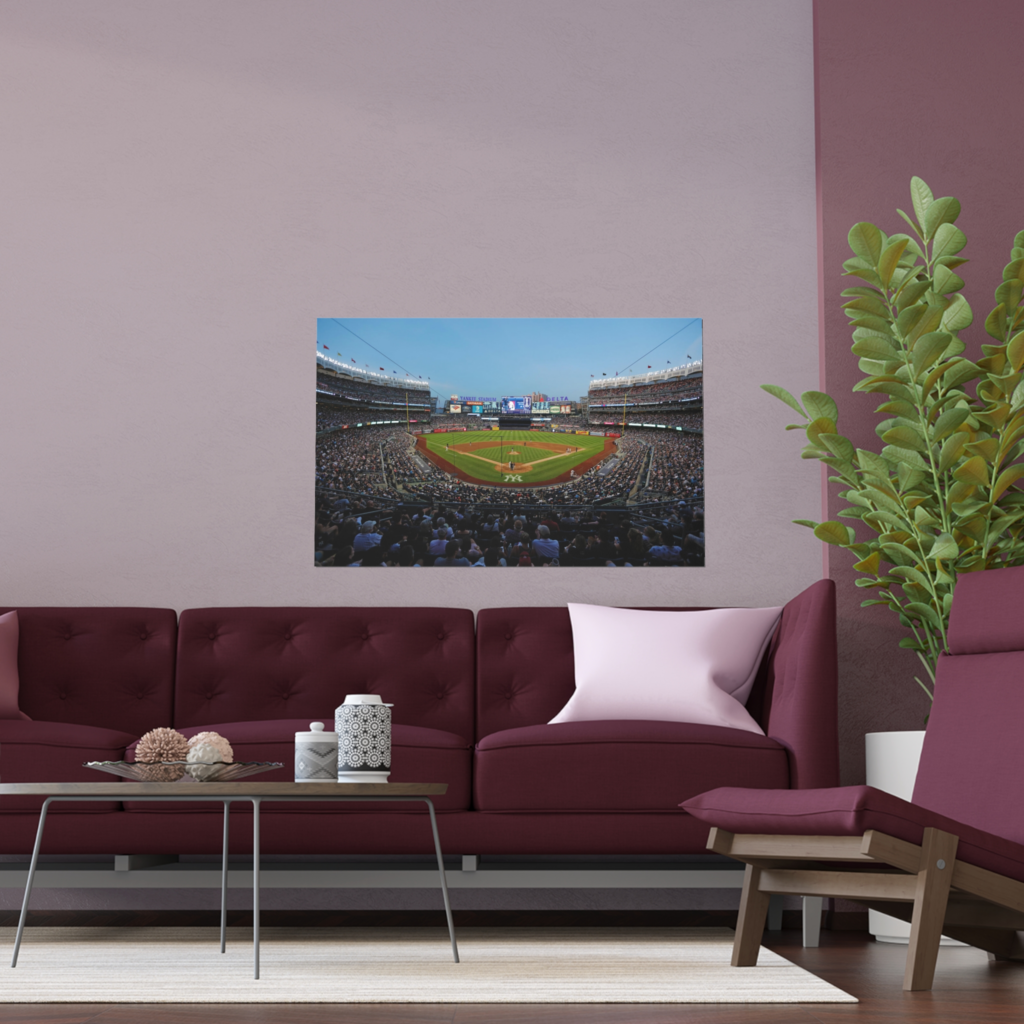
Before discussing the eight sluggers who will take their hacks tonight, it is worth spending a moment with the venue itself, because Citizens Bank Park is not just any backdrop for a Home Run Derby. According to park factor analytics, Citizens Bank Park rates as the second most homer-friendly environment in all of Major League Baseball for left-handed hitters, a designation that carries enormous practical significance for an event built entirely around the ability to hit baseballs over fences and into the crowd. The park sits in South Philadelphia, a neighborhood whose relationship with sports is among the most intense and personally held in the country, and it was built with the dimensions and the air conditions that have made it one of the most legitimately dangerous environments in the sport for a pitcher trying to keep the ball in the yard. For a Home Run Derby participant stepping into the right-handed batter’s box, the left field porch at Citizens Bank Park is an invitation. For a left-handed hitter like Kyle Schwarber, it is practically a dare.

The city of Philadelphia has been hosting major events with a particular brand of enthusiastic ownership for generations, and this All-Star Week is no different. The crowd that fills Citizens Bank Park tonight will not be a polite, appreciative audience watching an exhibition. It will be Philadelphia, which means it will be loud, opinionated, knowledgeable, and entirely capable of determining by the third or fourth swing of the evening which players it has adopted as its own and which it plans to evaluate with the careful critical eye that Philadelphia reserves for anyone who has not yet fully earned its trust. Bryce Harper has earned it. Kyle Schwarber has earned it. The other six participants will have approximately twenty swings to make a convincing case. The Philadelphia Phillies section at Pro Merch carries the gear for the host city’s fans heading into the most anticipated baseball event the city has hosted in years.


The Eight Participants: A Field That Covers Every Corner of the Sport

The 2026 Home Run Derby field is eight players deep, and the range of stories and backgrounds and organizational affiliations it represents is one of the reasons the event has the specific feel of a genuine cross-sport celebration rather than a showcase for a single franchise or a single demographic of fan. Every one of these eight hitters brings something distinct, and understanding what each of them represents going into tonight makes the event considerably richer to watch.
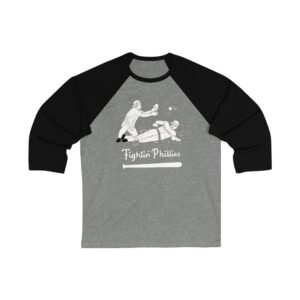
Kyle Schwarber leads the field in home runs this season with 32 and brings to this Derby the specific advantage of being a left-handed pull hitter competing in the second-most homer-friendly park for left-handed hitters in baseball, in his own home stadium, in front of a crowd that loves him with the specific passion that Philadelphia reserves for players who fit the city’s identity. Schwarber is not a subtle home run hitter. He does not manufacture distance through bat speed and launch angle optimization in the quiet analytical way that the modern game often produces power. He punishes baseballs with a directness and a physical force that is immediately apparent to anyone watching, and Citizens Bank Park’s left field dimensions are almost designed for what he does. His pitcher tonight is the Phillies’ assistant hitting coach, a professional arrangement that gives him a slightly different kind of trust than the family-member relationships several other participants have arranged, but a relationship built on thousands of repetitions of exactly the kind of pitch he will be seeing all night. If Schwarber does not win this Derby, it will be because one of the other seven participants was simply extraordinary, not because the conditions were anything less than ideal for him. Philadelphia Phillies fans have every reason to circle Schwarber as their man tonight.
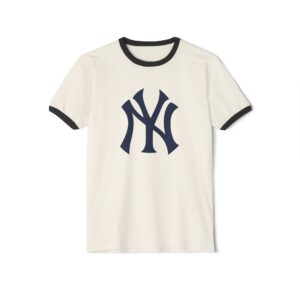
Ben Rice of the New York Yankees arrives with 29 home runs and the particular kind of momentum that comes from a breakout season in the most scrutinized baseball market in the country. Rice is having a year that has forced the sport to stop and pay attention to him, the kind of season where the numbers accumulate and the quality of the pitching he is facing makes the accumulation even more impressive, and the Derby format gives him an opportunity to demonstrate that what he has been doing in game situations translates to the pure power context of an exhibition. He will be getting pitches from his father tonight, a detail that appears in multiple participants’ setups and that speaks to the intimate, family-oriented character of the Derby at its best. A young Yankee slugger hitting with his dad throwing on the mound at Citizens Bank Park, competing against the hometown hero on one of the biggest stages in baseball, is the kind of story that the sport tells about itself at its most romantic. New York Yankees fans and the entire Pro Merch Yankees collection are ready for Rice’s moment.
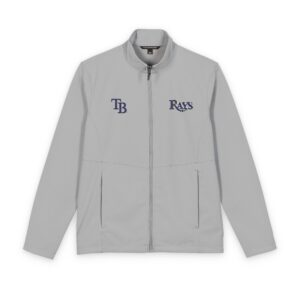
Junior Caminero of the Tampa Bay Rays brings 28 home runs and the specific kind of exciting unpredictability that very young, very powerful hitters carry into any environment. Caminero has the raw physical tools that make analytically minded baseball people use words like “generational,” and a Home Run Derby is one of the rare occasions where the sport simply gets out of the way and lets those tools express themselves without the strategic complexity that regulates them during the regular season.
At Citizens Bank Park, with its inviting dimensions and its partisan crowd, Caminero has every opportunity to introduce himself to a national audience in the most dramatic possible fashion.

Jordan Walker of the St. Louis Cardinals enters with 22 home runs and the physical frame and swing mechanics that have always suggested this kind of power output, even in seasons where the results were more inconsistent. Walker at his best is one of the most impressive physical specimens in the sport, a player with the arm, the speed, and the bat that could develop into a perennial Derby-caliber participant for years to come.
Tonight is his first invitation to this stage, and what he does with it will say something important about where his career is heading.

Bryce Harper, the host city’s icon, brings 20 home runs and the specific emotional weight of competing in his own stadium in front of the city that adopted him when he signed as a free agent and that has never once given him reason to regret the decision. Harper’s career has been defined by moments of theatrical excellence on the biggest stages, and the All-Star Home Run Derby at Citizens Bank Park is as theatrical and as large a stage as baseball provides outside the World Series. His selection for the Derby companion to his Legend Pick placement on the All-Star roster is entirely consistent with the spirit of this week in Philadelphia. The city wants to celebrate him, and tonight is the most public and the loudest possible opportunity to do exactly that. Philadelphia Phillies fans at the Pro Merch store are celebrating alongside him.
Willson Contreras of the Boston Red Sox brings 20 home runs and the veteran’s composure that separates players who have been on stages like this before from those who are experiencing it for the first time. Contreras was one of the more notable All-Star snubs in the initial roster announcement, his exclusion from the official game despite elite numbers at a thin position generating genuine controversy among fans and analysts. His Derby invitation offers a partial remedy: a national platform, a nationally streamed event, an opportunity to perform in front of the largest possible audience and remind the selection committee and the baseball world exactly what they left off the roster. Contreras is the kind of competitor who tends to be motivated by that kind of perceived slight rather than deflated by it.
Munetaka Murakami of the Chicago White Sox is one of the most fascinating participants in this field from a pure baseball history perspective. Murakami is one of the most celebrated sluggers in the history of Nippon Professional Baseball, a three-time home run champion in Japan and a player whose transition to Major League Baseball has been one of the most closely watched storylines of the season. Twenty home runs in his first MLB campaign, competing in a Home Run Derby at Citizens Bank Park with the entire sport watching, is the kind of narrative that the sport occasionally produces and that makes the Derby feel like something more than an exhibition.

Chicago White Sox fans at Pro Merch are watching a player who is writing his own American chapter in real time.
Jac Caglianone of the Kansas City Royals rounds out the field with 15 home runs and perhaps the most intriguing backstory of any participant. Caglianone was a two-way player in college, a legitimate left-handed pitching prospect whose hitting ability was so exceptional that the Royals faced a genuine organizational decision about how to deploy him. The decision to prioritize his bat has produced a player who hits with the kind of raw force that two-way athletes often generate when they commit fully to one discipline, and the raw power in his swing has already generated comparisons to left-handed hitters with the strength to drive balls to right field at Citizens Bank Park with consistency. His father is throwing to him tonight, adding the same personal family dimension that Ben Rice’s setup carries, and the combination of youth, raw power, and personal stakes makes Caglianone one of the most compelling sleeper candidates in the field. Kansas City Royals fans who have been watching this player develop all season know exactly why his invitation makes sense.


The New 2026 Format: Baseball Finally Gets the Derby Right
Major League Baseball has completely overhauled the Home Run Derby format for 2026, and the changes are, without exaggeration, the most significant structural revision the event has undergone in a decade. The pitch clock, which had been incorporated into the Derby format in recent years and which generated consistent criticism for imposing an artificial urgency on an event whose appeal is entirely about watching human beings hit baseballs as far as possible, has been eliminated entirely. What replaces it is a format that is simultaneously simpler and more dramatically satisfying, and the reasoning behind each element of it reflects a genuine understanding of what the Derby is supposed to be and why people watch it.

Round 1 operates on a pool-play basis that is new for 2026. Rather than head-to-head brackets from the opening round, all eight hitters bat in a single group format, each receiving exactly 20 swings. The critical detail that distinguishes this format from the older versions is absolute: every swing counts against the 20-swing limit, whether it produces a home run, a miss, or a foul ball. There are no outs, no redo opportunities, no bonus time for reaching distance thresholds. Twenty swings, full stop, and the number of balls that clear the fence in those 20 swings determines whether a hitter advances. The four participants with the highest home run totals in Round 1 advance to the semifinals, with ties broken by whoever hit the single longest home run during the round, giving hitters an incentive to take their absolute hardest swing on every pitch rather than managing the pace of their session.
The semifinals and championship round both operate on a 15-swing format with head-to-head seeding: the top finisher from Round 1 faces the fourth-place finisher, and the second-place finisher faces the third-place finisher, with the winners meeting in the final. Any tie in the semifinals or finals results in an immediate three-swing swing-off, creating a sudden-death dynamic that is as clean and tension-filled as any tiebreaker format in sports.

Perhaps the most genuinely brilliant element of the new format is the Final Swing rule, a provision that has no precedent in Derby history and that will almost certainly produce the single most memorable moment of the evening. Under the Final Swing rule, a round cannot end on a successful home run. If any participant hits a home run on the very last designated swing of their allotment, their session stays alive. They continue swinging, one pitch at a time, until they fail to hit a home run. The implications are extraordinary: a hitter who is locked in, who has found their timing on a particular pitcher’s delivery, who has the mechanical rhythm going that sometimes visits elite power hitters in extended batting practice sessions, could extend their round indefinitely as long as they keep launching balls over the fence. The possibility of a Derby participant hitting fifteen or twenty consecutive home runs on extended Final Swing time, in front of a Philadelphia crowd that is already at full volume, is not a hypothetical to be dismissed. It is a realistic scenario, and the format has been specifically designed to allow and encourage it.


The Human Element: Dads on the Mound and Perfect Pitches Down the Middle

One of the details about the Home Run Derby that casual fans sometimes underestimate is how precisely engineered the pitching arrangement is for each participant, and the 2026 edition makes that engineering more personal and more emotional than ever. Each hitter brings his own pitcher, and the pitcher each participant has chosen reveals something about the relationship between mechanical perfection and personal trust that underlies every swing of the Derby.

The ideal Derby pitch is what hitters and coaches universally call a “cookie”: a pitch delivered at a consistent, hittable speed directly through the center of the strike zone, with no movement, no deception, and no intention other than to be struck as hard as possible in the most favorable direction. The pitcher who can deliver that pitch with consistent repeatability, inning after inning, without varying the release point or the speed or the location in ways that disrupt a hitter’s timing, is worth more to a Derby participant than almost any other single factor. And the people most reliably capable of delivering that consistent pitch, the people who have spent decades watching a specific hitter’s mechanics and adjusting instinctively to his timing and his preferences, are often not coaches or teammates. They are fathers.

Ben Rice’s father will be on the mound at Citizens Bank Park throwing to his son tonight. Jac Caglianone’s father will be doing the same. The image of those relationships playing out on the biggest stage in baseball, in front of tens of millions of people watching on Netflix, with the crowd at Citizens Bank Park adding its own specific Philadelphia energy to the backdrop, is the kind of thing that the Derby does uniquely and that no other sports event replicates. Kyle Schwarber, using the Phillies’ assistant hitting coach in a slightly different arrangement, gains the professional precision of a coach who has spent hundreds of hours throwing batting practice to major league hitters, with all the mechanical consistency that professional repetition produces. The approaches are different. The goal is identical: perfect pitches, perfect timing, maximum distance.


The Pro Merch MLB Collection: 885 Products, 30 Teams, Every Franchise Represented at Every Level

The 2026 Home Run Derby is a celebration of baseball’s most joyful element, and Pro Merch is the celebration’s proper merchandise destination. The MLB collection at Pro Merch spans 885 products across all 30 franchises, making it the most comprehensive officially licensed Major League Baseball merchandise collection available from any single online retailer. Every team whose players are competing tonight, and every team whose fans are watching, has a fully stocked section at Pro Merch with the range of officially licensed gear that a serious baseball fan expects.

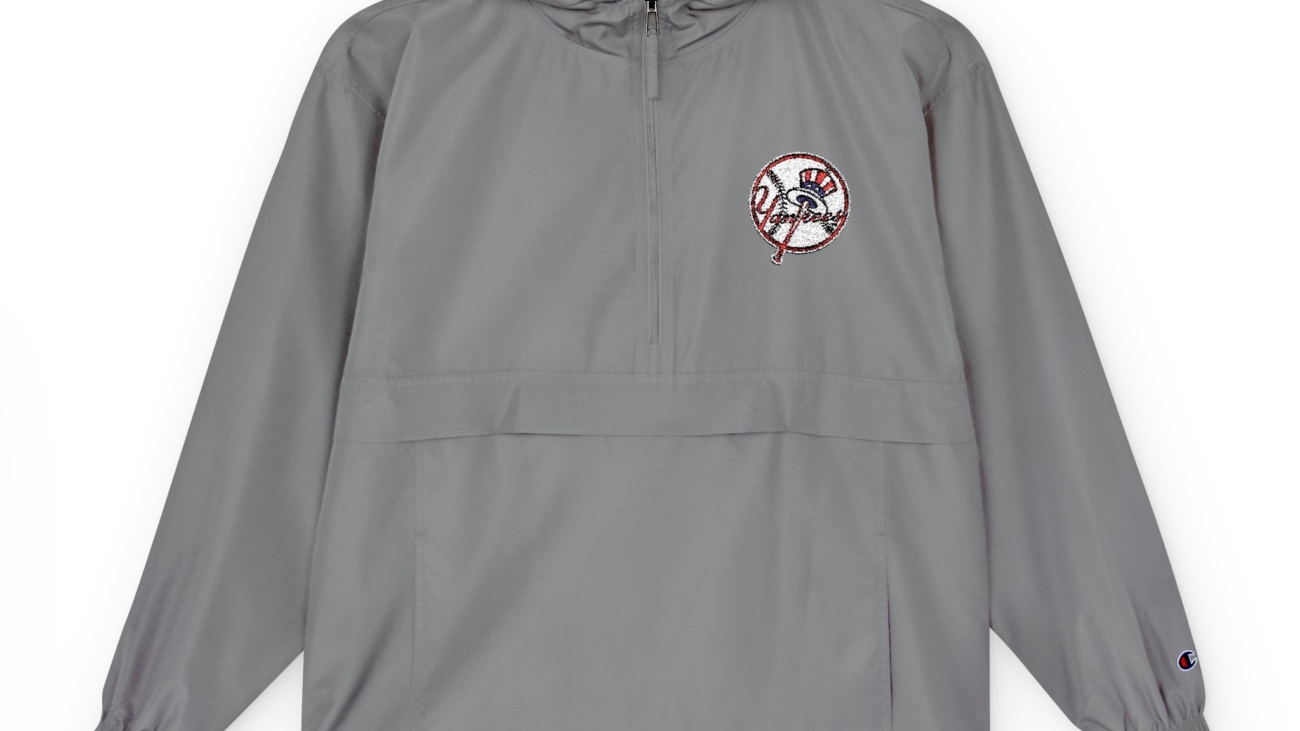
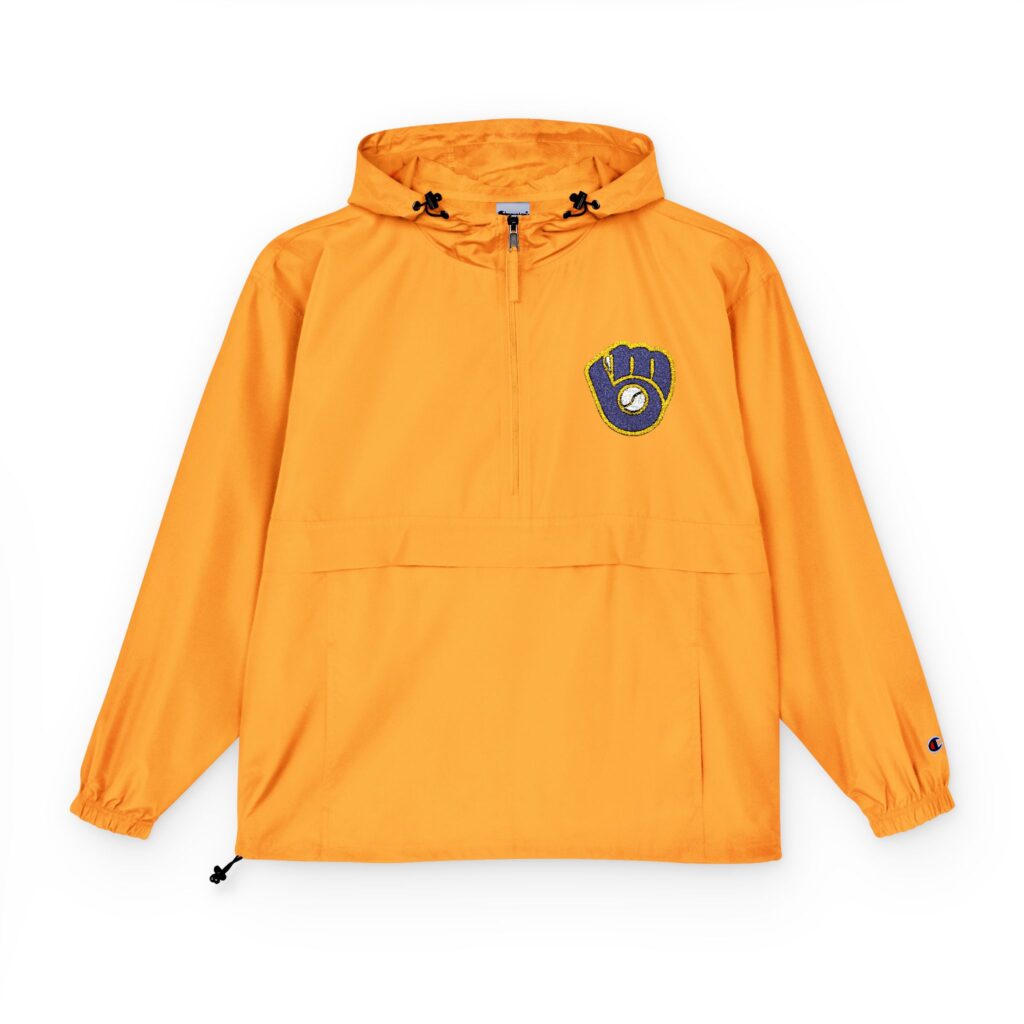
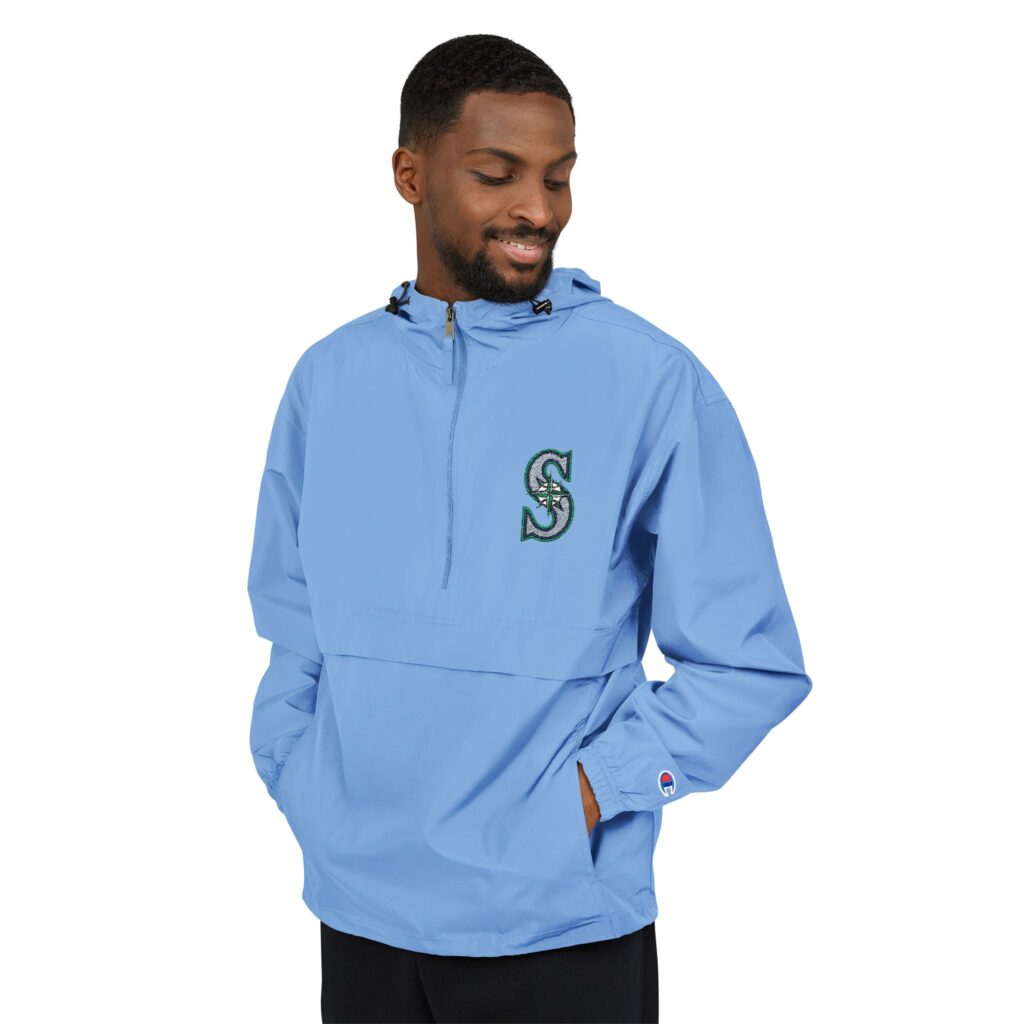
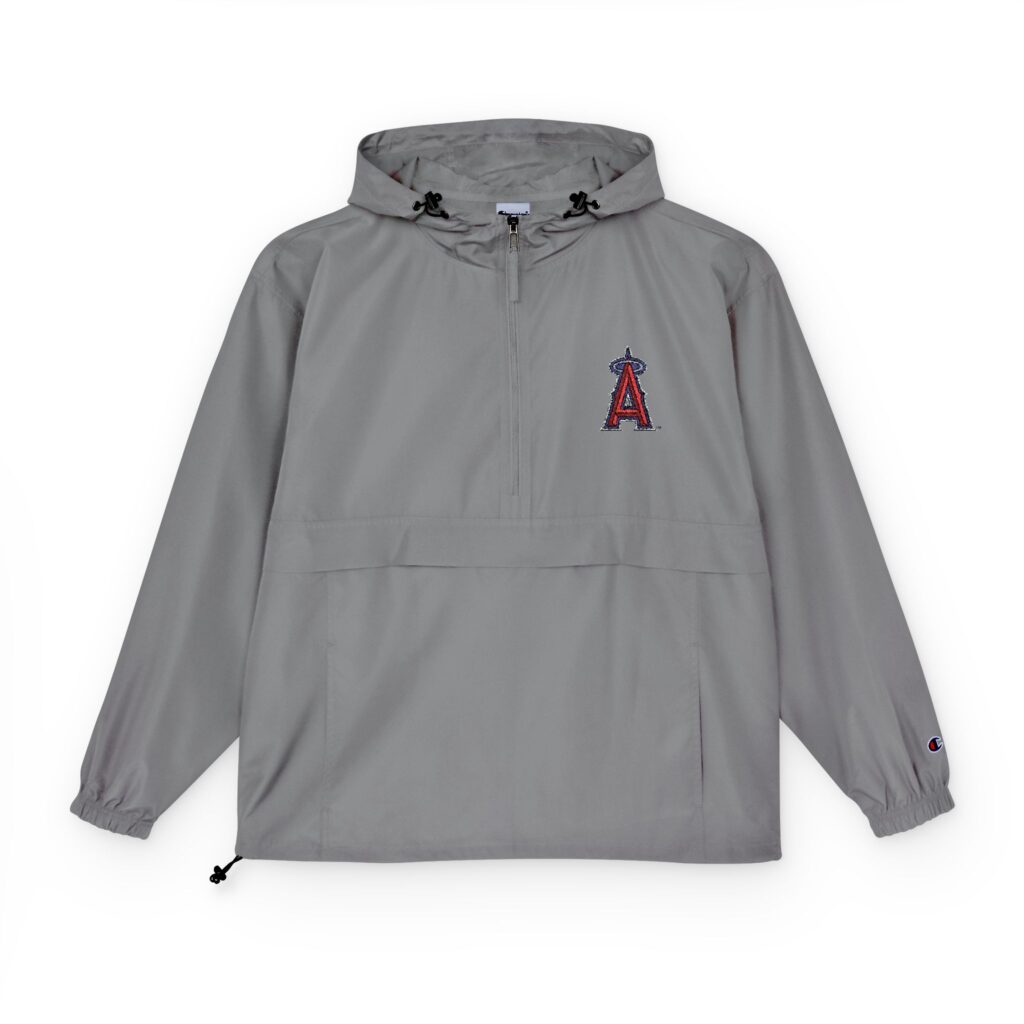
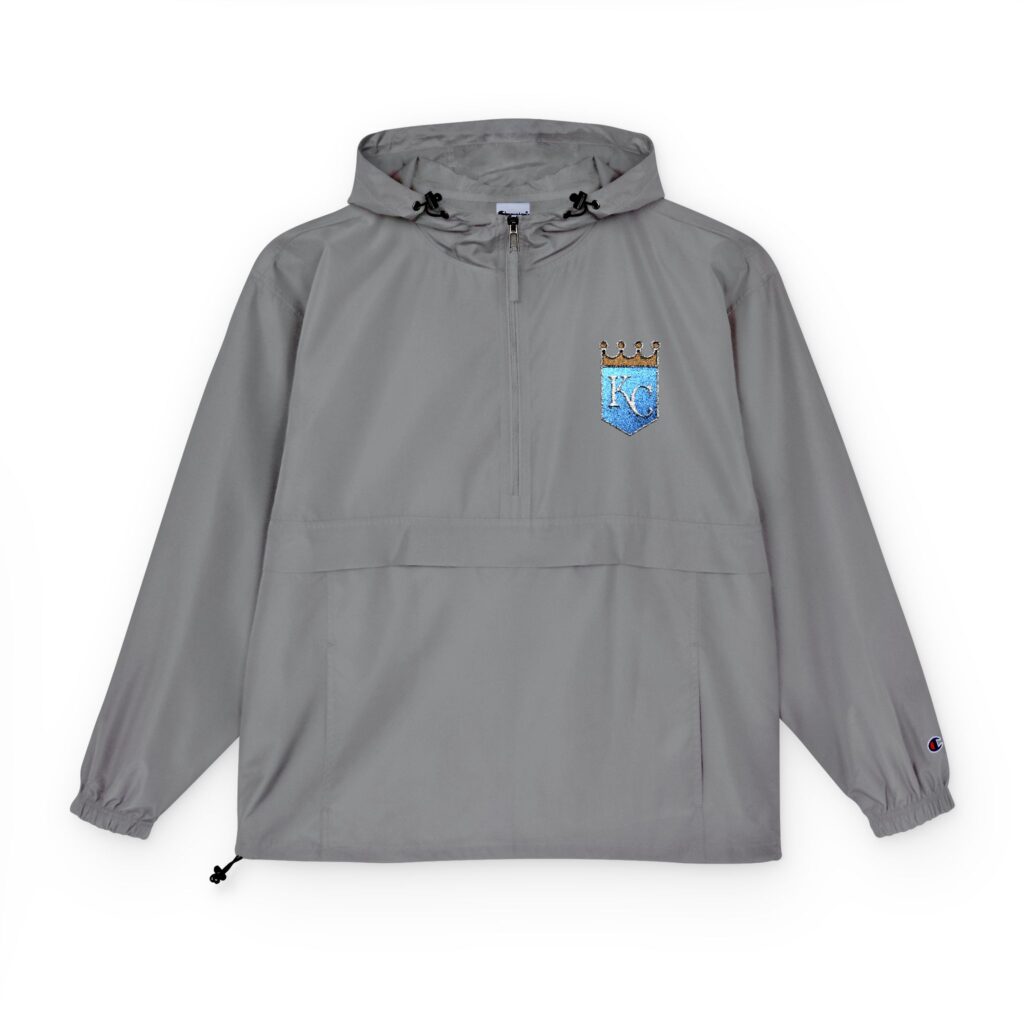
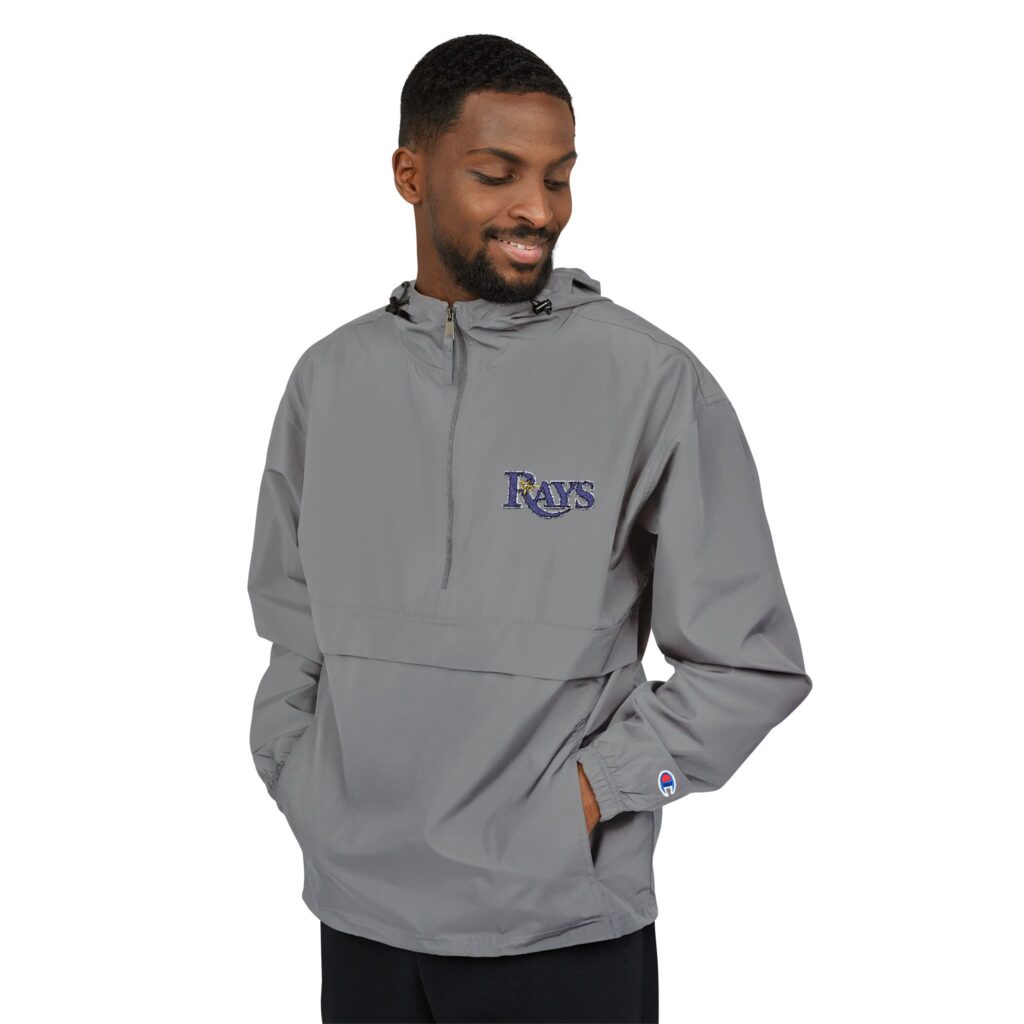
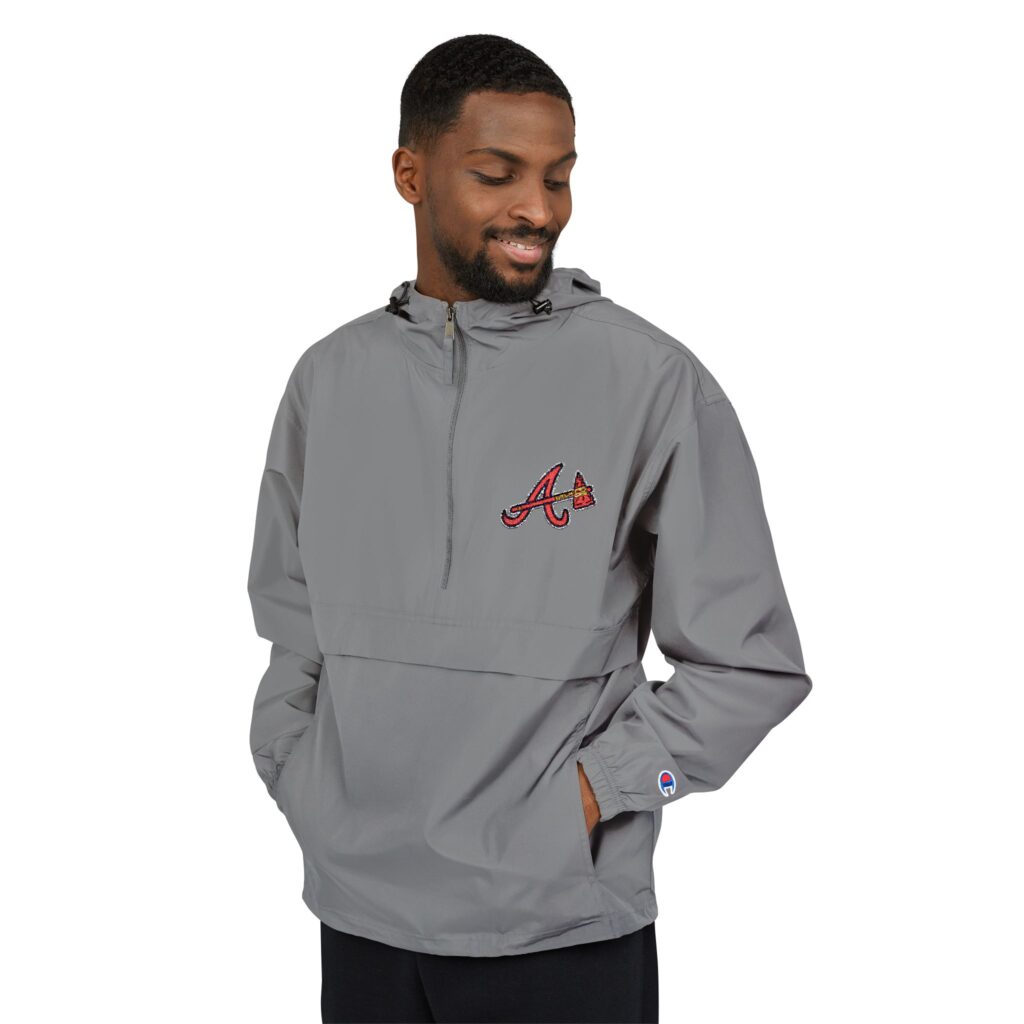
The anchor products in the MLB collection reflect Pro Merch’s commitment to quality over volume. The Champion Unisex Packable Anorak Jacket, priced from $69.98 to $73.97 depending on team and size, is one of the most useful and most well-made pieces of licensed baseball outerwear in the market. Champion has been producing athletic wear of genuine quality since 1919, and the Packable Anorak delivers exactly what the name promises: a lightweight, weather-resistant jacket that folds into itself for easy transport to a day game or a road trip, but that carries the team graphics, color accuracy, and construction quality that distinguish a real piece of fan apparel from a disposable souvenir. Available across the MLB catalog including the Los Angeles Dodgers, San Diego Padres, San Francisco Giants, Colorado Rockies, and Arizona Diamondbacks, with expansion across the full 30-team catalog continuing throughout the season.

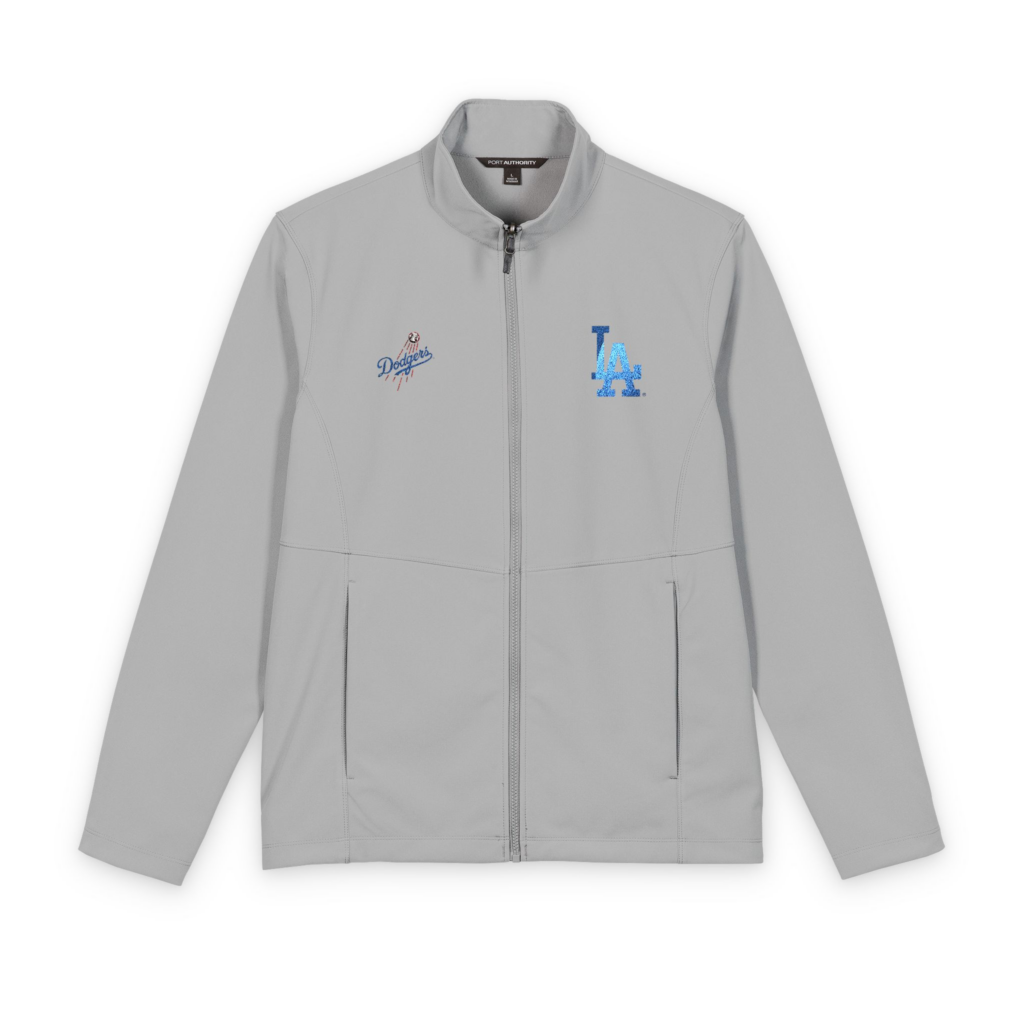
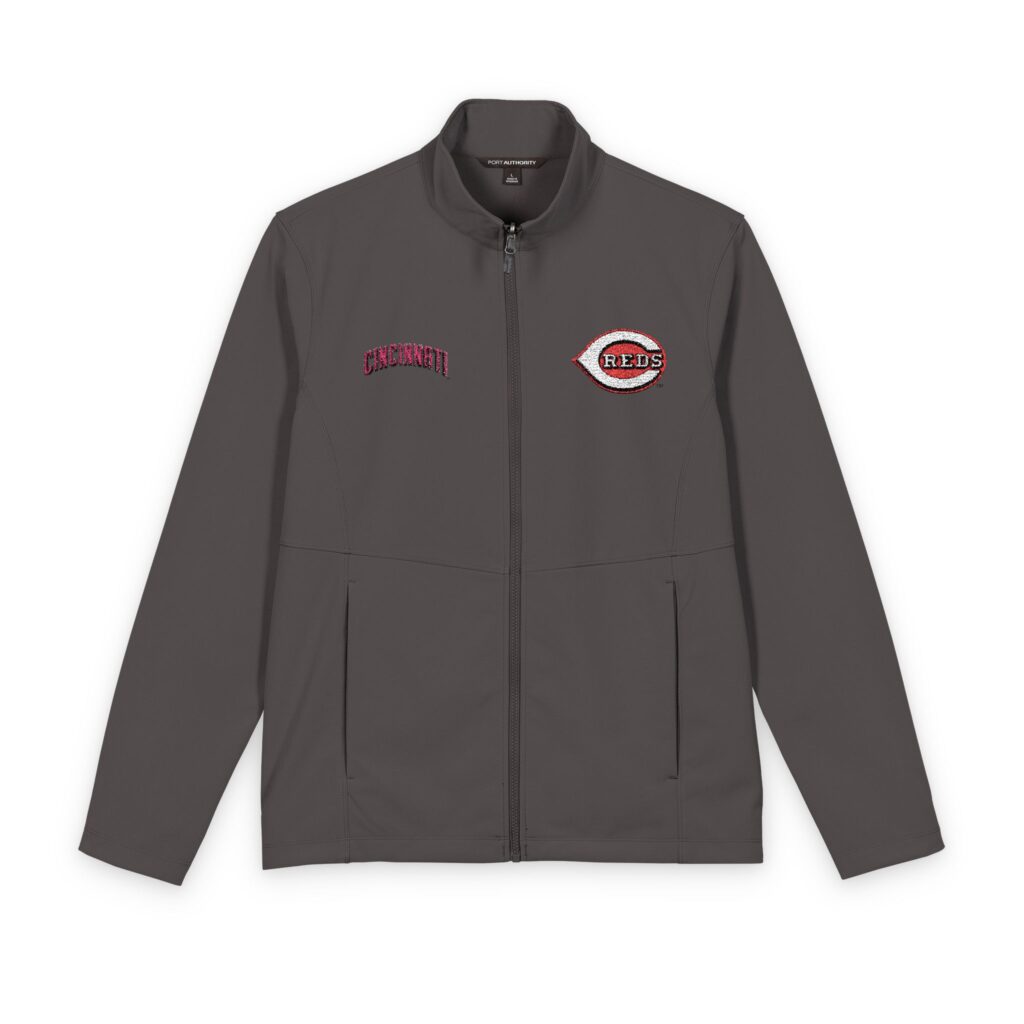
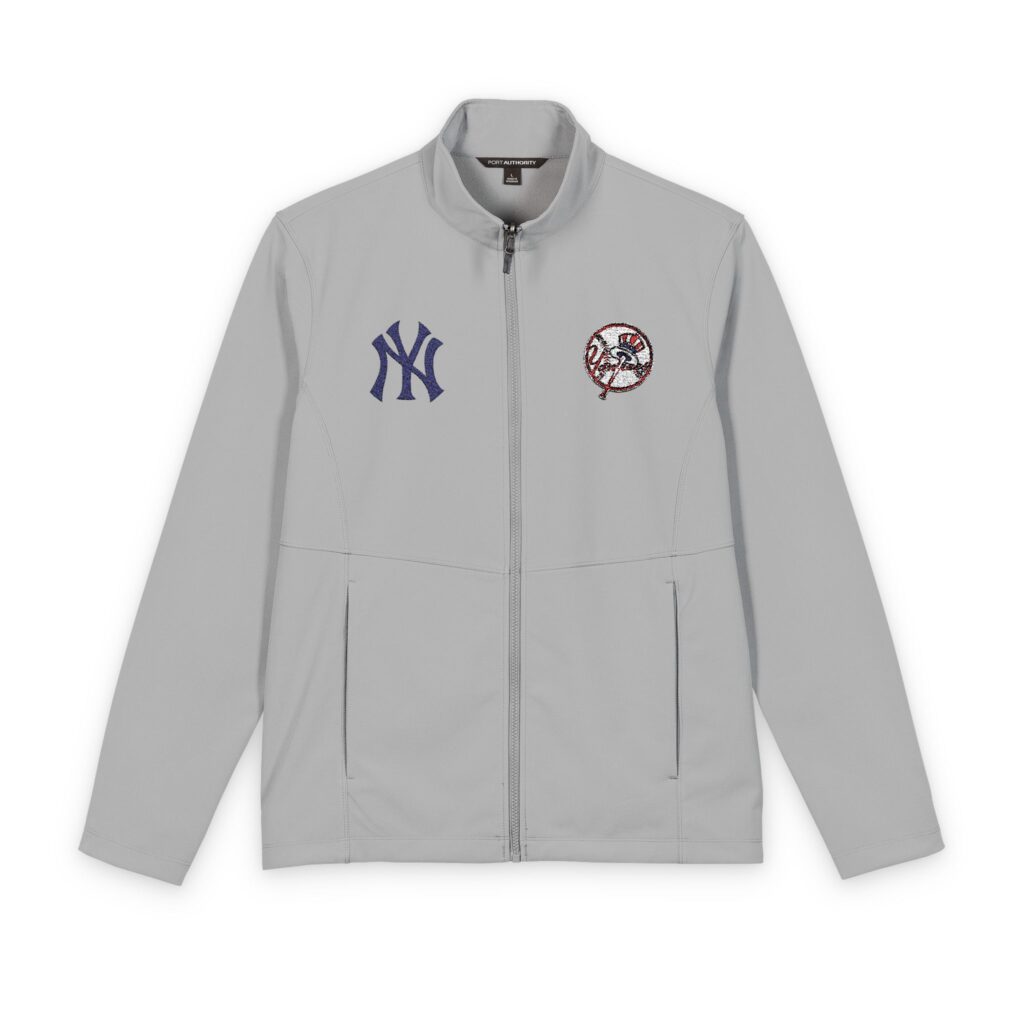
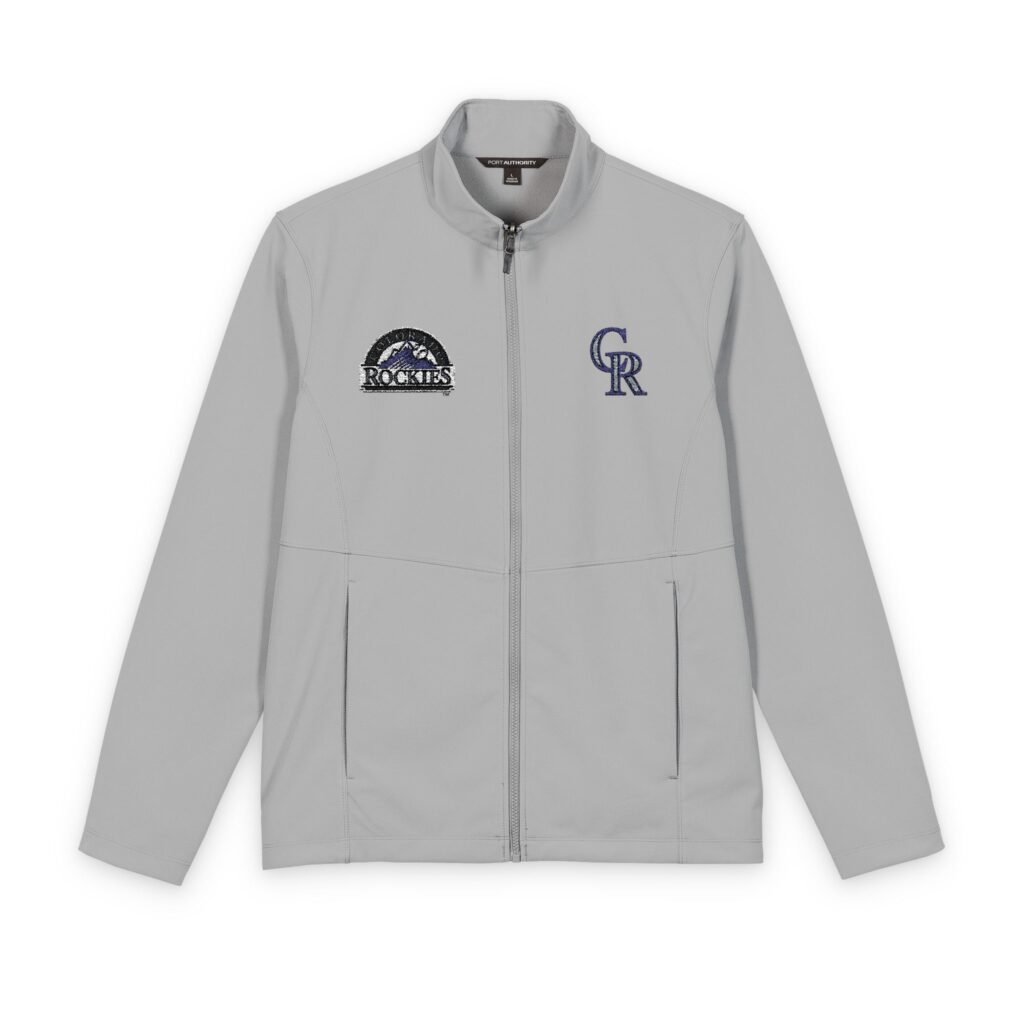
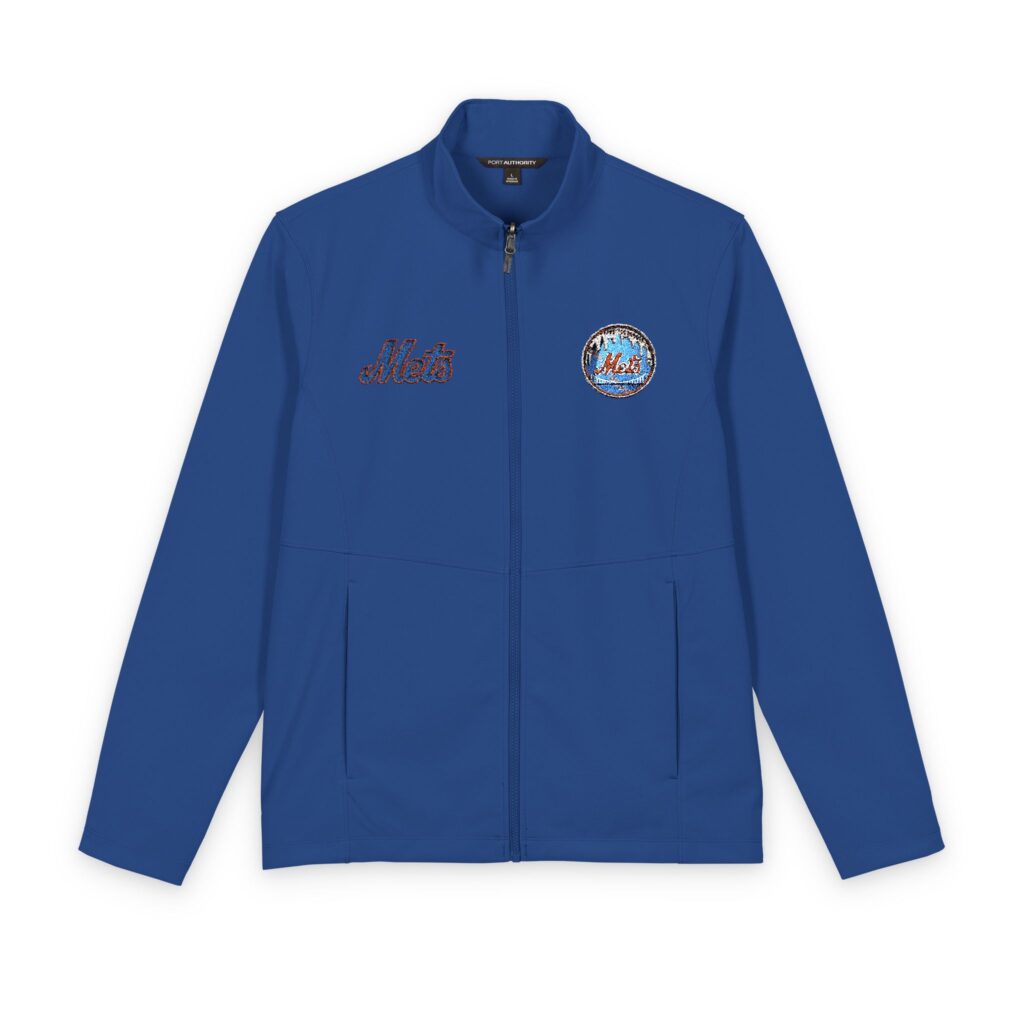
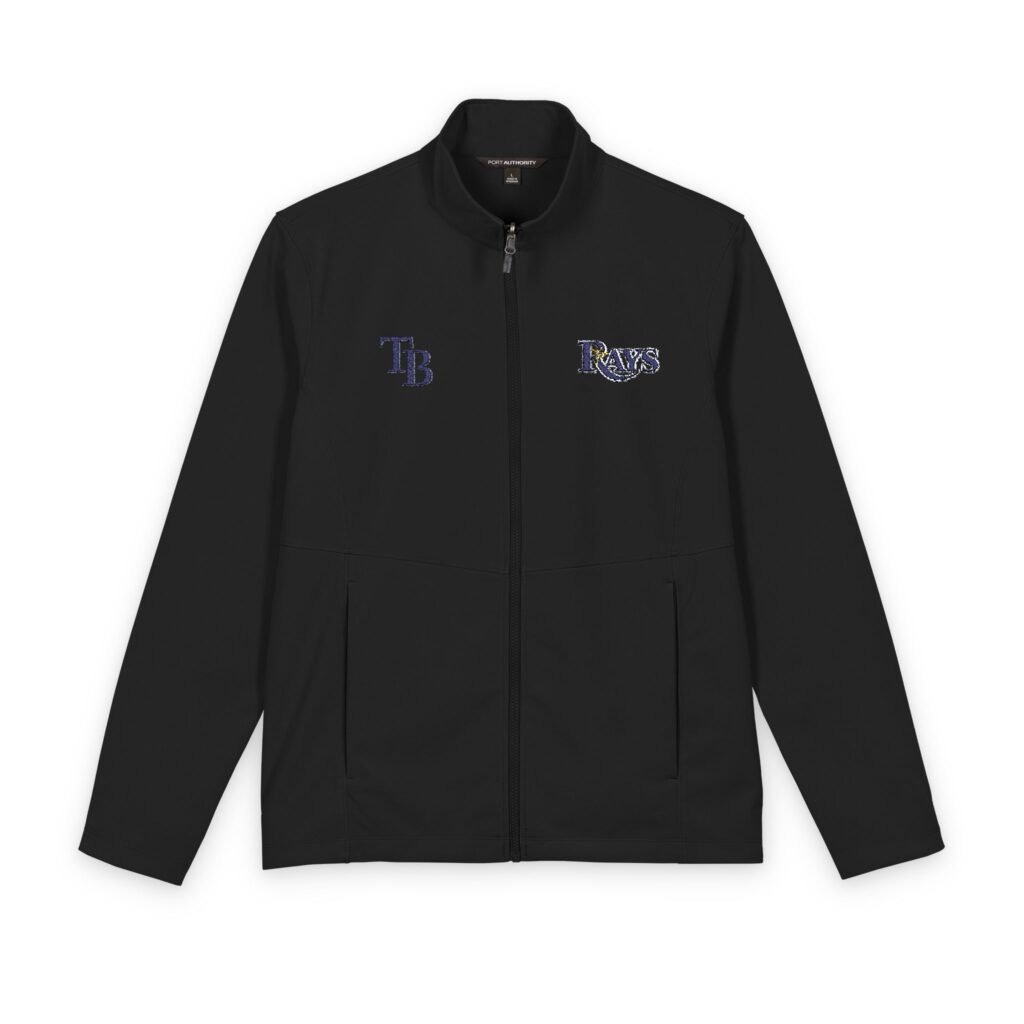
The Port Authority Men’s Collective Soft Shell Jacket occupies the premium position in the outerwear lineup, priced from $89.99 to $104.22 and delivering the polished, structured silhouette that translates from the stadium to any professional or social environment without losing the team identity that makes it worth wearing. Port Authority is known throughout the branded apparel world for producing pieces that balance finish with function, and the Collective Soft Shell reflects that reputation in every detail of its construction. Available for the Dodgers, Padres, Giants, Rockies, and additional teams across the catalog, it is the piece for the fan who wants to represent their team in something that holds up in any context without qualification or explanation.

Beyond these flagship outerwear pieces, the Pro Merch MLB catalog extends across hundreds of additional licensed products for each of the thirty franchises. The Atlanta Braves, Boston Red Sox, Chicago Cubs, Chicago White Sox, Cincinnati Reds, Cleveland Guardians, Detroit Tigers, Houston Astros, Kansas City Royals, Los Angeles Angels, Miami Marlins, Milwaukee Brewers, Minnesota Twins, New York Mets, New York Yankees, Oakland Athletics, Philadelphia Phillies, Pittsburgh Pirates, Seattle Mariners, St. Louis Cardinals, Tampa Bay Rays, Texas Rangers, Toronto Blue Jays, Washington Nationals, and Baltimore Orioles: all of them fully stocked, all of them properly licensed, all of them waiting for the fan who wants something worth owning rather than something merely available.

Pro Merch, a division of Sunset Entertainment & Media, has built its entire identity around the proposition that sports fans deserve merchandise that genuinely honors the teams and events it represents. That means working with brands that have earned their reputations, carrying products with the construction quality that justifies the price, and maintaining a catalog broad enough to serve every fan of every team regardless of where they live or who they root for. The phone line at 1.609.206.5763 and the email support at the store are both available for any questions about ordering, sizing, or product specifics.

Tonight, at Citizens Bank Park, baseball is going to be reduced to its purest and most celebratory form. Eight men with eight bats, one pitcher apiece chosen for maximum personal trust and mechanical reliability, 20 swings in Round 1 and 15 in the semifinals and finals, a Final Swing rule that could produce the longest single stretch of consecutive home runs the Derby has ever seen, and a Philadelphia crowd that has been waiting for exactly this moment in exactly this building with exactly these two Phillies in the field. The gear to mark the occasion is at Pro Merch. Shop the full MLB collection and the complete store at Pro-Merch.com, and then settle in for what promises to be one of the great Home Run Derby nights in the history of the Midsummer Classic.
Pro Merch Weekly: Messi Survives, Mbappé vs. Morocco Looms, Ohtani Hits 300, Wimbledon Reaches Its Fever Pitch, and the NBA Never Stops Moving — July 8, 2026

Pro Merch Weekly: Messi Survives, Mbappé vs. Morocco Looms, Ohtani Hits 300, Wimbledon Reaches Its Fever Pitch, and the NBA Never Stops Moving — July 8, 2026

There are weeks in sports when the headlines arrive in such volume and at such consequence that keeping up with them requires its own kind of stamina. This is one of those weeks. The 2026 FIFA World Cup is now in its quarterfinal stage, and the draw that has emerged from the chaos of the Round of 16 is setting the table for some of the most anticipated matches in the history of the tournament. Wimbledon is delivering the kind of semifinal weekend that tennis lovers spend the entire off-season dreaming about. Major League Baseball is producing individual performances of historic scale — Shohei Ohtani joining the 300 home run club, a player tying one of the sport’s most pristine consecutive at-bat records, and a pitching performance that shocked the defending champions. The NBA offseason continues to reshape the league with a six-team blockbuster that sends a veteran star back to the nation’s capital. And Pro Merch — the premier destination for licensed sports merchandise across every league, every team, and every tournament that matters — is here with the gear to mark every single moment of it.

This is the full story of the week in sports. Every game. Every match. Every headline. All of it.


The 2026 FIFA World Cup Quarterfinals: Argentina Survives, the USMNT’s Dream Dies, and the Greatest Matchup of the Tournament Is Set

The 2026 FIFA World Cup quarterfinal bracket is now locked in, and it has arrived with the full weight of everything this tournament has been building toward since the first whistle of the group stage. Some of it is joyful. Some of it is painful. All of it is exactly what the greatest tournament in world sports is supposed to produce.

Start with Argentina, because the world’s attention always begins with Lionel Messi at a World Cup and this week was no exception. The reigning champions advanced to the quarterfinals after an extraordinary, VAR-heavy comeback victory over Egypt — a match that had everything the sport specializes in delivering under maximum pressure: lead changes, controversy, video review, and ultimately the confirmation that Messi and this Argentine side have the competitive resilience that defines championship programs at their best. Argentina in the knockout rounds of a World Cup is not simply a team playing a match. It is a story with decades of context behind every moment, and Messi at the center of it in what is understood by nearly everyone to be his final World Cup campaign adds a dimension to every Argentina performance that no other team in the field can match. The Albiceleste advance. The world exhales and braces for what comes next. For fans of the greatest player the sport has ever produced, the FIFA World Cup 2026 collection at Pro Merch carries the gear to honor a tournament run that is still very much alive.

The news from the American side of the bracket was harder. The United States Men’s National Team’s journey through the 2026 FIFA World Cup — played on home soil, in front of American crowds, in stadiums across the country that had been building toward this moment for the better part of a decade — ended in the Round of 16 at the hands of Belgium. The exit will be processed for months by American soccer fans who understand that the USMNT brought genuine quality and genuine ambition to this tournament, that the growth of the program over the past several years has been real and measurable, and that losing in the knockout round of a World Cup at home does not erase any of it. But it stings in the specific way that tournament soccer stings — with the immediacy of finality, with the knowledge that there is no next game, with the weight of what the moment represented for a country that has been waiting for its soccer program to arrive on the world stage for as long as anyone can remember. The USMNT’s World Cup 2026 story is over. The broader story of American soccer is not. The MCI J4500 Coach Bus representing the United States National Soccer Team in dark blue — produced by Iconic Replicas in 1/87 HO scale, limited to just 504 pieces worldwide at $57.15 — now becomes a collectible tied to a tournament run with its own complicated, meaningful, worth-remembering narrative. The best collectibles are the ones that hold the full story.

The quarterfinal bracket that has taken shape carries two matchups that will dominate the conversation from now until the ball is kicked. Switzerland faces Colombia in what figures to be a tightly contested, tactically intricate elimination match between two programs that have earned their places in the final eight through genuine competitive quality. Colombia in particular, with an attacking unit that has been one of the most electric in the tournament, will bring a style of play that is difficult to prepare for and more difficult to contain over ninety minutes. Switzerland, steady and disciplined and deeply experienced in the tournament environment, will not be overawed. The match has all the ingredients of one of those quarterfinals that gets decided by a single moment of individual brilliance or a single defensive lapse, the kind of match that is impossible to look away from precisely because neither team looks likely to make a fatal mistake until suddenly one of them does.

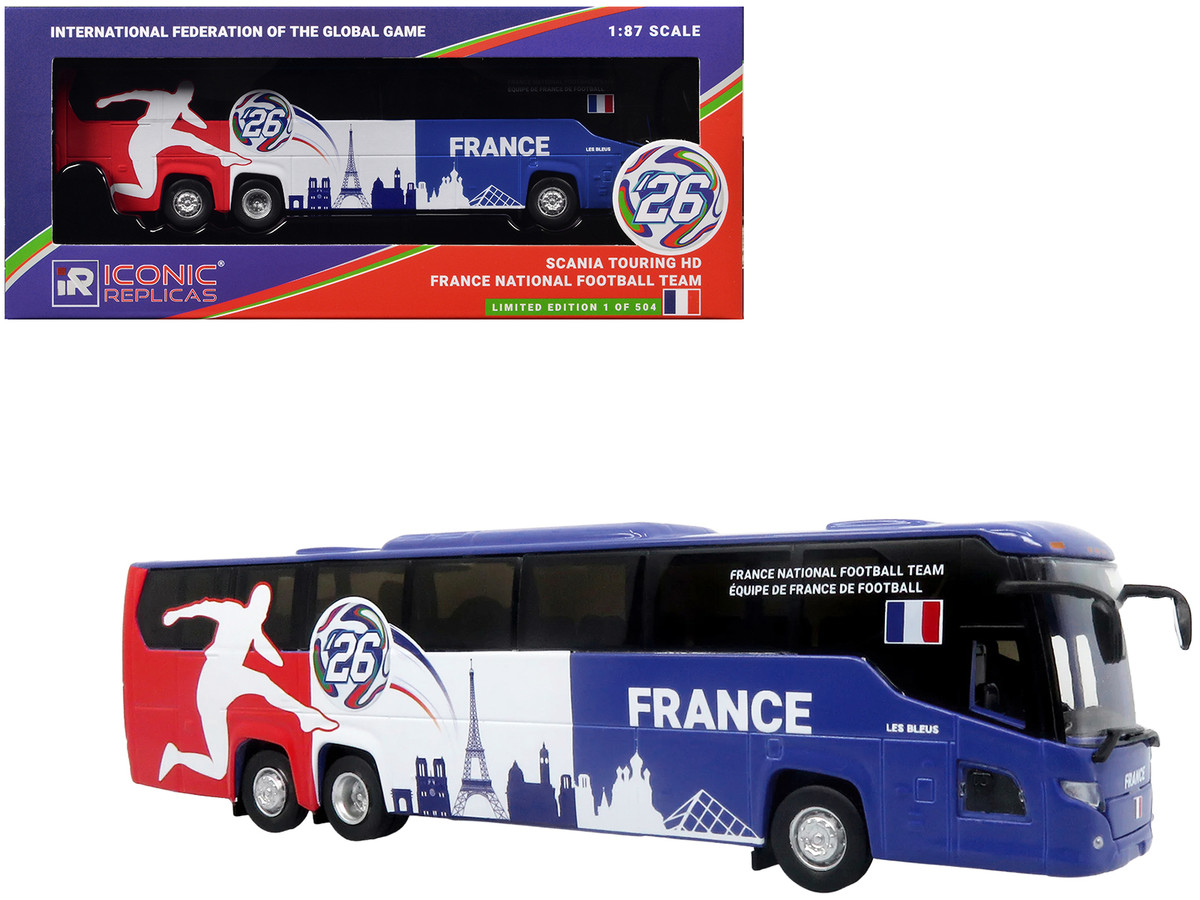
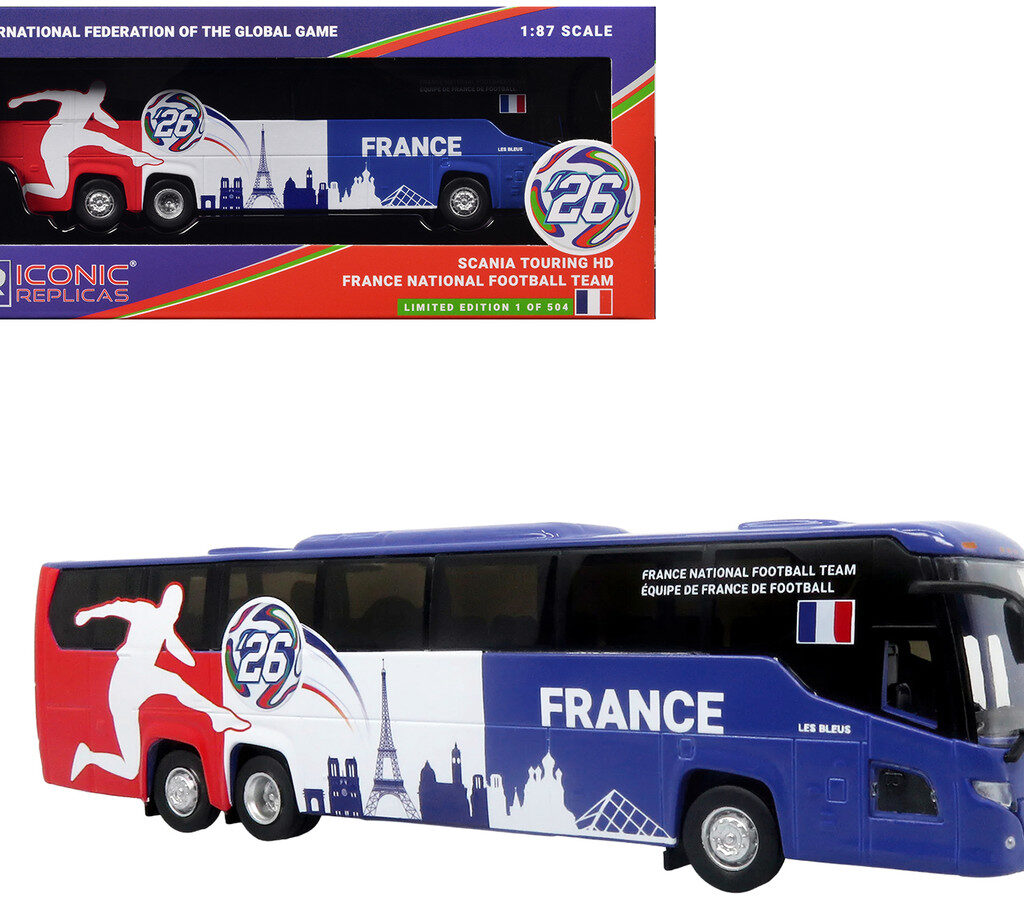
And then there is the heavyweight clash that the tournament has been building toward since the bracket was set: France against Morocco. Kylian Mbappé, who leads the tournament in scoring and who has been performing at a level that places him squarely in the conversation for the greatest individual World Cup performance of the modern era, against a Moroccan side that eliminated the Netherlands in the Round of 16 and that has already proven — emphatically and without qualification — that they can eliminate European heavyweights on the biggest stage in the sport. Morocco reached the semifinals of the 2022 World Cup in Qatar, becoming the first African nation in the history of the tournament to do so, and this current edition of the Atlas Lions carries the same combination of defensive organization, collective spirit, and counter-attacking danger that made that run possible. France is the favorite by any objective analytical measure. Mbappé at this level of performance is one of the most difficult offensive problems in the history of knockout round football. But Morocco does not lose this kind of match easily, and the collision of Mbappé’s individual brilliance against Morocco’s collective defensive excellence is the kind of quarterfinal that tournament history will discuss for a generation regardless of the result. The Scania Touring HD Coach Bus for the France National Football Team in deep tournament blue — limited to 504 pieces worldwide at $57.15 — represents a squad that may be three wins away from the greatest prize in the sport.

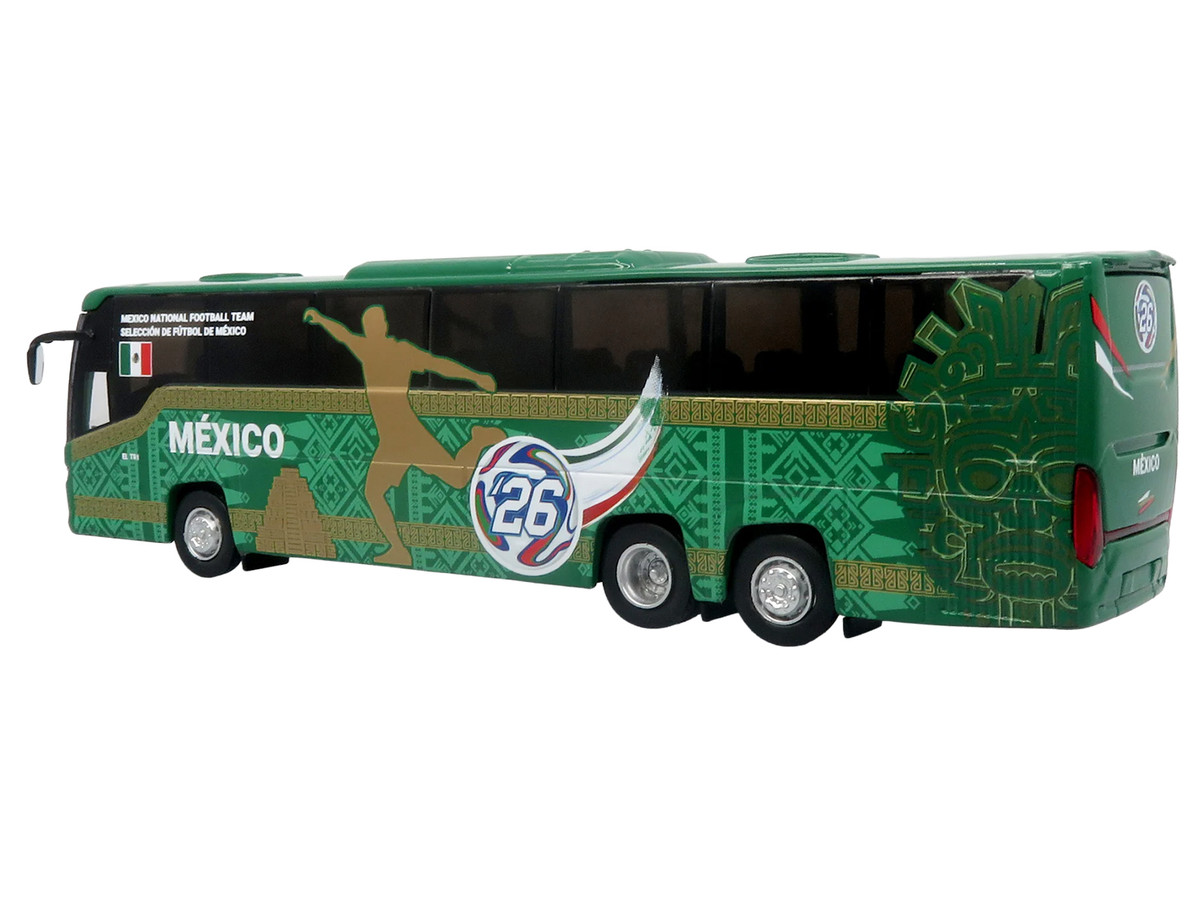
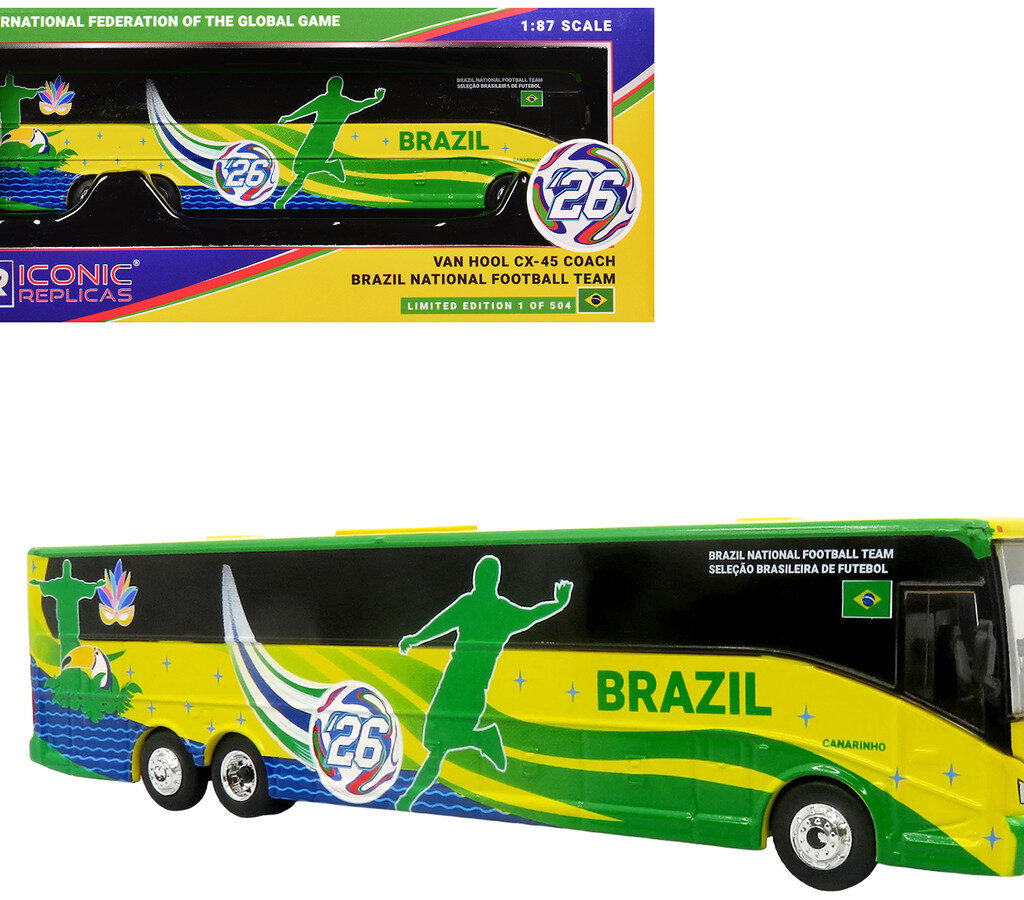
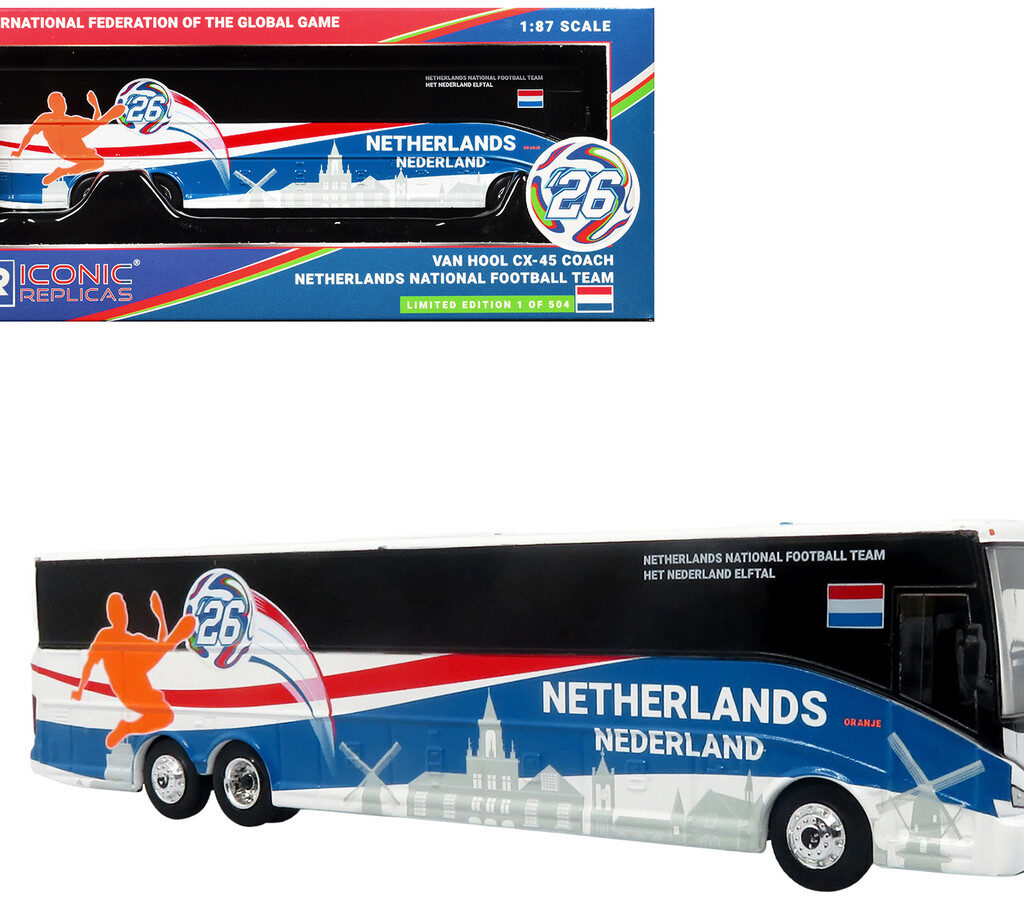
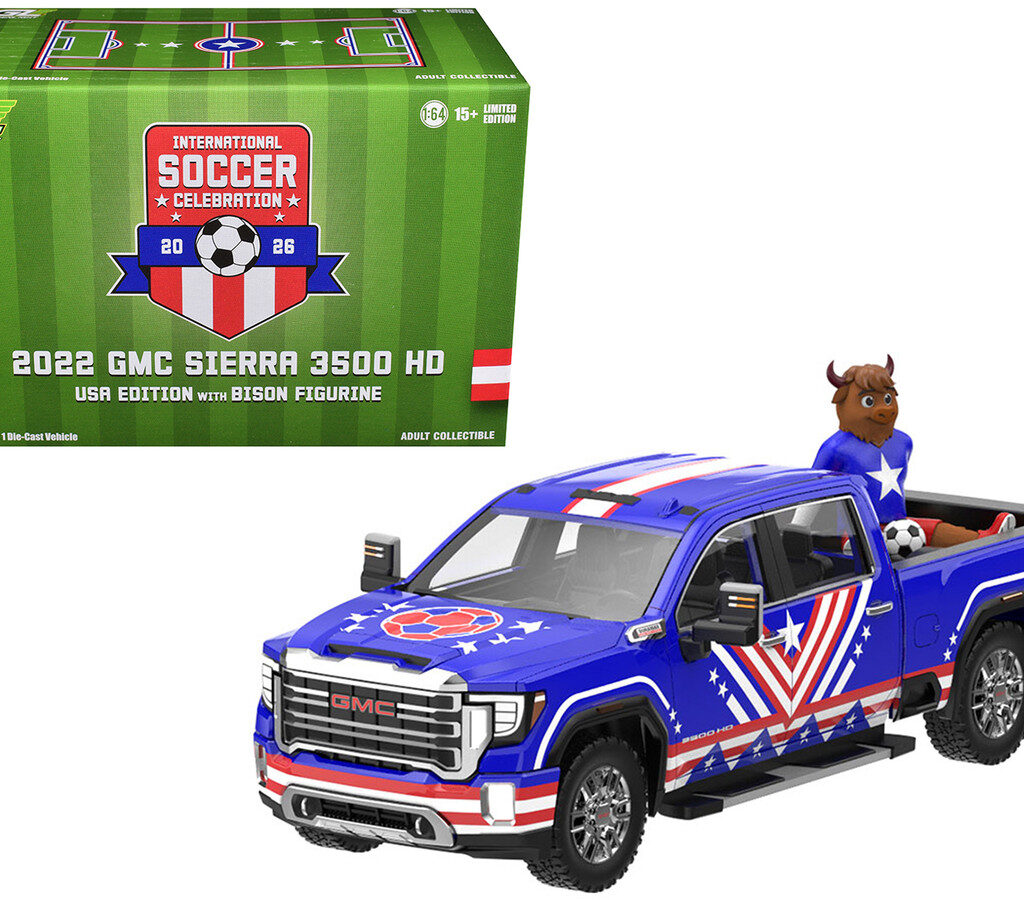
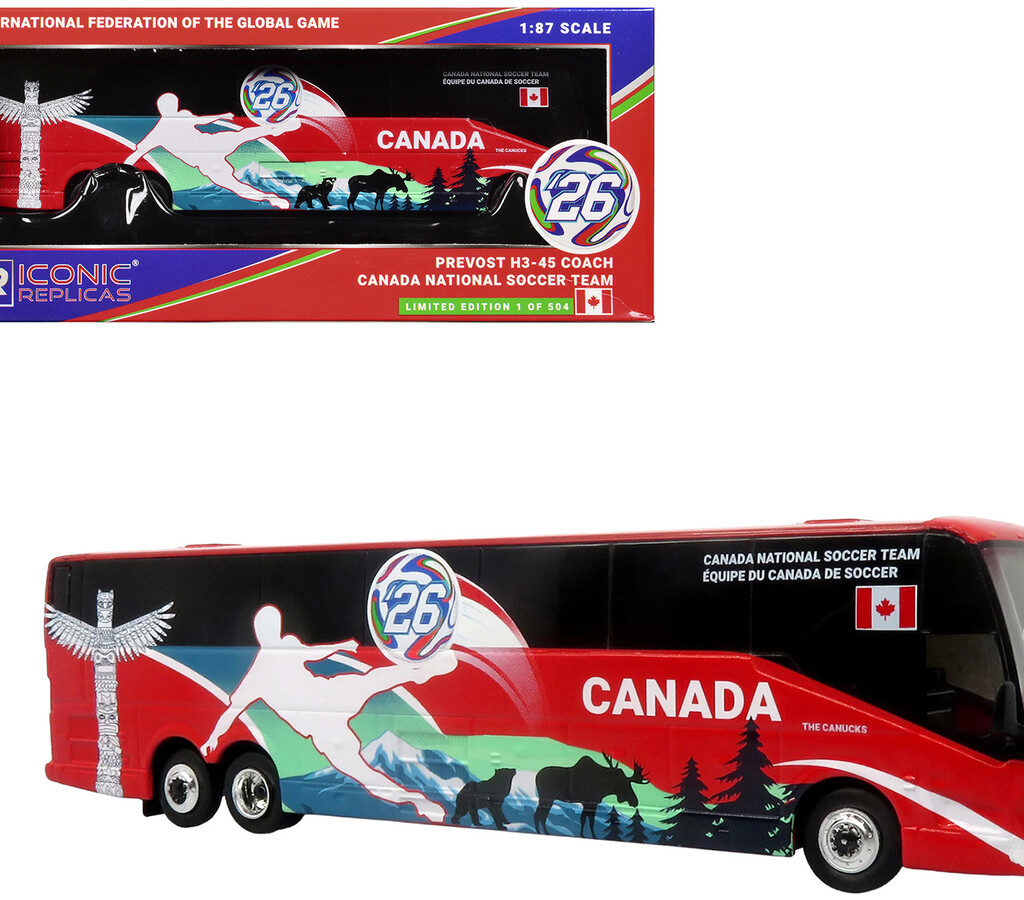
The FIFA World Cup 2026 collection at Pro Merch now spans 73 individual products built around two of the most respected names in die-cast and scale model collecting. Greenlight Collectibles’ International Soccer Celebration ’26 Series presents the three host nations in beautifully detailed 1/64 scale die-cast form: the United States truck in patriotic blue with a bison figure, Canada in rich dark red with a moose figure, and Mexico in vibrant green with an eagle figure, each priced at $24.69 and delivering the obsessive accuracy and authentic paint reproduction that has made Greenlight the defining name in licensed die-cast work. Iconic Replicas’ International Federation of the Global Game Series represents France on a Scania Touring HD, Brazil on a Van Hool CX45 in legendary yellow and green, Mexico on a Scania Touring HD in brilliant green, the Netherlands on a Van Hool CX45 in clean white, the United States on an MCI J4500 in dark blue, and Canada on a Prevost H345 in red — each limited to 504 pieces worldwide at $57.15, each a precision-made 1/87 HO scale model with the kind of detail that defines a serious collector’s acquisition rather than a casual fan purchase. With the tournament now in its final stages and every remaining match carrying elimination weight, the window to own a piece of this specific World Cup is narrowing by the day. The collectors who understand that move first. The rest regret it later.


Wimbledon 2026: Djokovic and Sinner Are on a Collision Course, and Coco Gauff Is Ready for Her Moment

While the World Cup was writing its quarterfinal stories, the grass courts of the All England Club were producing their own drama of the highest order, and Day 9 at Wimbledon delivered a Centre Court performance that will be cited for years as one of the defining matches of the 2026 tennis season. Novak Djokovic, the most decorated singles player in the history of professional tennis and a man who has turned the act of winning Wimbledon into something approaching a habit, outlasted Félix Auger-Aliassime in a five-hour, five-set thriller that required a fifth-set super tiebreak to separate two players who refused to yield to each other across an extraordinary afternoon on the most famous court in the sport.

The match was everything that Wimbledon quarterfinals at their best are supposed to be: technically precise, physically grueling, emotionally volatile, and ultimately decided by the smallest margins of execution under the largest possible pressure. Auger-Aliassime played with the kind of sustained brilliance that confirmed what his most devoted supporters have always believed — that on the right surface, in the right moment, he is capable of competing with anyone alive. That he ultimately fell to Djokovic is not a diminishment of his performance. It is, rather, a reminder of what Djokovic continues to represent in this sport: the competitive ceiling against which all others are measured, the player whose record in deciding sets at Grand Slams borders on the supernatural, and the man who finds ways to win matches that lesser champions would find ways to lose. Djokovic advances to the semifinals, where he will face world number one Jannik Sinner — a matchup that requires no embellishment and no additional context to appreciate. The two best players in the game, on the world’s most prestigious grass court, for a place in the Wimbledon final. It is exactly the match the sport deserves at this stage of the fortnight.

In the women’s draw, Coco Gauff earned her first-ever Wimbledon semifinal appearance with a three-set victory over Jessica Pegula that combined the baseline authority that has defined Gauff’s game at its best with the competitive composure under pressure that she has developed over the past two seasons into something genuinely formidable. Gauff and Pegula know each other well — as American players, as peers, as friends off the court and competitors on it — and the familiarity between them made the match a specific kind of intense that is different from facing a stranger across the net. Gauff’s ability to find another level when the match demanded it, to close out a player who fights for every point until the very last one, is the quality that has carried her to this semifinal. She will face Karolína Muchová, who beat Naomi Osaka on the other side of the draw, in a matchup between two of the most skilled all-court players in the women’s game. Muchová’s variety and craft against Gauff’s power and competitive will is the kind of semifinal that can go in any direction and that will likely be decided by whoever manages the big moments in the third set with more authority.


MLB: Shohei Ohtani Joins the 300 Home Run Club, a Historic Consecutive At-Bat Record Falls, and the Royals Beat the Mets in a 16-12 Slugfest

Major League Baseball has a long and distinguished tradition of producing individual performances that exist entirely outside the context of the pennant race and the standings, moments that belong to the record books rather than to any particular team’s season narrative. July 7, 2026 delivered several of them in a single evening, and taken together they constitute one of the more remarkable nights the sport has produced in years.

Shohei Ohtani hit his 300th career Major League Baseball home run. In a baseball world that has become accustomed to the impossible in connection with Ohtani’s name — the two-way dominance that has no genuine historical precedent, the statistical consistency that has made every season of his career a referendum on the limits of human athletic capability — this milestone carries its own weight independent of everything else he has done. Three hundred home runs in MLB is membership in a specific club, a marker of sustained power production across a significant number of seasons that only a particular kind of hitter can achieve. Ohtani is that kind of hitter. He always has been. The 300th homer simply makes it officially numbered. The Los Angeles Angels section at Pro Merch carries licensed gear for the franchise that first brought Ohtani to American baseball and watched him redefine what the sport thought was possible, and the moment belongs to every fan who has been watching this career from the beginning.

Michael Tolbert of the Kansas City Royals did something on the same evening that baseball statisticians have been cataloging carefully: he tied the MLB record for consecutive hits across consecutive at-bats, going 12 for 12 in a streak that requires both sustained excellence and a particular kind of competitive focus that most professional hitters, even excellent ones, never fully achieve. Baseball is a game where failing seven times out of ten is considered successful. Going twelve consecutive plate appearances without making an out is the kind of performance that sits in an entirely different category, that places a player — even briefly, even temporarily — in the most exclusive statistical neighborhood the sport has. Tolbert’s record-tying performance came in the context of a Kansas City-New York Mets game that was itself one of the more chaotic contests the sport has produced this season: the Royals ultimately won 16-12 in a high-scoring slugfest that featured the kind of offensive fireworks that make the box score look like a football result. For Kansas City Royals fans who are watching a franchise establish its own identity in the second half of a season full of individual and team highlights, Pro Merch carries the full licensed gear catalog.

And then there was the Colorado Rockies, who shocked the Los Angeles Dodgers with a late-game 4-3 comeback victory — the kind of result that makes baseball’s 162-game season the fascinating, infuriating, endlessly surprising enterprise that it is. The Dodgers, who have been one of the most dominant teams in the sport for the better part of a decade, do not lose to the Rockies in close games very often. When they do, the moment is worth noting precisely because of how infrequently it happens. Colorado’s ability to mount a late comeback against a Dodgers roster built at enormous financial and competitive cost is a reminder that on any given night, in any given game, the standings do not determine what happens on the field. The Colorado Rockies section at Pro Merch is for fans of a team that pulled off one of the better upsets of the week, and the full MLB catalog covers all thirty franchises with equal depth across every product category.


NBA Offseason: The Six-Team Mega-Trade and the LeBron Sweepstakes That Never Sleeps

The NBA offseason does not pause for World Cup quarterfinals or Wimbledon semifinals or historic MLB nights. It operates on its own timeline and its own logic, and that timeline this week produced a six-team sign-and-trade deal of sufficient complexity that unpacking it required an entire news cycle’s worth of reporting just to establish what exactly had moved where and why. The headline that emerged from the transaction — the one that will be remembered longest when the trade is discussed in retrospect — is that Khris Middleton is returning to the Washington Wizards from the Dallas Mavericks.

The Middleton story is one of those NBA narratives that requires context to fully appreciate. He was one of the central pillars of the Milwaukee Bucks championship in 2021, a player whose combination of mid-range efficiency, defensive competitiveness, and clutch performance under playoff pressure made him one of the most valuable secondary stars in the league. His subsequent years with Dallas added another chapter to a career that has been defined by evolution and resilience. His return to Washington — a franchise that is in the process of rebuilding its identity and that needed the kind of veteran presence and two-way experience that Middleton brings — is the kind of transaction that makes sense for everyone involved in a way that six-team trades do not always manage to do. Washington gets a proven winner with leadership qualities that are difficult to develop through the draft. Dallas replenishes assets for the next phase of their roster construction. And Middleton gets a situation where his contributions will be central rather than supplementary, which at this stage of a career spent mostly winning matters considerably.

Hovering above all of it, as it has been since the moment he informed the Los Angeles Lakers that he would not be returning, is the ongoing saga of where LeBron James will play his record-extending 24th NBA season. Every team with cap space, every franchise with championship aspirations, every city with a large enough media market and a compelling enough basketball story is part of the conversation — and the conversation itself has become one of the most compelling ongoing sports narratives of the summer. LeBron chooses his destinations with the same calculated strategic intelligence he has always brought to the biggest decisions of his career, weighing championship probability against personal legacy against family considerations against the specific basketball environment that will allow him to keep performing at the level that makes the whole enterprise worthwhile at 41. Whatever he decides will reshape the Eastern Conference, the Western Conference, or both. The waiting is its own kind of theater. And when the decision comes, whatever it is, every fan of every potential destination will feel something that Pro Merch is ready to help them express. The NBA catalog covers all thirty franchises, from the Lakers he is leaving to wherever he is going next.


Pro Merch: The Store Built for Every Fan, Every Sport, Every Moment

What this week makes clear, as clearly as any week on the sports calendar has in recent memory, is something that Pro Merch has been built around from its founding as a division of Sunset Entertainment & Media: being a sports fan in 2026 is not a single-sport proposition. The person who stayed up to watch Argentina survive against Egypt also checked the Wimbledon scores, also caught the Ohtani home run alert on their phone, also has a strong opinion about the LeBron sweepstakes. Sports fandom in the modern era is comprehensive, multi-league, multi-season, and deeply personal, and the merchandise that serves it properly has to match that breadth with quality that genuinely reflects the significance of what is being honored.

Pro Merch does that across every category it carries. The FIFA World Cup 2026 collection with 73 products is the most carefully curated assemblage of World Cup 2026 collectibles available from any single online retailer — from Greenlight’s 1/64 die-cast host-nation trucks at $24.69 to Iconic Replicas’ precision coach buses limited to 504 pieces worldwide at $57.15, every product in the collection is built to honor a tournament that will not come around again, at a level of detail that the tournament deserves. The MLB section covers all 30 franchises with 885 products including Champion Packable Anorak Jackets and Port Authority Soft Shell Jackets that are built for the fan who wants to represent their team in something worth wearing beyond the stadium. The NBA catalog covers every franchise in a league whose offseason generates as much fan engagement as its regular season. The NHL section covers all 32 franchises plus the WHA vintage series for collectors who want gear representing organizations like the New England Whalers and the original Winnipeg Jets. The NCAA catalog spans the ACC, Big Ten, Big 12, SEC, Big East, and American conferences alongside a dedicated HBCU section. The MLS section covers all 29 active clubs. And the Negro Leagues collection — 57 products across 14 legendary franchises including the Kansas City Monarchs, Homestead Grays, Pittsburgh Crawfords, and Newark Eagles — honors a chapter of baseball history that is finally receiving the full institutional recognition it has always deserved, at a cultural moment when that recognition is growing louder and more significant by the month.

Every product in every section of the Pro Merch catalog reflects the same standard: licensed gear from brands that take their craft seriously, at price points that reflect the quality being delivered, for fans who take their teams as seriously as the teams take themselves. On a week when Messi is in a World Cup quarterfinal and Djokovic and Sinner are meeting in a Wimbledon semifinal and Shohei Ohtani has 300 home runs and LeBron James is choosing his next chapter, the impulse to connect to sports physically — to have something in hand that marks the moment, that says you were paying attention, that you were part of this — is exactly what great merchandise is designed to serve.

Shop the FIFA World Cup 2026 collection, browse the full store, and find the gear that belongs with this week in sports at Pro-Merch.com.

Baseball’s Midsummer Circus: The 2026 MLB All-Star Snubs, Roster Drama, and Why Philadelphia Is the Perfect Stage for It All — Plus the Finest MLB Gear Available at Pro Merch

Baseball’s Midsummer Circus: The 2026 MLB All-Star Snubs, Roster Drama, and Why Philadelphia Is the Perfect Stage for It All — Plus the Finest MLB Gear Available at Pro Merch

Baseball has a long and distinguished tradition of making its own Midsummer Classic more complicated than it needs to be, and the 2026 edition of the MLB All-Star Game — set for Philadelphia, the city that invented passionate sports fandom and has never once been accused of being subtle about it — is carrying that tradition forward with unusual vigor. The official announcement of the American League and National League rosters triggered immediate, loud, and largely justified outrage from fans, analysts, and players themselves, setting off a week of debate about voting systems, advanced statistics, team records, injury waves, and whether a commissioner’s special exemption for a hometown icon is sports theater or genuine good sense. The answer, as it almost always is with baseball, is that it is probably both at once. And while the sport does what it does best — arguing loudly about itself in the middle of summer — Pro Merch is delivering the most comprehensive and carefully curated MLB merchandise collection available from any single online retailer: 885 products, all 30 franchises, premium gear from Champion and Port Authority, and the full range of officially licensed fanwear for every team whose fans have something to say about this roster — which is, by current count, every team.

This is the full story of the 2026 MLB All-Star rosters, the snubs that defined them, the dropouts that reshaped them, the power dynamics that produced them, and the city that will host what promises to be one of the most emotionally charged Midsummer Classics in recent memory.


The Rosters That Launched a Thousand Arguments

Every year, the All-Star rosters arrive with a combination of justified selections and head-scratching omissions, and every year the conversation that follows is the same conversation about whether fan voting distorts the process beyond redemption, whether advanced statistics should carry more weight than public popularity, and whether a player’s team record should be allowed to penalize a genuinely excellent individual performance. The 2026 edition of that conversation is louder than most, because the specific cases of specific players are so stark in their clarity that even casual fans can see exactly what went wrong and exactly why.

Start with Brice Turang. The Milwaukee Brewers second baseman is currently ranked seventh in the National League in overall WAR at 3.2 — a figure that reflects not just his offensive production but the elite defensive range and positional value that the wins-above-replacement metric is designed to capture. The player who won the fan vote to start at second base in the National League was Ozzie Albies of the Atlanta Braves, a fine player with a genuine pedigree, but a player carrying a 2.0 WAR this season. The gap between Turang’s 3.2 and Albies’ 2.0 is not a rounding error or a matter of interpretive disagreement between competing analytical systems — it is a meaningful, substantial difference in measurable value to a baseball team. Turang is, by the numbers, the better player at the better defensive position playing at the higher level this season. Albies has the name recognition and the Braves fan base behind him. In the fan vote, the latter wins. That Turang was left entirely off the roster — not just passed over for the starting spot but excluded from the reserves as well — is the kind of decision that makes baseball fans who care about what the numbers actually say feel like the game is not paying attention to its own data.

The American League pitching staff presents its own version of the same problem, with the Boston Red Sox’s Sonny Gray at the center of it. Gray has been one of the most dominant pitchers in the American League this season by any traditional measure: a 9-1 record and a 2.69 ERA represent a level of consistent, winning, run-preventing performance that in most years would be automatic All-Star material. The argument against his selection centers on Boston’s overall record — the team sits at 38-48, a poor mark that reflects a roster with significant problems outside of Gray’s starts. The question of whether an individual pitcher should be penalized for his team’s failures in the games he does not pitch is not a new debate in baseball, but it is one that rarely produces as clean a case study as Sonny Gray in 2026. He has done everything a pitcher can do to win. His team has not always done the same. Leaving him off the roster is the kind of decision that makes a nine-win, sub-2.70-ERA starter into a rallying point for everyone who believes the All-Star selection process rewards context over performance. Boston Red Sox fans who have been watching Gray pitch this year know exactly what they are watching, even if the selection committee apparently did not.

Then there is Zack Wheeler of the host-city Philadelphia Phillies, whose omission carries its own particular irony given that the game is being played at Citizens Bank Park, his home field, in front of his home crowd. Wheeler returned from an injury stint in late April and has been, by the accounts of hitters who have faced him and the numbers that describe those encounters, virtually untouchable since his return. The player ballot — selected by peers, which is supposed to capture the respect of professional players who see these performances up close — bypassed him entirely. The Phillies will send five players to their own All-Star Game, but Wheeler, one of the best pitchers in the National League since late April, will watch from the bench or from home. The irony is almost too clean. Philadelphia Phillies fans have every reason to feel the familiar burn of a city that has always believed its players are underappreciated by the rest of the sport. This is not a new feeling in Philadelphia. It does not get easier with repetition.

Brandon Lowe of the Pittsburgh Pirates and Willson Contreras of the Boston Red Sox complete the most prominent snubs, both of them players who have produced elite numbers at positions where depth is thin and where their statistical cases for inclusion are genuinely strong. Lowe has been one of the best second basemen in the National League by advanced metrics; Contreras behind the plate has combined quality receiving with offensive production that few catchers in either league can match this season. Both were casualties of roster size limits — a structural reality of the All-Star selection process that produces genuine injustice every year and that serves as an annual reminder that the rosters, fixed at a specific number of players per position, will always exclude someone who deserves to be there. The Pittsburgh Pirates section at Pro Merch and the Boston Red Sox collection are both destinations for fans of teams whose players deserved better from this process.


The Dropouts and the Injury Wave That Reshaped Everything

If the roster construction debate was not complicated enough on its own merits, the 2026 All-Star situation was further scrambled by a combination of player opt-outs and injury news that together produced a roster that looks significantly different from what was originally announced. Vladimir Guerrero Jr. of the Toronto Blue Jays, who was voted in by fans as the American League’s starting first baseman — a selection that reflected both his talent and his genuine popularity with the baseball-watching public — officially announced that he will skip the game. In his place, Oakland Athletics rookie Nick Kurtz gets the starting nod, which is a genuinely interesting development: Kurtz is one of the most compelling first-base prospects in baseball and a player whose own All-Star season has been building toward exactly this kind of recognition. His elevation from reserve to starter is the kind of unexpected story that the Midsummer Classic occasionally produces and that gives the game its own narrative momentum independent of the drama that surrounds the roster process. Toronto Blue Jays fans understand Guerrero’s decision even if they would have loved to see him in Philadelphia; Oakland Athletics fans — a fanbase that has been through more franchise turbulence than almost any in the sport and that has committed to this new chapter with genuine enthusiasm — have every reason to be thrilled about what Kurtz’s start represents.

The injury wave is a different kind of story and a harder one. Aaron Judge, Jose Ramirez, and Shohei Ohtani were all voted in as starters by fans — three of the most recognizable and genuinely accomplished players in the game, three players whose selection reflected not fan-vote bias but actual superstar performance — and none of them will be on the field in Philadelphia due to active stints on the Injured List. Judge’s absence is a blow to the American League lineup’s star power. Ramirez’s absence removes one of the most consistently productive hitters in the league from a game in which he would have been one of the most compelling participants. Ohtani’s absence is its own category: he is the most singular player in baseball, a two-way phenomenon whose presence at any event immediately elevates it, and his being sidelined by injury means that the All-Star Game loses the one element of genuine novelty it would have had regardless of every other roster decision. The New York Yankees collection at Pro Merch carries gear for a franchise whose best player will be watching from the injured list; the Cleveland Guardians and Los Angeles Angels sections hold merchandise for fans of teams whose All-Stars are similarly sidelined.


The Bryce Harper Legend Pick: Theater, Tradition, or Both?

Perhaps the most conversation-generating single decision in the 2026 All-Star roster process was MLB Commissioner Rob Manfred’s use of a special “Legend Pick” exception to automatically add Bryce Harper of the Philadelphia Phillies to the National League roster. Harper, the host city’s most beloved active player, did not receive enough votes through the standard selection process to earn a spot on the squad through conventional means. Rather than allow the player who is arguably the most important figure in Philadelphia baseball — a city that adopted him with the kind of fierce devotion that only Philadelphia can manage — to miss his own All-Star Game in his own city, Manfred exercised a rule that expanded the NL roster to 33 players specifically to include him.

The reaction was predictably split along predictable lines. Those who believe the All-Star Game is primarily a showcase and a celebration of the host city and its connection to baseball were entirely comfortable with the decision — of course Bryce Harper plays in Philadelphia’s All-Star Game; the alternative is absurd on its face as a matter of spectacle. Those who believe roster selection should be governed by performance metrics and standardized criteria found the exemption troubling, a departure from whatever residual connection the selection process has to actual merit. Both positions are coherent. Neither is wrong. What is beyond debate is that Harper on the field at Citizens Bank Park in front of a Philadelphia crowd that has given him everything a fanbase can give a player will produce a moment that the game itself — as a television product, as a civic event, as a celebration of baseball — genuinely needs. The Philadelphia Phillies section at Pro Merch is where fans of a team with five All-Star representatives and the most dramatic roster backstory of the week can gear up for a home Midsummer Classic that the city has been anticipating for years.


The Powerhouses: Dodgers, Phillies, and Braves Own the National League Squad

The distribution of All-Star representatives across the thirty franchises tells its own story about where the power in Major League Baseball currently lives, and the 2026 version of that story is written in Dodger blue, Phillies red, and Braves red and blue. The Los Angeles Dodgers, the Philadelphia Phillies, and the Atlanta Braves each send five players to the National League All-Star squad — a concentration of organizational talent at the top of the roster that reflects just how dominant these three franchises have been in constructing deep, star-laden rosters in the current era of baseball.

The Los Angeles Dodgers, who have constructed a roster of almost unfair depth over the past decade through a combination of development, free agency, and shrewd trades, sending five representatives is almost understating what they have built. The Dodgers have become the standard by which other franchises measure their own ambitions, and five All-Stars is a floor for what their roster could send if the selection process were purely meritocratic. The Atlanta Braves have built their own dynasty in the National League East, anchored by the young core that won the 2021 World Series and that has continued to add pieces in the years since. Five All-Stars from Atlanta is a reflection of sustained organizational competence at every level from development to roster construction to player acquisition. And the Philadelphia Phillies, hosting their home All-Star Game with five representatives on the NL roster, are a team that has rebuilt itself around Harper’s leadership into one of the most complete franchises in the league.
For fans of every other team — the New York Mets and Washington Nationals in the NL East, the Chicago Cubs and Milwaukee Brewers and St. Louis Cardinals and Cincinnati Reds and Pittsburgh Pirates in the NL Central, the San Diego Padres and San Francisco Giants and Arizona Diamondbacks and Colorado Rockies in the NL West — the All-Star Game is a moment to represent and be represented, and the Pro Merch MLB collection covers every single franchise with equal depth and equal commitment to quality.


Philadelphia: The City That Was Made for This Moment

There is something fitting about the 2026 MLB All-Star Game landing in Philadelphia, a city whose sports culture is defined by a combination of intense loyalty, fierce standards, and zero tolerance for anything that feels like it is not being taken seriously. Philadelphia fans do not attend sporting events in a spirit of passive appreciation. They come with opinions. They bring expectations. They have done their research. And they will let you know — loudly, immediately, and specifically — if they think you are wrong. The All-Star Game, with its roster controversies and its Legend Pick exemptions and its injury-depleted lineups and its voting-system debates, has arrived in exactly the right city for exactly the right moment. Nobody in Philadelphia is going to pretend the roster selection process made perfect sense. They are also going to cheer for Bryce Harper with a volume that will rattle the upper deck at Citizens Bank Park and make very clear, to anyone watching from anywhere in the country, why the city that adopted him and the player who chose to stay are exactly right for each other.

The Midsummer Classic is, at its best, a celebration of the sport that manages to be entertaining even when it is imperfect — which, in baseball, is most of the time. Philadelphia is going to give this game everything it has. The fans will be loud, the stadium will be electric, and Bryce Harper, Legend Pick or not, will walk out of the dugout to a reception that will remind everyone watching why the All-Star Game, for all its structural flaws and roster debates and opt-out frustrations, is still worth having.


The Pro Merch MLB Collection: 885 Products, 30 Teams, Every Jersey and Jacket You Need

The Pro Merch MLB collection is the most comprehensive assemblage of officially licensed Major League Baseball merchandise available from any single retailer, built across all 30 franchises with 885 individual products and a depth of coverage in each team’s section that reflects a genuine understanding of what baseball fans actually want to wear, collect, and give as gifts. Understanding what is in this collection and why it is worth owning begins with the product lines that anchor it.

The Champion Unisex Packable Anorak Jacket is one of the most versatile and well-made pieces of fan apparel in the market. Champion has been producing athletic wear of genuine quality since 1919, and the Packable Anorak represents their understanding of what the modern fan wants from a piece of licensed outerwear: a jacket that is lightweight enough to pack into a bag and take to a day game, durable enough to wear through a full season of outdoor baseball, and designed with enough care that the team graphics and color treatment are accurate, vibrant, and properly representative of the franchise. Priced from $69.98 to $73.97 depending on team and size, the Anorak is available for teams including the Los Angeles Dodgers, San Diego Padres, San Francisco Giants, Colorado Rockies, and Arizona Diamondbacks, with the full catalog continuing to expand across all thirty clubs. It is the kind of jacket that works equally well at the ballpark, at a sports bar, or anywhere a fan wants to wear their allegiance in something that looks and feels like a real piece of outerwear rather than a disposable piece of branded merchandise.

The Port Authority Men’s Collective Soft Shell Jacket occupies a different but equally important place in the collection — a structured, versatile soft shell with a polished silhouette that translates from the stadium to everyday wear without losing any of its identity as genuine team merchandise. Port Authority is known in the branded apparel world for producing pieces that balance professional finish with fan-appropriate design, and the Collective Soft Shell at $89.99 to $104.22 reflects that reputation. Available for the Los Angeles Dodgers, San Diego Padres, San Francisco Giants, and Colorado Rockies among others, the soft shell is the piece for the fan who wants to represent their team in something that holds up in any context — a work environment with a casual dress code, a weekend out, or a fall game when the temperature has dropped and the Anorak alone is not enough. Both jackets are available in multiple variants — sizes, colorways, and team options — directly from the individual product pages, with clear selection tools that make finding the right combination straightforward.

Beyond these anchor outerwear pieces, the Pro Merch MLB catalog extends across hundreds of additional products per team — the full licensed assortment of fanwear, headwear, collectibles, and apparel that covers every franchise from the Baltimore Orioles to the Minnesota Twins to the Tampa Bay Rays to the Seattle Mariners to the Texas Rangers to the Kansas City Royals and every franchise in between. The Houston Astros, the Detroit Tigers, the Cleveland Guardians, the Chicago Cubs, the Chicago White Sox, the St. Louis Cardinals, the New York Yankees, the New York Mets — every team in the sport has a fully stocked section at Pro Merch, organized to make shopping easy and to ensure that every fan finds exactly the product that speaks to their team and their style.


Why Pro Merch Is the Right Place for Baseball Fans Who Take Their Fandom Seriously

The conversation about the 2026 All-Star rosters — about who was included, who was left out, who opted out, who got the special exemption, which teams dominated the representation, and which genuinely excellent players were overlooked by a selection system that has structural flaws baked into it — is a conversation about how much baseball fans care. The depth and volume of the reaction to these rosters is not a sign that people are too invested in a meaningless exhibition game. It is a sign that baseball fans take the game seriously enough to expect that the institutions around it reflect the quality of what happens on the field. They watch closely. They know the statistics. They understand the arguments. They have opinions. And they want merchandise that matches the seriousness of that engagement.

Pro Merch, a division of Sunset Entertainment & Media, was built on exactly that understanding. The MLB section at Pro Merch carries 885 products across all 30 franchises because baseball fans are not casual about their teams and they should not have to settle for casual merchandise. The brands in the catalog — Champion, Port Authority, and the full range of officially licensed MLB partners — are brands that have earned the trust of the people who wear their products, and every item on the site reflects the standard of quality that Pro Merch has maintained across every category it covers. The full store extends across the NFL with all 32 franchises, the NBA, the NHL including a WHA vintage section, NCAA across every major conference with dedicated HBCU coverage, MLS across all 29 active clubs, Premier League, the FIFA World Cup 2026 collection, and the Negro Leagues section honoring 14 legendary franchises with historically serious merchandise that the moment absolutely deserves.

All-Star Week is when baseball stops and takes stock of itself — when it pauses the pennant races and the box scores and the trade rumors to celebrate the players who have defined the first half of the season and the cities that have supported the game for generations. Philadelphia is going to host that celebration with the energy and the passion and the noise that only Philadelphia brings. The debates about the rosters will continue through the weekend and probably into August. Brice Turang will keep producing at a 3.2 WAR pace. Sonny Gray will keep pitching with a 2.69 ERA for a team that does not deserve it. Zack Wheeler will keep being untouchable on his own home field. And Bryce Harper, Legend Pick intact, will walk out of that dugout to a roar that settles every argument about whether his presence in Philadelphia’s game was the right call.

Shop the full Pro Merch MLB collection and the complete store at Pro-Merch.com.

The World Has Arrived: FIFA World Cup 2026 Begins a Historic New Chapter as Pro Merch Celebrates the Global Game

Free Agency Shockwaves, World Cup Knockout Heat, Record Contracts, and Historic Milestones Across Every Major Sport

Global sport is currently operating in a rare state of simultaneous volatility across every major league and competition cycle, where roster movement, tournament progression, contract resets, and historic milestones are all colliding within the same news window. It is not one dominant storyline driving attention, but a synchronized surge across multiple disciplines that is redefining how fans consume sport in real time. Basketball is undergoing franchise-altering shifts at the very top of its hierarchy. Soccer is deep into World Cup knockout intensity where legacies are being reshaped in 90-minute increments. Hockey is resetting its financial ceiling through record-setting contracts and free agency disruption. Tennis is balancing generational transition with veteran resilience under physical strain. Baseball is layering milestone achievements with cultural rituals that have become as recognizable as the sport itself.

In this environment, sports consumption is no longer segmented by league or season. It is continuous, algorithmically amplified, and emotionally interwoven across disciplines. Fans are tracking LeBron James’ next destination while simultaneously following Kylian Mbappé’s tournament dominance, NHL contract escalations, Wimbledon injury updates, and MLB managerial milestones—all within the same feed cycle. That compression of attention has fundamentally changed the commercial architecture around sport, particularly in apparel, identity branding, and fan merchandise ecosystems.

The most immediate shockwave in basketball comes from the rupture at the very top of the league structure, where LeBron James has informed the Los Angeles Lakers that he will not return, triggering a franchise-defining free agency cycle that immediately reshapes competitive balance across the NBA. At the same time, Kawhi Leonard’s expected return to Toronto reintroduces championship history into the present tense of roster construction, effectively collapsing past and present narratives into a single strategic loop. Early signings such as Norman Powell to Chicago and John Collins to Detroit further illustrate how quickly mid-tier roster structures are being locked in before the market fully stabilizes.

This kind of rapid player movement is mirrored across hockey, where the NHL has entered a financial escalation phase defined by Bowen Byram’s record-setting extension with the Chicago Blackhawks, establishing a new benchmark for defenseman valuation, while Sergei Bobrovsky’s entry into unrestricted free agency adds immediate uncertainty at the highest level of goaltending supply. These movements are not isolated—they represent structural inflation in athlete valuation that directly influences how fans perceive team identity stability and long-term competitive windows.

In soccer, the World Cup knockout phase is delivering its own parallel narrative intensity. Kylian Mbappé’s continued scoring surge for France reinforces his position as a defining figure of the tournament cycle, while Mexico’s breakthrough knockout victory signals a historic resurgence that reshapes regional football narratives extending beyond Europe’s traditional dominance. At the same time, managerial fallout in the Netherlands following Ronald Koeman’s resignation underscores how quickly tactical narratives can shift into institutional restructuring during high-stakes international competition.

Tennis adds another layer of unpredictability at Wimbledon, where Serena Williams’ injury setback introduces uncertainty into what is already one of the most emotionally charged late-career arcs in modern sport, while Aryna Sabalenka’s progression through the draw reflects the ongoing consolidation of a new competitive elite. The contrast between physical limitation and competitive continuity defines the tournament’s underlying tension.

Baseball continues to deliver its own form of historical layering. Dave Roberts becoming the fastest manager to reach 1,000 wins adds a structural milestone to a season already defined by momentum shifts, while the Miami Marlins’ record-breaking June performance signals how quickly team trajectories can change within compressed scheduling environments. Even the recurring cultural marker of “Bobby Bonilla Day” reinforces how baseball’s financial structures have become part of its annual identity ritual, blending sport with long-term economic storytelling.

Within this multi-sport acceleration cycle, the commercial layer of sport becomes more important than ever. This is where Pro Merch operates—not as a passive retailer, but as a responsive cultural distribution system built around the reality that fandom is no longer isolated by league or season. Instead, it exists as a unified consumption environment where NBA jerseys, World Cup kits, NHL gear, and tennis-inspired apparel all compete within the same attention economy.

The expansion of the FIFA World Cup 2026 cycle, represented globally as FIFA World Cup 2026, is only one part of that ecosystem. While the tournament represents the most globally concentrated moment of football engagement, it is now functioning alongside equally powerful narratives in basketball free agency, hockey contract restructuring, tennis Grand Slam volatility, and MLB milestone storytelling. The modern fan does not experience these events sequentially; they experience them simultaneously.

Pro Merch’s product architecture reflects this reality by positioning its catalog as a cross-sport identity platform rather than a single-event merchandising channel. Its soccer and futbol category tied to the World Cup cycle is one pillar within a broader structure that responds to how fans actually move between sports narratives in real time. A supporter tracking Mbappé’s scoring surge may also be reacting to LeBron’s free agency decision or following NHL contract records within the same engagement window. The apparel ecosystem must therefore be able to operate across shifting emotional states rather than static team allegiance.

The FIFA World Cup 2026 collection itself is designed with this fluidity in mind. It draws from global football aesthetics but is constructed to function within a broader lifestyle context where sport is inseparable from fashion and identity signaling. Apparel is no longer limited to match-day consumption; it is part of daily visual language. That shift is critical when global attention is fragmented across multiple elite competitions occurring simultaneously.

What emerges from this moment is a convergence economy in sports culture. Basketball, soccer, hockey, tennis, and baseball are no longer independent silos of engagement. They are overlapping systems of narrative production, each generating their own peaks of attention that feed into a unified global sports discourse. Merchandise platforms that succeed in this environment are those that understand not just individual leagues, but the combined psychological rhythm of global fandom.

Pro Merch’s positioning reflects that understanding. Its FIFA World Cup 2026 product line is not isolated from NBA free agency narratives or NHL contract escalation cycles; it exists within the same attention ecosystem. The modern fan might move from watching Mbappé’s knockout-stage dominance to reacting to LeBron’s league-shifting decision to tracking Wimbledon injuries and MLB milestones—all while consuming apparel content across the same digital platforms.

This convergence defines the current sports moment more accurately than any single headline. It is not about one league dominating the conversation, but about multiple elite systems peaking at the same time. Within that compressed attention field, Pro Merch is building a merchandise framework that reflects how fans actually live with sport today: constantly, across disciplines, and without boundaries.

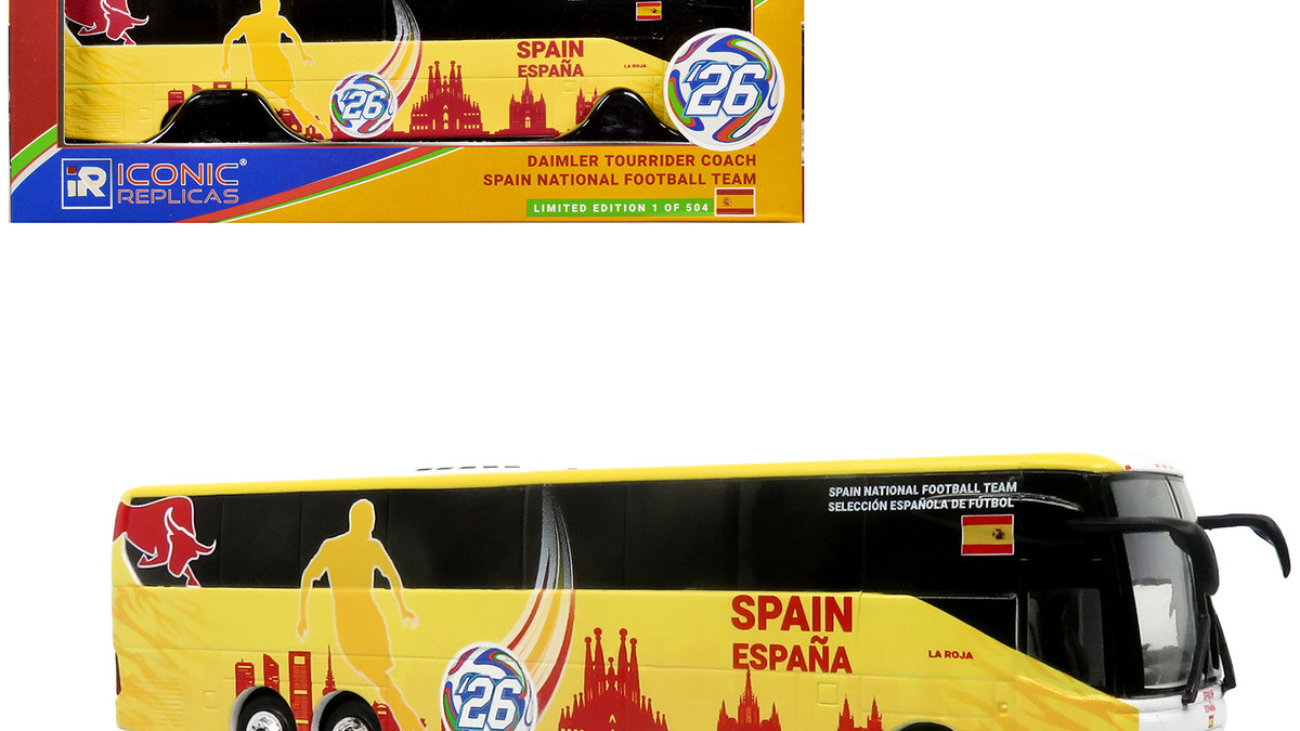
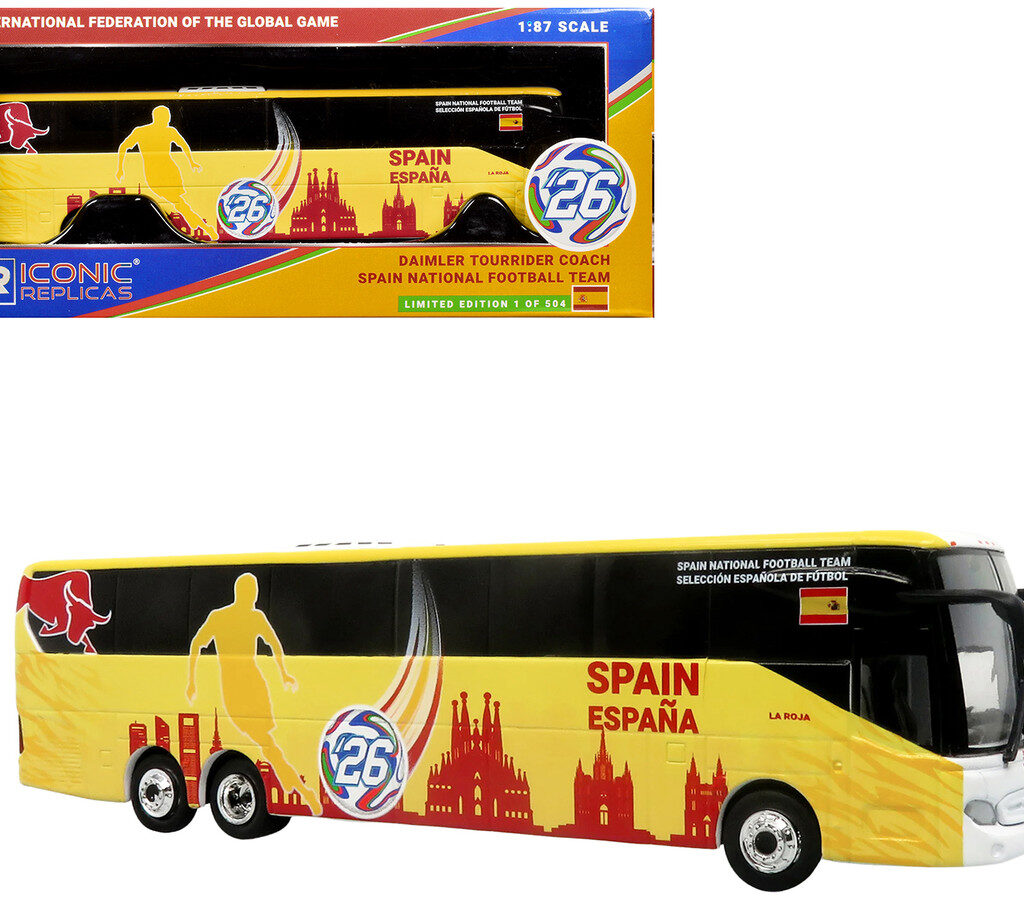
Daimler Tourrider Coach Bus Spain National Football Team Yellow with Graphics International Federation of the Global Game Series Limited Edition to 504 pieces Worldwide 1/87 (HO) Diecast Model by Iconic Replicas

The Day Sports Stood Still: World Cup History, NHL Draft Chaos, NBA Earthquakes, and Record-Breaking Nights Across the Board — June 27, 2026

There are days on the sports calendar that arrive quietly and leave changed forever. Saturday, June 27, 2026 is one of them. Across every major sport playing right now — from the FIFA World Cup group stage nearing its fever pitch conclusion, to the NHL Draft floor in Buffalo erupting with blockbuster trade after blockbuster trade, to the NBA’s summer of seismic roster reshuffling that is already redefining the Eastern Conference, to a pair of record-breaking performances on a WNBA court in Chicago and a pitcher’s mound in Milwaukee — the sports world delivered an extraordinary volume of genuine history in a single twenty-four-hour window. And right in the middle of all of it, Pro Merch sits as the destination for every fan who wants to hold a piece of this moment in their hands — officially licensed, collector-grade merchandise across every league and every team that matters, including the most exciting FIFA World Cup 2026 collectible collection available anywhere online.

This is the full story. Every sport. Every headline. Every moment that will be talked about for years.

The 2026 FIFA World Cup: Cinderella Stories, Shocking Exits, and Hat-Trick Brilliance

The expanded 48-team FIFA World Cup — the first in history to feature this many nations, spread across the United States, Canada, and Mexico in what is the most geographically ambitious tournament ever staged — is delivering exactly the kind of unpredictable, emotional, borderline unbelievable theater that soccer at its greatest always promises and so rarely fully delivers. The group stage is wrapping up, the Round of 32 is taking shape, and the storylines coming out of June 27 are the ones that will define this entire edition of the tournament.

Cape Verde has done something that seemed almost structurally impossible in the modern game: the small island archipelago nation in the Atlantic, with a population smaller than many individual American cities, drew goalless with Saudi Arabia to clinch their spot in the knockout rounds — becoming, by any measure of national size and footballing pedigree, the most unlikely team ever to advance past the group stage of a World Cup. They will face world champions Argentina in the Round of 32, a matchup so lopsided on paper and so compelling as a sporting narrative that it almost feels engineered by the tournament itself. The Albiceleste, fresh off back-to-back tournament dominance, versus the smallest nation to ever reach this stage. If that is not what football is for, nothing is.

Meanwhile, the tournament did not wait long to remind the established powers that nothing is guaranteed. Uruguay — a nation with two World Cup titles, an iconic goalkeeper in Fernando Muslera, and a squad led by the tactical obsession of Marcelo Bielsa — was eliminated from the group stage when Spain claimed a 1-0 victory on a goal made possible by a brutal Muslera error. La Roja claims the top spot in Group H. Uruguay, a footballing nation that has been among the sport’s most consistent forces for over a century, goes home early. In a 48-team tournament built to expand possibility, it is a sobering reminder that bigger fields do not protect giants from falling — they just give more people the chance to watch when they do.

On the same day, France served notice to the rest of the competition that they intend to go very deep in this tournament. Ousmane Dembélé, playing with the kind of fluid explosive confidence that defines him at his absolute ceiling, completed a hat-trick in a dominant 4-1 dismantling of Norway. The result was complicated by Norway’s controversial decision to rest Erling Haaland — a choice that drew immediate and fierce criticism — but Les Bleus’ performance was not diminished by the context. Dembélé was electric. France was clinical. And the message sent to the rest of the bracket was clear.
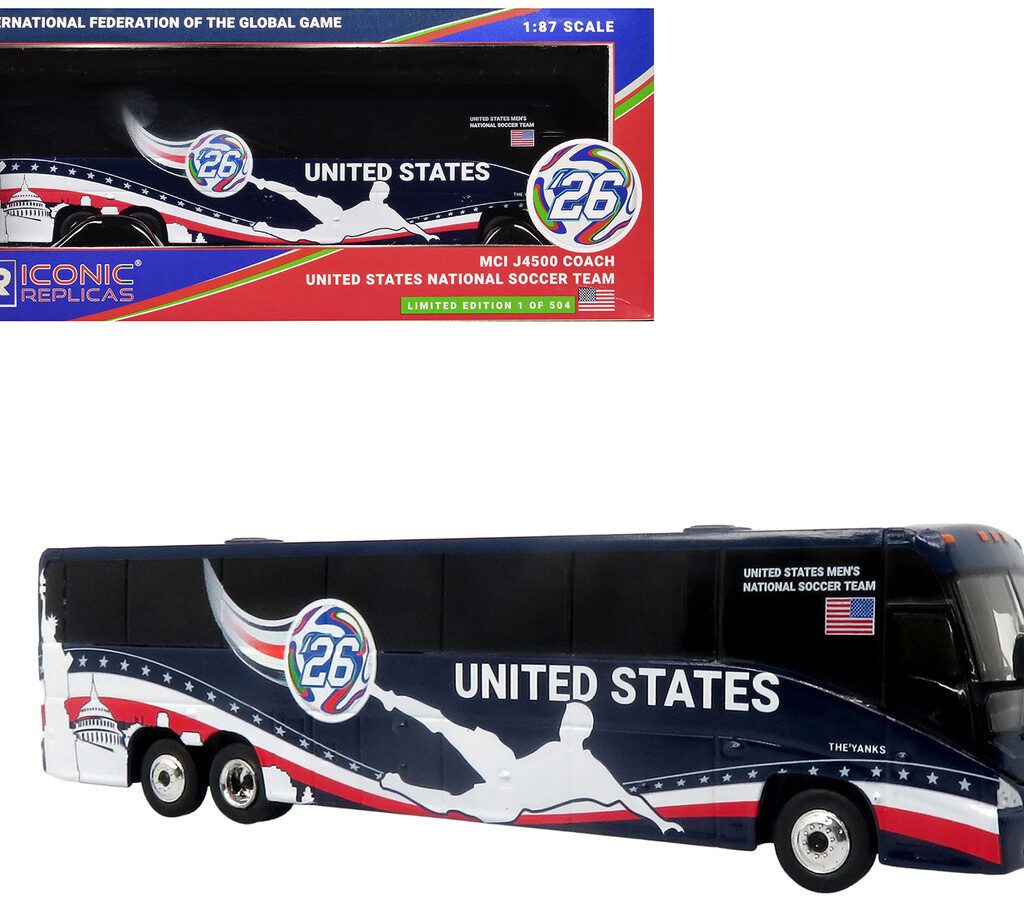
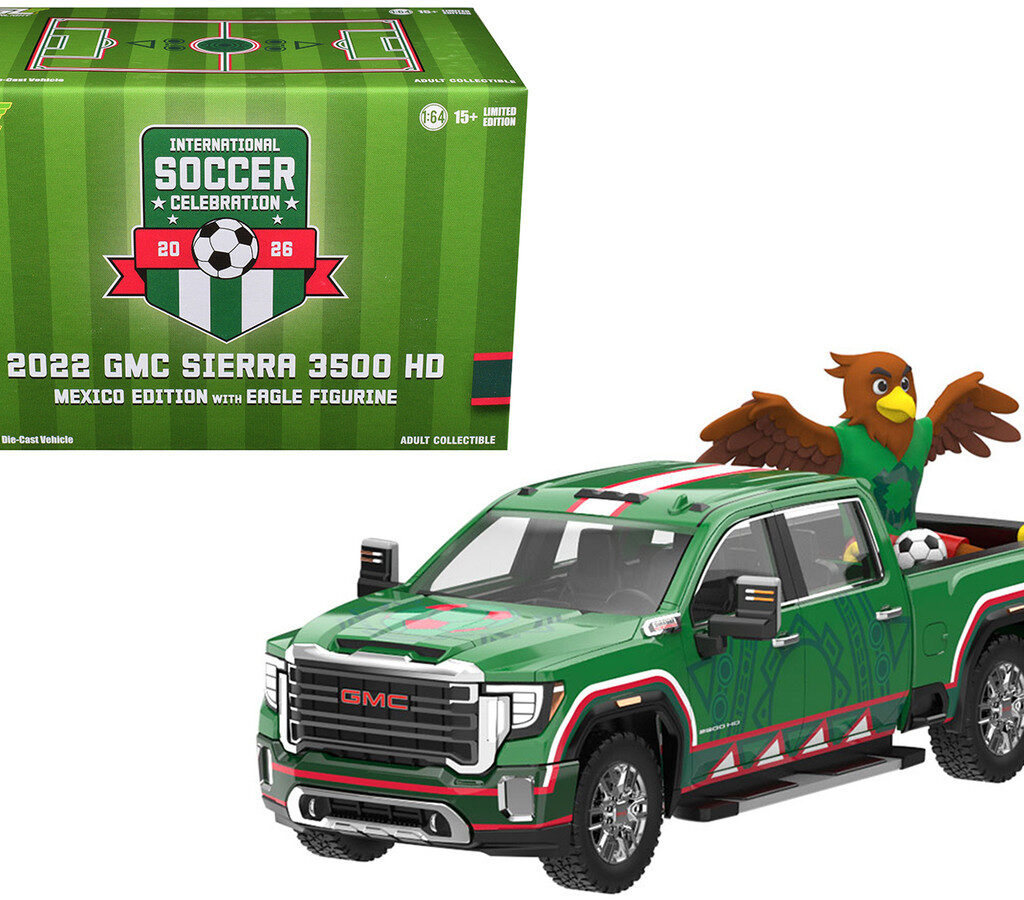
Also playing out today: Colombia meets Portugal at Hard Rock Stadium in Miami, England closes out their group against Panama having already secured qualification, and Jordan faces Argentina at AT&T Stadium in Arlington, Texas. The World Cup is everywhere, it is everything, and it is happening right now on home soil for the first time in a generation. For fans who want to own a piece of this once-in-a-lifetime tournament, the Pro Merch FIFA World Cup 2026 collection — 73 products deep and growing — is the finest and most collector-focused assemblage of World Cup merchandise available from any single retailer. Greenlight Collectibles’ International Soccer Celebration ’26 Series of 1/64 die-cast GMC Sierra pickup trucks, representing the United States with a bison figure, Canada with a moose figure, and Mexico with an eagle figure, are priced at $24.69 each and capture the spirit of the three host nations in exquisite miniature form. Iconic Replicas’ International Federation of the Global Game Series — 1/87 HO scale coach buses for France, Brazil, Mexico, Netherlands, the United States, and Canada, each limited to just 504 pieces worldwide at $57.15 — are the kind of limited-run, precision-made collectibles that define a tournament for decades. These are not keepsakes that sit in a drawer. They are objects that hold value and carry memory.

The NHL Draft: Buffalo Erupts, Gavin McKenna Goes First, and the Trade Machine Never Stops

While the World Cup was unfolding on pitches from Miami to Arlington, the Keybank Center in Buffalo was in the grip of its own brand of high-stakes chaos. The 2026 NHL Draft — held across June 26 and 27 in what is also the first time Buffalo has hosted since 2016 — delivered one of the most trade-frenzied, roster-reshaping draft weekends in recent memory, and the night ended with the league looking genuinely different than it did when it started.

The Toronto Maple Leafs held the first overall pick for the first time since they selected Auston Matthews in 2016, and they used it exactly as everyone expected: Penn State phenom Gavin McKenna, the most hyped prospect in this draft class and one of the most anticipated number-one selections in years, became a Maple Leaf. The San Jose Sharks went second, selecting Ivar Stenberg, and the Vancouver Canucks rounded out the top three with Caleb Malhotra.

But the picks themselves were almost secondary to the volume of transactions happening simultaneously on the draft floor. The New York Rangers, who entered the draft with two first-round picks, leveraged that capital in a way that will define their roster for years: they traded the No. 26 pick, the No. 92 pick, and a conditional 2028 first-rounder to the Vegas Golden Knights for Pavel Dorofeyev, a 25-year-old forward coming off back-to-back seasons of at least 35 goals. The Rangers then immediately moved to lock Dorofeyev down on a seven-year extension — turning a single draft night transaction into a decade-long commitment to a player who had been one of the most dangerous pure goal-scorers in the league.

The Anaheim Ducks made a more painful but strategically calculated move: Mason McTavish, the No. 3 pick from the 2021 draft and a player who was supposed to be the cornerstone of Anaheim’s rebuild, was dealt to the St. Louis Blues. The Blues surrendered the No. 15 and No. 29 picks to pry him away. McTavish is 23, still ascending, coming off what the Blues’ own general manager acknowledged was a down year — but his pedigree, his contract situation, and his upside made him exactly the kind of move St. Louis needed to accelerate their rebuild. The Ducks’ GM Pat Verbeek noted the decision crystallized when Nikita Klepov fell to the 15th pick, giving Anaheim the ability to replenish youth while moving on from a centerpiece that was perhaps not the right fit for their immediate future.

The Boston Bruins were also busy: they landed JJ Peterka from the Utah Mammoth in exchange for the No. 23 pick and a 2028 first-rounder, adding a proven offensive winger to a roster that needed scoring punch. The Washington Capitals shipped Jordan Kyrou to themselves — wait, more accurately, the Capitals acquired Kyrou from the Blues while sending McMichael, Gastrin, and the No. 16 pick the other direction, another significant reshuffling that continues to make the Western Conference look like a different conference than it was a week ago. The Buffalo Sabres, as the host team, used their home ice advantage to lock Zach Benson to a seven-year, $52.5 million commitment — a statement of organizational faith in a player entering the next phase of his development. The Blackhawks acquired Bowen Byram from the Sabres in a deal that gives Chicago a cornerstone defenseman to pair with their young core as their rebuild gains momentum.

Rounds 2 through 7 continue Saturday morning from Buffalo, and the trade pace shows no sign of slowing. For NHL fans looking to gear up for whatever their team just became, Pro Merch carries licensed merchandise for every franchise in the league, from the Maple Leafs who now own the future, to the Blues who just made a significant bet on it, to every team in between.

The NBA: Giannis Goes to Miami, LaMelo Heads to Minnesota, and the League’s Landscape Shifts Again

The NBA offseason does not officially open its free agency window until June 30, but the league has never been particularly respectful of its own calendar when there are superstar-level moves to be made. The past seventy-two hours have delivered two of the most significant trades of the modern era, both of them reshaping Eastern Conference title contention in ways that will echo for years.

The headline that started it all: Giannis Antetokounmpo, the two-time MVP, the Greek Freak, the player who delivered Milwaukee its first championship since 1971 in 2021, is no longer a Milwaukee Buck. In a late-night blockbuster that ended what had become a year-long trade saga, the Bucks sent Antetokounmpo and Bobby Portis to the Miami Heat in exchange for Tyler Herro, Kel’el Ware, Jaime Jaquez Jr., Kasparas Jakučionis, the No. 13 pick in this year’s draft, and three future first-rounders plus a pick swap. The Heat, who have not had a player finish in the top ten of MVP voting since LeBron James was runner-up in 2014, have now landed one of the three or four best players in the entire league. Miami’s reputation as a destination for stars is more than restored — it is emphatically confirmed.

For Milwaukee, the price was painful but the return was thoughtful: Herro is a proven offensive weapon, Ware is one of the most promising young bigs in the league, and the accumulation of future picks gives a franchise the flexibility to build again. The Bucks drafted around Antetokounmpo for a decade and won once. Now they rebuild, and rebuild they must.

The second seismic move: LaMelo Ball is a Minnesota Timberwolf. The Charlotte Hornets completed a trade sending their franchise point guard — the No. 3 pick from the 2020 draft, one of the most gifted playmakers of his generation, a player the Hornets built their identity around — to Minnesota for a package headlined by Naz Reid and an unprotected 2033 first-round pick, along with three first-round pick swaps and three second-round picks. Ball will now play alongside Anthony Edwards, forming one of the most exciting — and stylistically unconventional — backcourt pairings in basketball. The fit questions are real: both Ball and Edwards want the ball in their hands and both are at their best as primary initiators. Whether coach Chris Finch can find a functional division of labor between them will be one of the most compelling storylines of the 2026-27 season. The Timberwolves gave up an enormous amount of future capital to find out.

Elsewhere, the Oklahoma City Thunder — who have been operating under the constant pressure of luxury tax math — secured center Isaiah Hartenstein to a three-year, $75 million extension, ensuring that the defensive anchor of one of the league’s best frontcourts stays in place. The Los Angeles Lakers locked up Austin Reaves on a four-year, $185 million maximum deal, ensuring that the player who has emerged as Luka Doncic and LeBron James’s most important supporting piece is not going anywhere. And the Knicks are navigating the tension between owner James Dolan’s reluctance to go into the second apron and a front office that believes the depth necessary to defend their 2025-26 championship requires exactly that. That internal conflict will be one of New York’s defining offseason narratives.

The NBA section at Pro Merch covers all thirty teams, meaning whether you are a Heat fan celebrating the arrival of the Greek Freak, a Timberwolves supporter trying to figure out what this LaMelo era looks like, or a Bucks loyalist processing the end of a dynasty, there is licensed gear waiting for you.

The WNBA: Kamilla Cardoso Delivers the Most Efficient Game in League History

Friday night at Wintrust Arena in Chicago produced one of those performances that stops people mid-conversation and makes them pull out their phones to confirm what they are reading is real. Kamilla Cardoso, the Chicago Sky center and former South Carolina Gamecock who was the No. 3 pick in the 2024 WNBA Draft, shot a perfect 13 for 13 from the field — the most field goals ever made without a miss in WNBA history — and scored a career-high 30 points with eight rebounds to lead the Sky to a 124-94 obliteration of the expansion Portland Fire.

The record she shattered belonged to Nneka Ogwumike, who went 12 for 12 in 2016 and finished with 32 points — the only other player to score 30 in a game while shooting 100 percent. Cardoso played just 24 minutes. She set the record on an open layup off a Sydney Taylor feed in the third quarter and was subbed out shortly after, the game well in hand. The implication is almost absurd: she went 13 for 13 in twenty-four minutes of court time. There were simply no misses to be had.

Chicago also set a WNBA record with 38 assists in the same game — the previous mark of 37 was set by the Seattle Storm. It was a record-setting night at an institutional level, with the Sky’s 124 points representing a franchise record and the second-highest point total in regulation in league history. Sydney Taylor added 29 points of her own. Courtney Vandersloot returned from a torn ACL to contribute 10 points and 7 assists in her first game back. The Sky improved to 6-12, still well back in the standings — but on this particular night, none of that context mattered. Cardoso’s performance exists in a category by itself, the kind of game you tell people about later regardless of what the record shows.

MLB: Milwaukee’s Misiorowski Keeps Rewriting the Velocity Record Book

Jacob Misiorowski is doing something to the record books that pitchers simply do not do. The Milwaukee Brewers right-hander registered yet another historically fast pitch as a starting pitcher — with reports of a 105.5 mph reading on the radar gun, a figure that puts him in a category occupied by essentially no one who has ever started a baseball game for a living. Misiorowski has been stretching the boundaries of what human arms are understood to be capable of at the starting pitcher level, and each outing adds another data point to what is becoming one of the most remarkable velocity stories in the history of the sport.

For context: the hardest pitches in MLB history have almost always come from relievers, who can air it out for a single inning rather than managing effort across a full start. A starter who can approach and break the 105 mph threshold across multiple innings of work is not just a good story — it is a genuinely unprecedented athletic phenomenon. Misiorowski is young, his command is continuing to develop, and the Brewers are managing his workload carefully. But every time he takes the mound, the radar gun tells a story that baseball has never fully told before.

The broader MLB landscape also saw the New York Mets fire manager Carlos Mendoza following a difficult stretch, the Chicago Cubs continue a torrid run behind Danby Swanson’s offensive tear, and ongoing trade activity as teams approach the mid-season deadline with varying degrees of urgency. For baseball fans, Pro Merch carries licensed merchandise for all thirty MLB franchises.

The Bigger Picture: Why Today Matters for Every Fan

There is something important to acknowledge about a day like June 27, 2026 beyond the individual scorelines and transaction details: it is a day that demonstrates, as clearly as any single day on the sports calendar has in years, why being a sports fan in the summer of 2026 is an extraordinary thing to be. The World Cup on home soil. The NHL rebuilding itself in real time. The NBA’s best player changing teams in a deal that resets the Eastern Conference. A WNBA center achieving statistical perfection. A baseball pitcher throwing harder than anyone his position has ever thrown. These are not routine developments that happen every season. These are moments that define eras.

The impulse that draws fans to merchandise — to jerseys and collectibles and signed items and scale models and officially licensed gear — is the impulse to mark these moments physically, to have something in hand that says: I was here when this happened, I followed this team, I was part of this. That impulse is what drives Pro Merch. From the NFL to MLB to NBA to NHL to NCAA to the FIFA World Cup 2026 to MLS to the Premier League to the historic Negro Leagues, the catalog at Pro-Merch.com is built around the conviction that sports fans deserve access to merchandise that is genuinely worth owning — products from brands that honor the authenticity of the teams and events they represent, at price points that make collecting accessible without sacrificing quality.

The Greenlight die-cast trucks at $24.69. The Iconic Replicas coach buses at $57.15, limited to 504 pieces worldwide. The full-range licensed fanwear across every franchise in every league. The vintage series. The WHA throwbacks. All of it, in one place, curated by people who take sports as seriously as the fans who shop there.

Days like today are why Pro Merch exists. And days like today are why the collection keeps growing — because history keeps happening, and history deserves to be collected.

The Energy of Baseball’s Most Exciting Season as Aaron Judge’s Health, Division Races, and Summer Showdowns Dominate the Sport

The Energy of Baseball’s Most Exciting Season as Aaron Judge’s Health, Division Races, and Summer Showdowns Dominate the Sport

Baseball has reached that point in the season where every game begins carrying greater significance. The weather is warmer, division races are tightening, contenders are separating themselves from pretenders, and fans across Major League Baseball are settling into the daily rhythm that makes the sport unlike any other professional league. Every afternoon features meaningful pitching matchups. Every evening brings the possibility of dramatic comebacks, milestone performances, walk-off victories, and unforgettable highlights. It is the heartbeat of baseball season, and it is exactly why the Pro Merch MLB Collection has become a destination for fans looking to celebrate the game they love while representing their favorite teams with pride.

The MLB season is often described as a marathon rather than a sprint, but there are moments throughout the summer when the energy surrounding the sport feels impossible to ignore. Today is one of those days. Across baseball, conversations are being driven by playoff implications, division races, individual performances, and perhaps most importantly, one injury update that has captured the attention of the entire baseball world.

The biggest story in the sport centers around New York Yankees captain Aaron Judge. The superstar slugger is meeting with a specialist regarding a bone bruise on his hand, creating anxiety not only within the Yankees organization but throughout Major League Baseball. Judge has become one of the defining faces of the modern game, a player whose presence impacts television ratings, attendance, merchandise sales, and competitive balance throughout the league.

Whenever a player of Judge’s stature faces a health concern, the ripple effects extend far beyond a single clubhouse. The Yankees remain one of the most recognizable brands in professional sports, and Judge serves as the centerpiece of both the franchise and the league’s broader marketing efforts. Fans throughout baseball understand that his availability could significantly impact the American League playoff picture as the season progresses.

The uncertainty surrounding Judge arrives at a fascinating moment in the MLB calendar because so many teams are beginning to establish their identities. Some organizations are positioning themselves as legitimate World Series contenders, while others are attempting to remain within striking distance before the trade deadline arrives. Every injury, every winning streak, and every breakout performance suddenly carries amplified significance.

Few teams currently exemplify that momentum better than the Seattle Mariners. Seattle has emerged as one of baseball’s hottest clubs, extending its winning streak to eight consecutive games following an impressive victory over the New York Mets. The Mariners’ offense has awakened at precisely the right time, delivering a barrage of home runs and timely hitting that has strengthened their position atop the American League West.

Winning streaks in baseball are often difficult to sustain because of the daily grind inherent to the schedule. The fact that Seattle continues finding ways to win speaks volumes about both the depth of the roster and the confidence currently flowing throughout the clubhouse. Every contender eventually experiences a stretch where momentum appears almost unstoppable, and the Mariners are firmly living in that reality right now.

That surge has dramatically reshaped the American League West conversation. A division once viewed as highly competitive now sees Seattle creating separation through consistent execution, strong pitching, and an offense capable of changing games with a single swing. As the season moves deeper into the summer months, maintaining that momentum could prove critical when postseason positioning begins taking center stage.

Meanwhile, one of the strangest moments of the season unfolded in Anaheim during a game between the Colorado Rockies and Los Angeles Angels. Baseball has always been a sport capable of producing bizarre, unpredictable moments that seem almost impossible until they happen. This latest example instantly joined that category.

Rockies slugger TJ Rumfield launched a deep fly ball that appeared destined for routine review and replay discussion. Instead, the baseball struck Angels outfielder Jo Adell before deflecting over the wall for a home run. The unusual sequence immediately became one of the most talked-about highlights in baseball, demonstrating once again why the sport remains endlessly unpredictable.

Moments like that become part of baseball folklore because they remind fans that no matter how advanced analytics become, no matter how many probabilities are calculated, the game still possesses a unique ability to surprise everyone watching.

The Cincinnati Reds delivered another memorable chapter in baseball drama with a thrilling extra-inning victory over the Kansas City Royals. Despite collecting only four hits throughout the game, Cincinnati found a way to remain competitive and eventually secure a dramatic walk-off win in the tenth inning.

These are the types of victories that often define playoff races months later. Teams capable of winning games despite offensive struggles frequently discover an internal confidence that carries into larger moments. The Reds demonstrated resilience, patience, and the ability to capitalize when opportunities finally emerged.

Walk-off victories remain among the most electric moments in professional sports because they compress emotional extremes into a matter of seconds. One moment fans are preparing for another inning. The next moment the game is over, the stadium is erupting, and players are celebrating at home plate. It is a uniquely baseball experience that continues making the sport special generation after generation.

Individual excellence also remains a major storyline throughout the league, and few players embody sustained greatness more than Cleveland Guardians third baseman José Ramírez. Facing the Yankees once again, Ramírez delivered a dominant performance highlighted by three doubles, continuing a remarkable pattern of success whenever he visits Yankee Stadium.

Elite players consistently find ways to elevate their performance on baseball’s biggest stages. Ramírez has repeatedly demonstrated that ability, turning difficult environments into opportunities for memorable performances. His production remains one of the key reasons Cleveland continues positioning itself as a serious contender in the American League.

The broader playoff landscape is becoming increasingly fascinating as division leaders establish themselves entering the heart of the summer schedule. The Tampa Bay Rays continue leading the American League East through consistency, depth, and organizational excellence. Cleveland sits atop the American League Central, while Seattle’s recent surge has placed the Mariners firmly in control of the AL West conversation.

Over in the National League, the Atlanta Braves have emerged as baseball’s most dominant team, carrying the best overall record in the sport. Atlanta’s combination of power, pitching, athleticism, and roster depth has transformed the Braves into the standard by which other contenders are currently measured. The Milwaukee Brewers continue impressing in the National League Central, while the Los Angeles Dodgers remain firmly positioned among baseball’s elite organizations despite facing enormous expectations every season.

These standings provide a snapshot of where baseball currently stands, but experienced fans understand how quickly things can change. Injuries, trades, prospect promotions, hot streaks, and unexpected collapses have always shaped the MLB season. The clubs leading today must continue proving themselves tomorrow.

The daily pitching matchups remain another defining element of baseball culture. Every afternoon and evening presents fresh storylines driven by starting pitchers attempting to establish dominance against opposing lineups.

Miami’s Max Meyer enters his latest start seeking to reverse recent struggles and rediscover the form that made him one of baseball’s most intriguing young arms. Across the field, Washington counters with Andrew Alvarez in a matchup that could significantly influence both clubs’ momentum moving forward.

Later in the day, the Mets face the difficult task of stopping Seattle’s red-hot lineup. New York turns to Huascar Brazoban in hopes of preventing a sweep against a Mariners team currently playing with tremendous confidence and energy. Games like these often carry significance beyond a single result because they reveal how teams respond when facing adversity.

The beauty of baseball lies in the fact that every day presents a new opportunity. Yesterday’s disappointment can become today’s redemption story. A struggling player can suddenly find his swing. A slumping pitcher can rediscover command. A team that appears finished can launch an unexpected playoff push.

That constant evolution is precisely what keeps baseball fans engaged throughout the six-month regular season. Every game matters. Every series introduces new narratives. Every week creates fresh opportunities for heroes to emerge and contenders to establish themselves.

The Pro Merch MLB Collection embraces that passion by celebrating the teams, traditions, and personalities that make Major League Baseball one of the most enduring institutions in sports. Whether fans support historic franchises, emerging contenders, division leaders, or rebuilding clubs searching for their next breakthrough, baseball remains a sport rooted in loyalty, community, and generational connections.

From spring training optimism to summer pennant races and ultimately October championship dreams, the MLB season represents a journey shared by millions of fans. The stories unfolding today—from Aaron Judge’s injury concerns and Seattle’s remarkable surge to dramatic walk-off victories and unforgettable highlights—are simply the latest chapters in a season already packed with excitement.

As baseball continues marching toward the postseason, the Pro Merch MLB Collection stands as a celebration of everything that makes the sport special: tradition, passion, unpredictability, excellence, and the unwavering connection between teams and the fans who support them through every inning, every game, and every season.

MLB The Show 26’s Negro Leagues Storylines Is Bigger Than a Video Game — And Pro Merch’s Non-MLB Collection Arrives at the Perfect Moment

MLB The Show 26’s Negro Leagues Storylines Is Bigger Than a Video Game — And Pro Merch’s Non-MLB Collection Arrives at the Perfect Moment

There are moments in sports culture when history unexpectedly finds a new generation. Sometimes it happens through documentaries. Sometimes it happens through live events, anniversaries, museums, or archival discoveries. In 2026, one of the most powerful examples of that resurgence is happening through gaming culture, collectible merchandise, and apparel design simultaneously. The release of MLB The Show 26 and the launch of Season 4 of its groundbreaking “Storylines: The Negro Leagues” mode has become far more than another sports gaming update. It has evolved into a cultural bridge connecting baseball history, Black excellence, nostalgia, education, and modern fandom in a way few sports properties have managed successfully.

That cultural shift is exactly where the expanding non-MLB product collection at Pro Merch is positioning itself. While mainstream sports apparel often revolves around officially licensed league branding and repetitive retail cycles, Pro Merch’s growing non-MLB catalog is operating in a completely different lane. It is becoming a destination for fans who want baseball culture beyond corporate branding, beyond predictable merchandising, and beyond the narrow limitations of modern sports retail.

With the spotlight now turning toward the Negro Leagues through one of the largest sports gaming franchises in the world, the timing could not be more important.

The release of “Storylines: The Negro Leagues — Season 4: A Symphony of Greatness” inside MLB The Show 26 represents one of the most ambitious historical storytelling projects ever incorporated into a sports video game. Released globally on March 17, 2026, following early access beginning March 13 for Digital Deluxe Edition players, the mode continues the franchise’s evolving partnership with the preservation and celebration of Black baseball history. Narrated once again by Negro Leagues Baseball Museum President Bob Kendrick, the experience blends documentary filmmaking, playable gameplay moments, archival storytelling, and immersive historical recreation into a format that younger audiences can engage with naturally.

That matters enormously.

For decades, many Negro Leagues legends remained underrepresented in mainstream baseball education. Entire generations grew up hearing only fragments about icons whose influence fundamentally shaped professional baseball in America. Players like Roy Campanella, Mamie Johnson, George Suttles, and John Henry Lloyd are no longer being treated as historical footnotes. They are being reintroduced as central figures in baseball history through interactive media capable of reaching millions of players globally.

The emotional impact of that approach cannot be overstated. Instead of merely reading statistics or watching a short clip online, gamers actively recreate pivotal career moments. They step into the batter’s box. They pitch critical innings. They relive defining performances. The result transforms historical appreciation from passive observation into personal participation.

That evolution creates a massive ripple effect throughout baseball culture itself, including apparel, collectibles, memorabilia, and independent merchandise brands.

This is where Pro Merch’s non-MLB collection becomes especially relevant.

The modern sports fan increasingly wants products tied to identity, storytelling, heritage, authenticity, and culture instead of simply another standardized jersey or mass-produced logo shirt. Consumers today are drawn toward apparel that represents meaning and emotional connection. They want pieces that feel tied to movements, moments, forgotten histories, underground communities, or deeper appreciation of sports culture itself.

The growing non-MLB category at Pro Merch’s Non-MLB Collection reflects that evolution directly. Rather than limiting baseball merchandise exclusively to active Major League branding structures, the collection embraces the broader ecosystem surrounding the sport — independent culture, vintage aesthetics, heritage appreciation, storytelling-driven apparel, and designs that connect emotionally with serious fans.

That distinction matters because baseball itself is changing.

The audience consuming baseball in 2026 no longer exists solely inside stadiums or television broadcasts. Baseball culture now intersects with streaming platforms, gaming communities, digital collectibles, nostalgia media, documentary filmmaking, social history, and online storytelling ecosystems. Younger audiences often encounter historic players first through TikTok clips, YouTube documentaries, streaming content, retro fashion, or sports gaming modes before they ever encounter them through traditional broadcasts.

MLB The Show 26 understands that reality. Pro Merch appears to understand it too.

The “Storylines” mode succeeds because it approaches baseball history cinematically rather than academically. The mode’s structure allows players to engage emotionally with the figures involved instead of simply absorbing information. Mamie “Peanut” Johnson’s inclusion, for example, carries enormous historical significance. As the first and only female pitcher to play in the Negro Leagues, her legacy challenges decades of assumptions surrounding gender and professional baseball opportunity. Her dominance despite her small stature remains one of the most compelling stories in baseball history. Introducing her to younger audiences through gameplay creates emotional accessibility that textbooks alone rarely achieve.

Likewise, Roy Campanella’s journey from the Negro Leagues to becoming a three-time National League MVP with the Brooklyn Dodgers represents one of the defining transitions in baseball’s integration era. George “Mule” Suttles’ legendary power hitting and iconic 50-ounce bat feel almost mythical by modern standards. John Henry “Pop” Lloyd’s reputation as arguably the finest shortstop the Negro Leagues ever produced reinforces the depth of elite talent that existed outside Major League Baseball’s segregated system.

All of these stories contribute to a broader reexamination of baseball heritage happening right now across media, fashion, and collectibles.

For apparel brands and merchandise platforms, this cultural moment creates enormous opportunity — but only for companies capable of treating the history with authenticity rather than superficial marketing.

That is why the structure of Pro Merch’s non-MLB line feels especially timely.

The collection exists within a larger movement where fans increasingly seek alternatives to over-commercialized league merchandise. Vintage aesthetics continue dominating sports fashion trends. Heritage-inspired graphics are outperforming generic team branding online. Independent sports merchandise brands are experiencing growth because fans want individuality and narrative identity instead of mass-market sameness.

There is also a broader cultural reevaluation happening around overlooked sports histories. Negro Leagues appreciation has grown significantly over the past decade thanks to museums, documentaries, historians, archival restoration projects, and now gaming integration. The visibility generated by MLB The Show 26 dramatically accelerates that awareness.

Importantly, the game does not simply present history as nostalgia. It presents it as living influence.

Unlockable rewards inside the mode reinforce that immersion further. Players can earn digital recreations of historic stadiums including Mack Park, Bush Stadium, and Terrapin Park Stadium. Authentic uniforms from franchises such as the Kansas City Monarchs, Baltimore Elite Giants, and Indianapolis Clowns deepen the historical authenticity. Competitive player cards allow these legends to exist actively inside online gameplay ecosystems rather than remaining isolated within a museum-style mode.

That integration matters because it normalizes Negro Leagues greatness as part of mainstream baseball identity instead of separate historical trivia.

Merchandising connected to this larger cultural movement naturally becomes more meaningful. Apparel transforms from decoration into participation in preserving and amplifying baseball history.

The strongest sports merchandise always reflects more than fandom alone. It reflects identity, memory, emotional attachment, and cultural awareness. Fans wear apparel connected to stories they believe matter. They wear products tied to moments they want represented publicly. They wear designs that communicate appreciation beyond surface-level branding.

That is why independent merchandise ecosystems continue gaining momentum across sports culture.

The sports fan of 2026 wants depth.

They want the documentary.
They want the gaming experience.
They want the collectible.
They want the history.
They want the apparel.
They want the story behind all of it.

That interconnected ecosystem is becoming the future of sports merchandising.

Pro Merch’s non-MLB category sits directly inside that emerging lane. It speaks to fans who care about baseball culture broadly, not merely official licensing structures. It creates space for appreciation of heritage, nostalgia, forgotten narratives, and the emotional architecture surrounding the game itself.

There is also something especially powerful about this moment occurring through interactive technology. Sports video games historically focused almost entirely on current rosters, franchise modes, and competition. The “Storylines” initiative fundamentally changes expectations for what sports gaming can accomplish educationally and culturally. Instead of using history as decoration, the mode uses gameplay as preservation.

That concept aligns naturally with the evolution of modern merchandise branding.

Consumers increasingly gravitate toward products attached to authentic storytelling ecosystems. Brands capable of participating in those ecosystems meaningfully gain credibility and longevity. Generic merchandise disappears quickly. Story-driven merchandise builds communities.

As baseball culture continues expanding beyond traditional boundaries, expect the demand for heritage-inspired, non-mainstream baseball apparel to continue growing rapidly. Younger collectors increasingly value authenticity, niche identity, and historical depth. Vintage-inspired sportswear continues dominating both streetwear and online sports fashion markets. Negro Leagues appreciation continues accelerating. Sports gaming audiences continue expanding globally.

All of those trends are converging simultaneously.

For Pro Merch, that creates a major opportunity to position its non-MLB product line not simply as alternative baseball merchandise, but as part of a broader cultural movement surrounding sports history, identity, preservation, and storytelling.

The success of MLB The Show 26’s “Storylines: The Negro Leagues” mode demonstrates something critical about the modern sports audience: fans are hungry for substance again. They want context. They want history. They want emotional resonance attached to what they consume.

The brands that understand that shift will dominate the next generation of sports culture merchandising.

The ones that do not will continue producing interchangeable products that disappear into endless digital retail noise.

Right now, baseball history is reaching millions of younger fans through gaming technology in ways the industry has never seen before. That renewed awareness is reshaping conversations around apparel, collectibles, storytelling, and fan identity across the entire baseball ecosystem.

And for companies willing to embrace baseball culture beyond the obvious, this moment may only be the beginning.

Munetaka Murakami’s Historic Arrival Is Powering a New Era in Chicago—and Pro Merch’s White Sox Collection Is Right at the Center of It

Munetaka Murakami’s Historic Arrival Is Powering a New Era in Chicago—and Pro Merch’s White Sox Collection Is Right at the Center of It

There are moments in a baseball season when performance stops being incremental and becomes undeniable—when a player’s presence reshapes expectations not just for a team, but for an entire fan base. That moment has arrived on the South Side of Chicago, where the Chicago White Sox are witnessing the immediate and electrifying impact of Munetaka Murakami, a rookie whose arrival has already begun rewriting the early chapters of the 2026 Major League Baseball season. In parallel, Pro Merch has positioned its Chicago White Sox product line as a direct extension of this surge—capturing the urgency, identity, and renewed belief surrounding a franchise that is rapidly becoming one of the most compelling stories in baseball.

Murakami’s latest statement came in emphatic fashion, a three-run home run in the second inning of an 8–2 victory over the San Diego Padres that did more than secure another win—it placed him alone atop the league leaderboard with 13 home runs. In doing so, he broke a tie with established power forces like Aaron Judge of the New York Yankees and Yordan Alvarez of the Houston Astros, firmly establishing himself not just as a promising rookie, but as a dominant offensive presence operating at the highest level of the sport.

The scale of Murakami’s start is not merely impressive—it is historically significant. Through his first 32 career games, his 13 home runs rank as the third-most in Major League Baseball history over that span, placing him alongside some of the most explosive debuts the game has ever seen. This is not a gradual adaptation to Major League pitching; it is immediate, high-impact production that has forced the league to recalibrate its expectations in real time. For the White Sox, it represents a transformative shift—one that has injected power, attention, and momentum into a team looking to reassert its place in the competitive hierarchy of the American League.

Equally notable is the synergy developing within the roster, particularly between Murakami and fellow rookie Colson Montgomery. The two have already homered in the same game seven times this season, establishing a new benchmark for teammate production within the first 35 games of a campaign. This is not an isolated breakout—it is the emergence of a core, a foundation that signals sustained offensive potential and long-term relevance. For fans, this kind of alignment creates a deeper investment, a sense that they are witnessing the formation of something durable rather than fleeting.

Murakami’s offensive identity is defined by a modern analytical profile often described as the “three true outcomes”—home runs, walks, and strikeouts. More than 60 percent of his plate appearances end in one of these definitive results, placing him among the most extreme—and effective—power hitters in the league. While his batting average sits at .239, the broader statistical picture tells a far more impactful story. His .967 OPS places him firmly among the league’s most productive hitters, while his 26 RBIs underscore his ability to deliver in consequential moments. This is a player whose value is not tied to traditional metrics alone, but to the outsized influence he exerts on every game he enters.

That influence is rooted in a global pedigree. Before arriving in Major League Baseball, Murakami had already established himself as one of the most decorated players in Nippon Professional Baseball, earning multiple MVP honors and becoming the youngest Triple Crown winner in the league’s history. His decision to sign a two-year, $34 million deal with the White Sox was a calculated one—an opportunity to prove his dominance on baseball’s biggest stage before potentially resetting the market in 2027. What he has accomplished in the opening stretch of the season suggests that calculation is already paying dividends.

This convergence of performance, expectation, and identity is precisely where Pro Merch’s Chicago White Sox collection finds its relevance. The platform’s MLB category, and more specifically its White Sox offering, is designed to reflect not just the legacy of the franchise, but the immediacy of its current evolution. The merchandise available through the collection serves as a tangible connection to the team’s present trajectory—a way for fans to align themselves with a moment that feels both historic and forward-looking.

What distinguishes the Pro Merch White Sox line is its responsiveness to narrative. This is not a static catalog built around generic branding. It is a curated selection that mirrors the pulse of the team, offering fans the ability to represent a roster that is actively redefining its identity. As Murakami continues to deliver headline performances and as the supporting cast builds momentum, the demand for authentic, high-quality team merchandise intensifies. Pro Merch meets that demand by ensuring that its collection remains comprehensive, accessible, and aligned with the evolving story of the season.

The broader MLB landscape only amplifies the significance of what is happening in Chicago. Power hitters like Judge and Alvarez have long defined the league’s offensive standard, but Murakami’s emergence introduces a new dynamic—one that blends international excellence with immediate Major League impact. For the White Sox, this represents both validation and opportunity. For fans, it creates a moment of entry, a chance to engage with a team that is not just competing, but redefining its ceiling.

As the 2026 season progresses, the intersection between on-field performance and fan expression will only become more pronounced. Every home run, every milestone, every defining game adds another layer to the narrative—and with it, another reason for fans to deepen their connection. Pro Merch’s Chicago White Sox collection stands at that intersection, offering a platform that translates performance into identity and momentum into representation.

For those tracking the rise of Munetaka Murakami, the evolution of the White Sox, and the broader reshaping of the MLB power landscape, the opportunity to engage goes beyond the box score. It extends into how the moment is carried forward, worn, and represented. Explore the full Chicago White Sox collection and align with one of the most dynamic stories in baseball by visiting the Pro Merch Chicago White Sox collection.

MLB 2026 Opening Weekend Ignites a New Era—and Pro Merch Delivers the Definitive Fan Collection to Match

MLB 2026 Opening Weekend Ignites a New Era—and Pro Merch Delivers the Definitive Fan Collection to Match

The 2026 Major League Baseball season did not quietly begin—it arrived with authority, redefining both the competitive landscape and the cultural energy surrounding the game. Opening Weekend delivered a rare convergence of dominant pitching, historic debuts, technological innovation, and headline-making performances that immediately elevated the stakes. It was not just a return to baseball; it was a recalibration of what the sport looks like in a modern era defined by precision, personality, and performance. And as the on-field product evolves, so too does the way fans engage, represent, and embody their teams—an evolution perfectly captured by the MLB collection now available through Pro Merch.

From the first pitch, the tone was unmistakable. Pitchers set the pace, asserting control with performances that felt more midseason than Opening Weekend. Jacob Misiorowski’s electrifying debut for Milwaukee—punctuated by a franchise-record 11 strikeouts—was more than a breakout moment; it was a declaration that a new power arm had arrived. Max Fried, stepping into the spotlight in New York, delivered exactly the kind of composed, elite outing the Yankees envisioned, silencing the Giants across 6.1 scoreless innings in a dominant shutout. Meanwhile, Tarik Skubal, continuing his Cy Young-caliber run, reinforced that consistency at the highest level is no longer the exception—it is the expectation.

Yet while established stars delivered, it was the emergence of new talent that truly defined the weekend’s historic weight. Kevin McGonigle’s four-hit MLB debut placed him in a category that spans more than a century of baseball history, while a trio of rookies—Carson Benge, Chase DeLauter, and JJ Wetherholt—etched their names into the record books by homering in their first regular-season games on the same day. These are not incremental storylines; these are foundational moments that reshape the league’s narrative in real time.

Layered into this was the official rollout of the Automated Ball-Strike challenge system, a technological shift that immediately injected strategy and drama into every borderline call. The first challenge, unsuccessful, signaled the learning curve. The first successful overturn, however, underscored its impact—transforming a moment into a turning point and giving players a direct role in shaping outcomes in ways never seen before. Baseball is no longer just adapting to the future—it is actively engineering it.

And then there are the teams themselves, establishing early dominance and drawing clear lines in the standings. The New York Yankees and Los Angeles Dodgers opened the season undefeated, each asserting themselves as immediate contenders. The Dodgers, in particular, carried the weight of expectation as defending champions and responded with authority, sweeping Arizona and fueling early narratives of a potential three-peat. At the other end of the spectrum, early struggles from clubs like San Francisco and Chicago highlighted just how unforgiving the modern MLB landscape has become.

This convergence of performance, narrative, and innovation creates a powerful reality: baseball is not just being played—it is being experienced at a higher level. And that experience extends directly into how fans align themselves with the game. The demand is no longer for generic merchandise or surface-level branding. Today’s fan expects authenticity, elevated design, and a deeper connection to the sport’s evolving identity. This is precisely where Pro Merch has positioned itself as a defining force.

The MLB collection at Pro Merch is not built as a simple extension of team branding—it is constructed as a curated expression of modern baseball culture. Each piece reflects a clear understanding that today’s fan does not separate style from allegiance. Whether representing legacy franchises like the Yankees and Dodgers or aligning with emerging storylines across the league, the collection bridges the gap between performance energy and lifestyle design. It captures the aesthetic of a sport that is faster, sharper, and more globally influential than ever before.

What distinguishes Pro Merch is not just product availability—it is product philosophy. The MLB category is designed to meet fans where they are now: engaged, informed, and deeply invested in the narrative of the game. This means apparel that feels relevant beyond the ballpark, pieces that carry the weight of Opening Weekend moments, and designs that translate the intensity of a 100-mph fastball or a historic debut into something tangible. It is merchandise that understands the moment because it is built for it.

As Opening Weekend demonstrated, baseball in 2026 is operating at a different level. It is a sport defined by precision pitching, fearless rookies, and evolving technology, but also by a fan base that demands more—from the experience, from the storytelling, and from the way they represent their teams. The connection between performance and identity has never been stronger, and the opportunity to align with that momentum has never been clearer.

Pro Merch’s MLB collection stands at the center of that intersection. It is not simply about wearing a logo—it is about stepping into the narrative of a season already filled with defining moments. As the Yankees and Dodgers surge, as new stars emerge, and as the league continues to push forward, the way fans show up matters. This is the gear that meets that moment head-on—crafted for a season that is already proving it will be remembered.

Pro Merch Brings Major League Style to Fans as the 2026 Cactus League Season Heats Up

Pro Merch Brings Major League Style to Fans as the 2026 Cactus League Season Heats Up

Baseball is back, and with the 2026 Cactus League season in full swing across Arizona, the anticipation surrounding Major League Baseball is building rapidly. Every spring, fans flock to the desert to witness the early chapters of a new MLB season unfold—prospects making their case for roster spots, veterans sharpening their timing, and entire organizations preparing for Opening Day.

At the same time, baseball culture extends far beyond the ballpark. From the stands to the streets, fans proudly represent their teams through apparel and merchandise that connects them directly to the sport they love. That connection is exactly where Pro Merch steps in, offering an expanding lineup of Major League–inspired apparel and gear designed for passionate baseball followers who want to carry the spirit of the game with them year-round.

The growing collection available through the MLB product lineup showcases team-focused apparel that celebrates the tradition, identity, and energy of professional baseball. As the Cactus League schedule unfolds and excitement grows toward Opening Night, Pro Merch is positioning itself as a destination for fans who want to wear their allegiance proudly.

Spring Training Energy Fuels the Baseball Season

Spring training represents one of the most exciting periods on the baseball calendar. Across ten stadiums in the Phoenix metropolitan area, the Cactus League brings together teams from across the league for weeks of exhibition games that serve as the final testing ground before the regular season begins.

The 2026 Cactus League campaign officially began in late February, and early March has already delivered memorable moments.

Recent matchups have included impressive performances and explosive offensive outings. The Chicago Cubs delivered a commanding victory over the Arizona Diamondbacks with an 8–1 result. The San Diego Padres put on an extraordinary offensive display with a staggering 27–6 win against the Seattle Mariners. Meanwhile, the Athletics outslugged the Los Angeles Angels in a high-scoring 16–11 contest.

The Arizona Diamondbacks have also seen competitive games during the early stretch of the schedule, including matchups against the Chicago White Sox and Milwaukee Brewers.

These early contests may not count toward the official standings, but they provide fans with their first glimpse of the players and storylines that will shape the upcoming season.

For baseball enthusiasts, it’s the perfect time to refresh their game-day wardrobe—and that’s where Pro Merch enters the conversation.

Pro Merch: Building a Destination for Baseball Fans

Pro Merch has been steadily expanding its catalog of sports apparel with a clear mission: create stylish, fan-driven merchandise that celebrates the identity of Major League Baseball teams while remaining comfortable, wearable, and distinctive.

The MLB collection offered through Pro Merch is built for fans who want to showcase their loyalty beyond traditional jerseys. The lineup includes apparel that merges modern design with the timeless branding associated with baseball’s most recognizable franchises.

From casual everyday wear to statement pieces that stand out at the ballpark, the Pro Merch catalog reflects the passion of the baseball community.

The brand’s focus is not simply on logos—it’s about lifestyle. Baseball fans often carry their team loyalty throughout the year, whether they’re attending games, watching broadcasts, or simply connecting with the culture surrounding the sport.

Pro Merch products are designed with that lifestyle in mind.

The Featured MLB Product Line

Within the Pro Merch store, the MLB category highlights a range of products that reflect the enduring appeal of Major League Baseball teams.

Fans browsing the lineup will find apparel designed to represent iconic franchises that have shaped the history of the sport. Each product is crafted with attention to style and comfort, making it easy for supporters to wear their team pride wherever they go.

Key elements of the product line include:

  • Team-inspired apparel featuring recognizable colors and branding associated with MLB franchises
  • Fan-friendly designs that blend sports heritage with modern streetwear aesthetics
  • Comfort-focused materials suited for both game-day environments and everyday wear
  • Versatile styles that appeal to both longtime baseball followers and younger fans discovering the sport

As baseball’s popularity continues to evolve, apparel has become one of the primary ways fans express their connection to teams and players. The Pro Merch lineup taps directly into that trend, offering pieces that feel authentic while still reflecting contemporary design sensibilities.

Why MLB Merchandise Matters More Than Ever

Major League Baseball has experienced a resurgence in fan engagement in recent years. With rule changes designed to speed up the game and highlight athleticism, the sport has attracted renewed interest from both longtime followers and new audiences.

That excitement naturally extends to merchandise.

For many fans, wearing team apparel is more than just fashion—it’s a statement of belonging. It signals allegiance to a community of supporters who share a passion for the same club, the same players, and the same traditions.

Spring training amplifies that connection.

Every highlight play, every home run, and every pitching duel builds anticipation for Opening Day. Fans watching these moments often feel the urge to represent their teams proudly.

Pro Merch aims to provide the gear that allows them to do exactly that.

Cactus League Highlights and Upcoming Events

The 2026 Cactus League season is already delivering compelling storylines that will shape the months ahead.

Beyond the daily slate of exhibition games, several major events are adding excitement to the spring calendar.

One of the most notable developments involves international baseball competition. In early March, Cactus League teams hosted exhibition matchups against national squads preparing for the upcoming World Baseball Classic, including Team USA and Team Mexico. These contests offer fans a preview of global baseball talent before the tournament officially begins.

Meanwhile, the Athletics are preparing to play games in Las Vegas at Las Vegas Ballpark on March 7 and 8 against the Los Angeles Angels. These games mark an important milestone as the franchise moves closer to establishing its future home in Nevada.

Later in the month, MLB will showcase the sport’s next generation of stars through the Spring Breakout event scheduled from March 19 to March 22. This four-day showcase features 16 exhibition games highlighting each organization’s top prospects.

Rising stars from across the league will take center stage, giving fans a glimpse of the players who may soon become household names.

The Cactus League Hall of Fame will also celebrate several important figures in baseball history this month. Honorees include longtime manager and broadcaster Bob Brenly, legendary skipper Dusty Baker, and Chicago White Sox icon Paul Konerko.

All of these moments contribute to the growing momentum leading into the start of the regular season.

Opening Day Is Just Around the Corner

The Cactus League schedule runs through March 24, bringing the spring exhibition season to a close just as anticipation reaches its peak.

Opening Night of the Major League Baseball season arrives immediately afterward on March 25, when teams across the league begin their pursuit of a championship.

For fans, that transition from spring training to the regular season represents one of the most exciting moments of the sports calendar.

It’s also the moment when team pride takes center stage.

Ballparks fill with jerseys and hats. Living rooms transform into watch parties. Cities rally around their clubs as another season of unforgettable baseball begins.

Pro Merch and the Culture of the Game

Baseball has always been about more than statistics or standings. It’s about tradition, community, and the shared experience of cheering for something larger than ourselves.

Pro Merch captures that spirit through apparel that connects fans directly to the identity of their favorite teams.

Whether someone is preparing for Opening Day, planning a trip to a ballpark this summer, or simply enjoying the excitement of spring training from home, the right gear helps bring that experience to life.

The MLB lineup from Pro Merch reflects the same energy that fuels the sport itself—passion, loyalty, and pride.

As the Cactus League continues and the countdown to Opening Day accelerates, baseball fans everywhere are once again reminded why the sport remains one of the most enduring cultural forces in American life.

And with the growing collection available through the Pro Merch MLB store, supporters now have even more ways to represent the teams and traditions that make the game so unforgettable. ⚾